
Most code security programs start in the same place: the InfoSec or AppSec team integrates a scanning tool, connects the repositories, and starts reviewing findings. That is the right way to begin — a small, accountable team gets the tool working, tunes it, and builds confidence in the signal. But it is not where a mature program ends. At some point, the findings have to reach the people who write the code, because a developer fixing an issue in the pull request they are already working on is worth ten findings triaged by a security engineer three sprints later.
The transition from “security owns the tool” to “developers see and act on findings in their workflow” is where a lot of programs stall. Handing code security to the development team is not a switch you flip; it is a rollout with real decisions about access, gates, findings ownership, and workflow. This guide walks through those decisions.
Why Hand Code Security to Developers at All?
The case for shift-left is well understood, but it is worth being precise about the mechanism. Continuous scanning integrated into the pull request catches issues at the point of introduction — while the developer is still in context, the change is small, and the fix is a one-line edit in the same PR. The alternative is finding the same issue later: in a periodic audit, in a security team’s backlog, or in production. The later it surfaces, the more expensive and disruptive it is to fix.
But shift-left only works if developers actually see the findings. A dashboard that only the security team looks at is not shift-left; it is centralized scanning with extra steps. The goal of handing code security to the dev team is to close the loop: findings appear where developers work, they own the fixes, and security moves from reviewing every finding to governing the system.
Decision 1: Roles and Access
The first real decision is who gets access and at what level. A good code security tool separates roles so that access maps to responsibility. In practice, two developer-facing roles cover most needs:
- Editor — suitable for engineering managers and reviewers. They can see findings, configure aspects of scanning, and manage how their team’s repositories are handled.
- Developer — suitable for the engineers raising pull requests. They see findings on the code they work on and act on them, without access to configuration they should not touch.
A key adoption detail: developers should see the code security surface and their findings — not the broader cloud misconfiguration or infrastructure findings that belong to the security and platform teams. Scoping what developers see keeps the experience focused and avoids drowning them in signal that is not theirs to fix. When you add developers to the platform, existing repository integrations should stay intact — nobody should have to re-integrate anything for new users to start seeing findings.
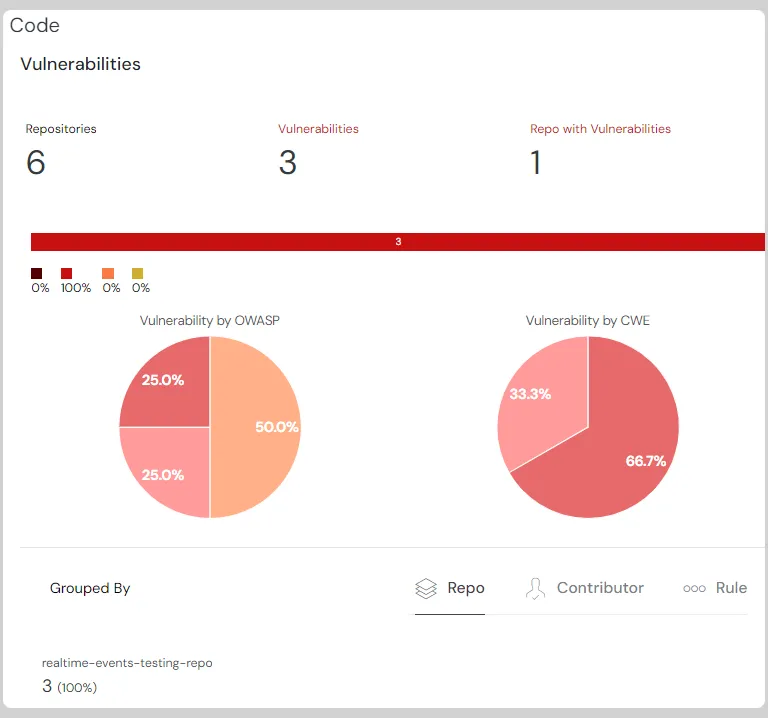
The RBAC nuance worth planning for: in larger organizations, engineering managers often should only see their own team’s repositories, not every team’s. Fine-grained, application- or repository-level access control is the mechanism for that, and it is worth confirming where your tool stands on this before a broad rollout — it determines whether you can cleanly separate Team A’s view from Team B’s. Design your rollout around the access granularity you actually have today.
Decision 2: Quality Gates
Quality gates are how code security becomes a control rather than a report. A quality gate blocks a pull request from merging when it fails to meet a defined bar — for example, when it introduces findings above a severity threshold.
A few principles make gates work in practice:
- Configure at the right level. Tenant-level defaults give you consistency across all repositories; repository-level overrides let sensitive repos apply stricter rules. Set a sane default, then tighten where it matters.
- Treat secrets as a hard fail. A leaked credential is categorically different from other findings — it should fail the PR regardless of the aggregate score, because the moment it lands on a shared branch it is effectively exposed. This is the model behind secret-aware PR quality gates that fail the pull request on any leaked secret.
- Tune before you enforce. Turning on a strict gate before you have tuned false positives is the fastest way to lose developer trust. Start in a reporting mode, calibrate, then enforce.
- Make the gate reliable. An unreliable gate — one that blocks unpredictably or fails to run — is worse than no gate, because developers stop trusting it. Reliability is a prerequisite for enforcement, not a nice-to-have.
Decision 3: Findings Ownership and Governance
Once developers can see and act on findings, the security team’s job shifts from triaging every finding to governing the system. Three governance mechanisms matter:
- Exceptions with a reason on record. Developers and reviewers will legitimately need to suppress some findings — false positives, accepted risks, business exceptions. Capture a justification when they do, so an exception is a documented decision, not a silent dismissal.
- Visibility into control changes. If an engineering manager relaxes or disables a quality gate for an urgent release, the security team should have that on record — the pattern of keeping infosec in the loop when engineers change PR quality gates. An audit trail of who changed which control, and why, keeps delegation accountable.
- Rich finding detail. Developers act faster when a finding includes impact, risk, and remediation guidance — not just a rule ID. The less research a developer has to do between “finding received” and “fix shipped,” the higher the fix rate.
Decision 4: The PR Workflow Itself
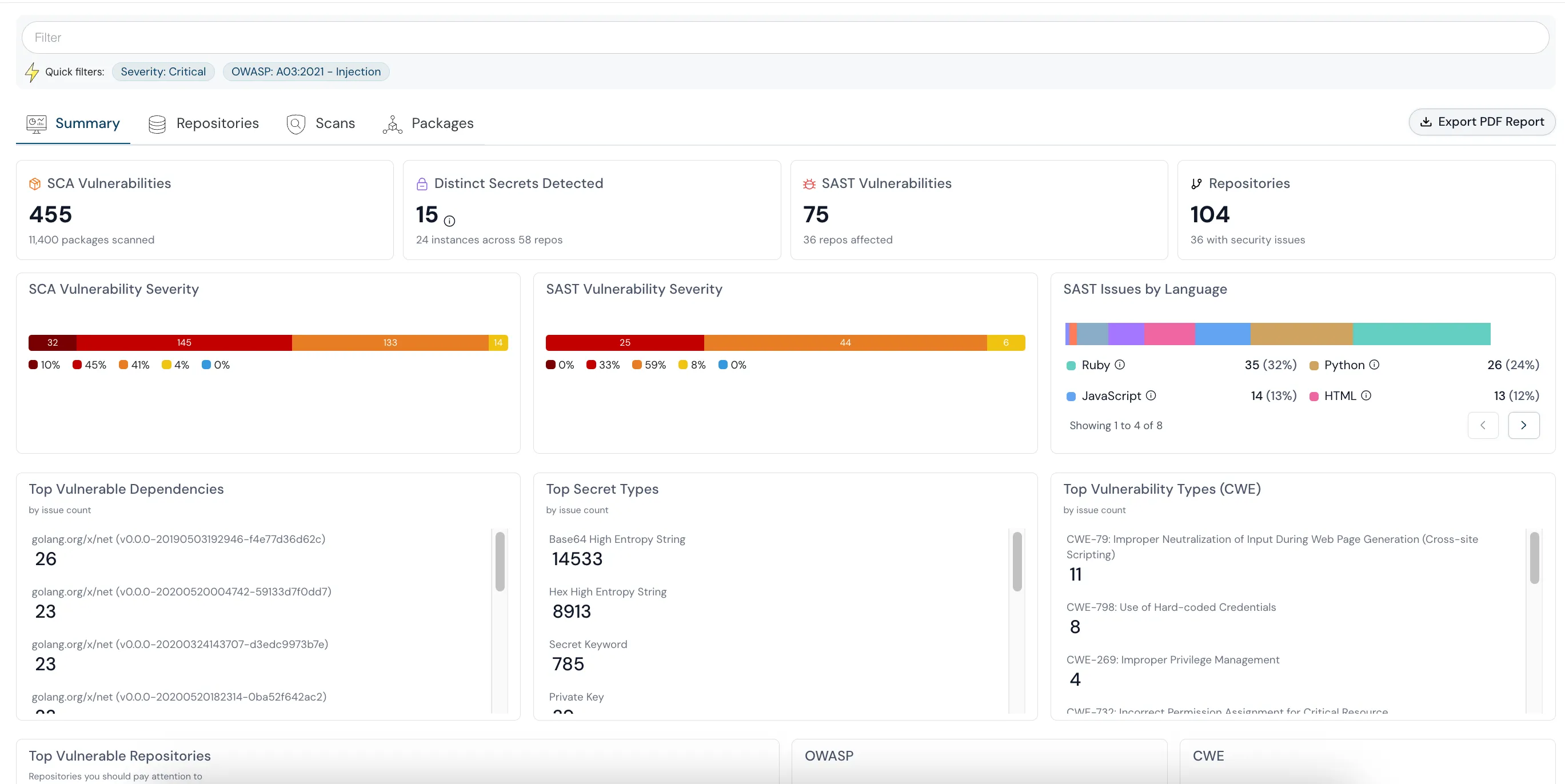
The workflow is where adoption is won or lost. The findings should meet developers in the pull request as inline annotations at the relevant code line — not in a separate dashboard they have to remember to check. The developer sees the issue during review, fixes it in the same PR, and moves on. Cloudanix Code Security surfaces SAST, SCA, and secrets findings as PR annotations for exactly this reason: the security signal has to live where the work happens.
A Practical Rollout Sequence
- Security team lands the tool. Integrate repositories, tune findings, establish sane quality-gate defaults. Build confidence in the signal before anyone else sees it.
- Pilot with a few engineering teams. Invite editors and developers for a small set of repositories. Watch how findings land in PRs and where the friction is.
- Calibrate gates and exceptions. Move from reporting to enforcement once false positives are under control. Establish the exception-and-justification norm early.
- Expand by team. Roll out repository by repository or team by team, respecting whatever access granularity you have. Keep developers scoped to their own findings.
- Shift the security team to governance. Once developers own fixes, security governs gates, exceptions, and control changes — reviewing the system, not every finding.
The Payoff
Done well, handing code security to the development team changes the economics of the program. Instead of a security team as the bottleneck between findings and fixes, developers close issues in the pull requests they are already working on, and the security team governs the system rather than triaging it. Findings arrive at the point of introduction, fixes ship in the same change, and security stops being a gate developers resent and starts being part of how they work.
If you are planning this transition and want to see how role-based access, configurable gates, and PR-level findings come together, book a free assessment to see Cloudanix Code Security on your repositories.