
Customer Snapshot
| Attribute | Details |
|---|---|
| Industry | Conversational AI / SaaS Platform |
| Cloud Environment | AWS (primary), Azure, GCP |
| Code & CI | GitHub, Jenkins for CI |
| Repositories | 60+ actively developed repositories |
| Team Structure | Central InfoSec team + distributed engineering org |
| Focus Area | PR quality gates with secret-blocking thresholds |
The Situation: Not All Findings Are Equal at the Gate
This team wanted security signal at the pull request — the point where a change is reviewed and the developer is still in context. They already understood that quality gates should block risky changes based on severity thresholds. But they had a specific, sharper requirement that most gate configurations do not handle well: a leaked secret should be treated as an automatic failure, regardless of everything else.
Their example was precise. If a pull request passes four of five checks but a secret — say, an AWS access key — is detected in the diff, that PR should fail. Not warn. Not pass-with-a-note. Fail. A leaked credential is not a finding to be weighed against other findings on a severity scale; it is a categorically different class of risk, because the moment it lands on the default branch, it is effectively already exposed. This is exactly what secrets detection is built to prevent.
The Core Challenge
Standard quality gates evaluate a pull request against aggregate severity thresholds — pass if the overall risk is under a bar. That model treats a leaked secret as just another weighted finding, when the team needed it to be an absolute, non-negotiable blocker. They needed a gate where a single detected secret fails the PR even when every other check is green.
Why a Leaked Secret Deserves Special Treatment
1. A Committed Secret Is Already Compromised
Unlike most vulnerabilities, a secret does not require exploitation to become a problem. The instant an AWS key or database credential is committed to a shared branch, it must be treated as exposed — visible in history, in clones, in CI logs, and potentially in mirrors. Rotation becomes mandatory the moment it lands. That is why “block before merge” matters so much more for secrets than for many other finding types: prevention is the only cheap option.
2. Aggregate Thresholds Can Let Secrets Through
A gate that passes a PR when “4 of 5 checks pass” or when “total severity is below X” can, by design, let a secret slip through if the other signals are clean. For a credential, that is exactly the wrong behavior. The team needed the gate logic to carve out secrets as a hard-fail condition independent of the aggregate score.
3. Coverage Breadth Determines Whether the Gate Even Fires
A secret-blocking gate is only as good as the detection behind it. If the scanner only knows a few hundred common patterns, custom internal tokens, non-standard partner API keys, and database URLs with embedded credentials sail straight through — and the gate never fires because the secret was never detected.
The Cloudanix Approach: Secrets as a Hard-Fail Condition
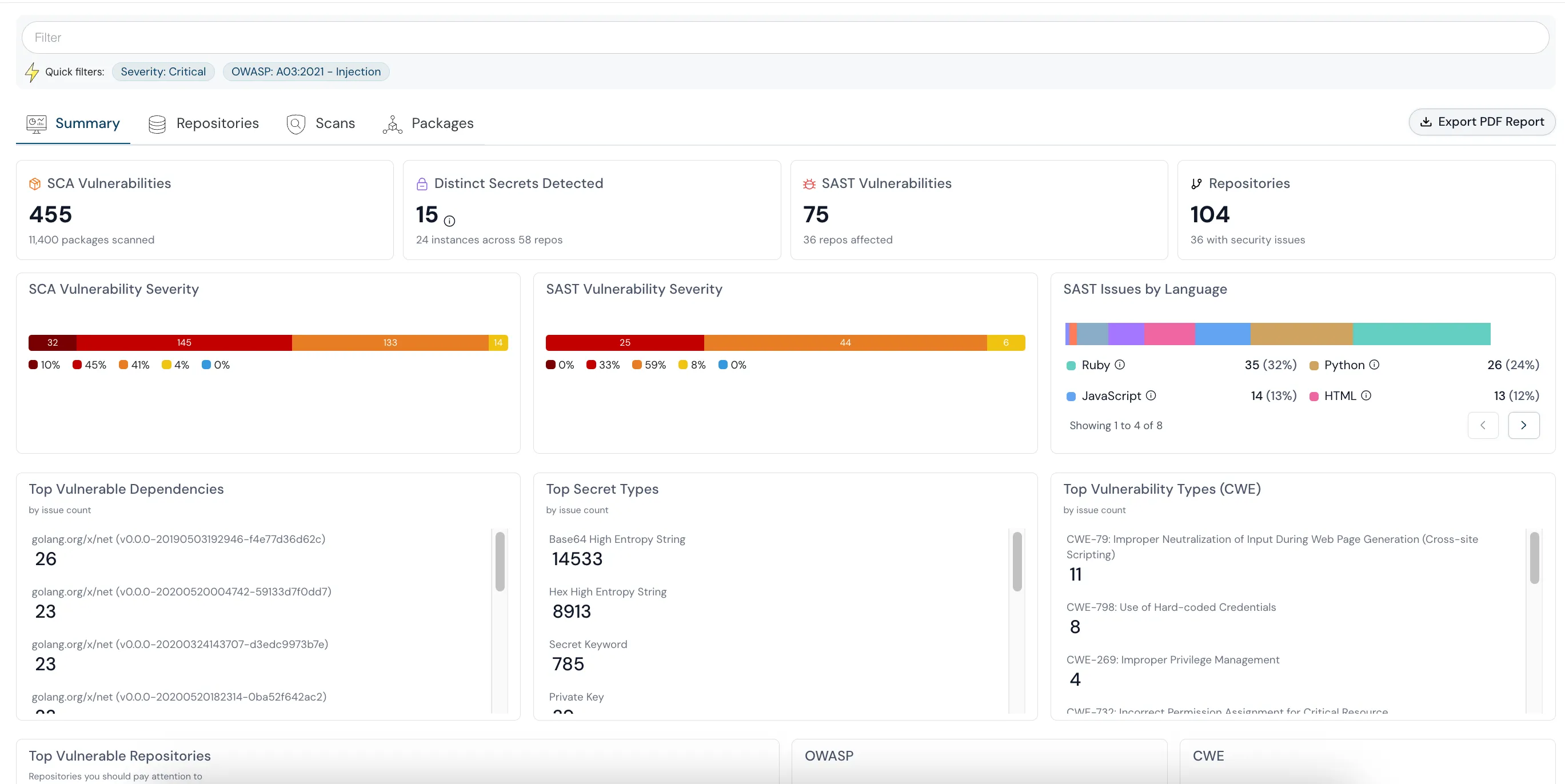
Cloudanix Code Security integrates with GitHub, running SAST and secret scanning, and supports configurable quality gates at both tenant and repository level — including the ability to treat detected secrets as an absolute blocking condition.
Configurable Gates With a Secret-Blocking Rule
Cloudanix lets teams define quality gates that block pull requests based on severity thresholds, and configure secret detection as a hard-fail condition within them. A detected secret fails the PR independently of the aggregate severity outcome — so a change that is otherwise clean still cannot merge if it carries a credential. Repository-level settings can override tenant-level defaults, so a team can apply stricter secret rules to sensitive repositories.
Detection Broad Enough for the Gate to Matter
The gate fires only if the secret is found, so coverage breadth is the foundation. Cloudanix ships with 2,000+ secret patterns — covering cloud provider keys (AWS, Azure, GCP), database connection strings, API tokens, OAuth secrets, and private keys — plus bring-your-own-pattern support so the team’s custom internal token formats are caught with the same confidence as standard ones. Breadth of detection is what makes a secret-blocking gate trustworthy rather than theatre.
Findings at the PR, With the Context to Act
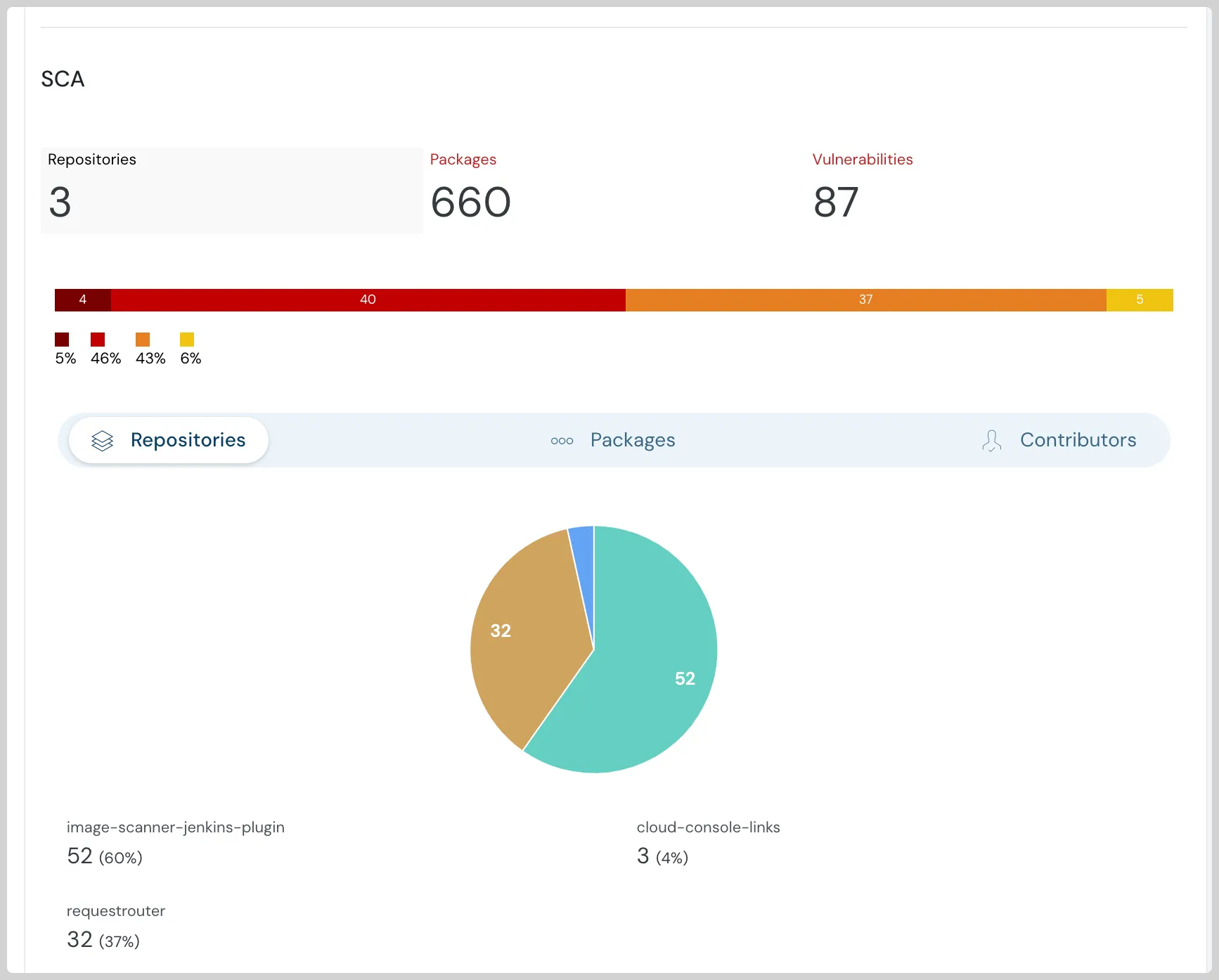
When a secret is detected, the finding surfaces as a pull request annotation at the exact line, with remediation guidance: where the secret was found, when it was introduced, and the steps to rotate it. The developer who introduced it sees it immediately, in their own workflow, and knows what to do — not just that the PR failed.
The Same Gate Across Every Repository
Because gates can be set at the tenant level and overridden per repository, the secret-blocking rule can be applied consistently across all 60+ repositories from one place, rather than configured by hand repo by repo. Consistency is what turns a policy into an actual control.
The Outcome
The team configured pull request quality gates where a detected secret is an absolute fail condition — a PR carrying an AWS key or database credential cannot merge even if every other check passes — backed by broad secret detection and applied consistently across their repositories, with findings and rotation guidance delivered to developers at the PR.
Key Results
✅ Secrets as a Hard Fail: A detected secret blocks the PR regardless of the aggregate score ✅ 2,000+ Patterns + BYO: Broad coverage so the gate actually fires on real secrets ✅ Tenant + Repo-Level Gates: Stricter rules where they matter, consistent everywhere ✅ PR-Level Feedback: Findings annotated at the line, with rotation steps ✅ Prevention Over Rotation: Secrets blocked before merge, not chased after exposure
Want Secrets to Be a Non-Negotiable Blocker in Your PRs?
If your quality gate can let a leaked credential through because the other checks passed, Cloudanix lets you make secrets an absolute fail condition — backed by detection broad enough to catch the custom ones.
Book a Free Assessment to see secret-aware quality gates on your repositories.