Customer Snapshot
| Attribute | Details |
|---|---|
| Industry | Conversational AI / SaaS Platform |
| Cloud Environment | AWS (primary), Azure, GCP |
| Code & CI | GitHub, Jenkins for CI |
| Prior Code Stack | SonarCloud (SAST + secrets), Snyk (SCA) |
| Repositories | 60+ repositories, actively developed |
| Team Structure | Central InfoSec team + large distributed engineering org |
| Focus Area | Code Security consolidation |
The Situation: Two Tools, Two Dashboards, One Incomplete Picture
This SaaS platform took code security seriously and had for years. They ran static analysis and secrets scanning through one platform and software composition analysis through another. Individually, each tool did what it was bought to do. Together, they created a fragmented view of code-level risk that a central security team had to reconcile by hand.
The comparison the team kept coming back to was between the two incumbents themselves — where each tool disagreed with the other, and where each disagreed with what the source-control platform reported. That disagreement is the tell-tale sign of fragmentation: when your tools cannot agree on how many repositories you have or which packages are vulnerable, you do not have a security posture, you have a reconciliation problem.
The Core Challenge
Code security was split across two vendors with no unified view. Static analysis and secrets lived in one dashboard, dependency risk in another, and neither connected to the cloud posture or workload layers. The security team spent time aggregating and de-duplicating findings instead of prioritizing and fixing them — and developers were not seeing security findings where they actually work.
Where the Gaps Were
1. Repository and Finding Discrepancies Across Tools
The source-control platform showed one repository count; the scanning tools showed another, lower number. On more than one occasion, package-level vulnerabilities were flagged by the SCA tool but not by the static analysis platform, and vice versa. When two tools produce different answers to “how many repos do we scan?” and “which dependencies are vulnerable?”, the security team has to become the integration layer — manually reconciling coverage before it can even begin to prioritize risk.
2. Findings Trapped in a View-Only Dashboard
The static analysis platform was, in practice, a view-only dashboard. There was no straightforward way to route an individual finding to the specific developer who needed to act on it. To get findings into developers’ hands, the team resorted to periodic manual exports — a quarterly or six-monthly copy exercise. For a team shipping code every week, security feedback delivered every quarter is security feedback that arrives after the code is already in production.
There was also a hard scaling wall: as the codebase grew past a large line-of-code threshold, the static analysis coverage degraded — exactly the wrong behavior for a platform whose codebase only grows.
3. Pull Request Checks That Were Not Reliable
The team wanted security signal at the pull request — the moment code is reviewed and the developer is still in context. But PR-level scanning through the existing setup was inconsistent: scans that did not run, automated PR comments that stopped appearing, and quality-gate behavior that blocked pull requests unpredictably across repositories. When the PR check is unreliable, developers stop trusting it, and an untrusted gate is worse than no gate.
4. No Connection Between Code Risk and Cloud Risk
The deepest gap was structural. A permissive IAM policy in a Terraform file is a code finding. The misconfigured role it produces once deployed is a cloud finding. In a two-tool code stack with no link to cloud posture, those are two unrelated entries in two unrelated systems — and nobody can see that they are the same problem at two points in time.
The Cloudanix Approach: One Code Security Layer
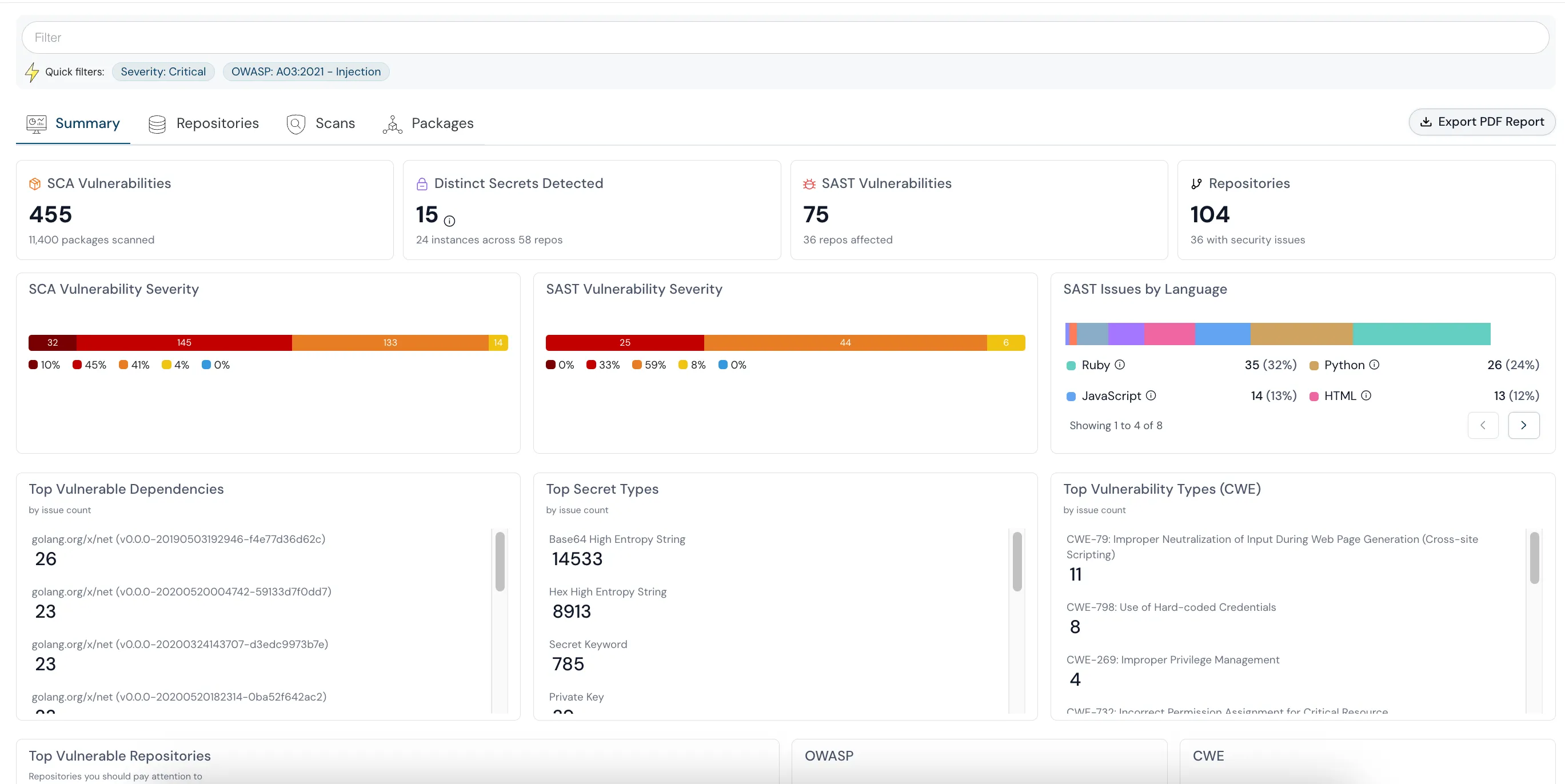
Cloudanix integrates directly with GitHub and runs SAST, SCA, secrets detection, and IaC scanning as a single layer — collapsing the two-tool split into one unified findings view.
SAST, SCA, and Secrets in One Place
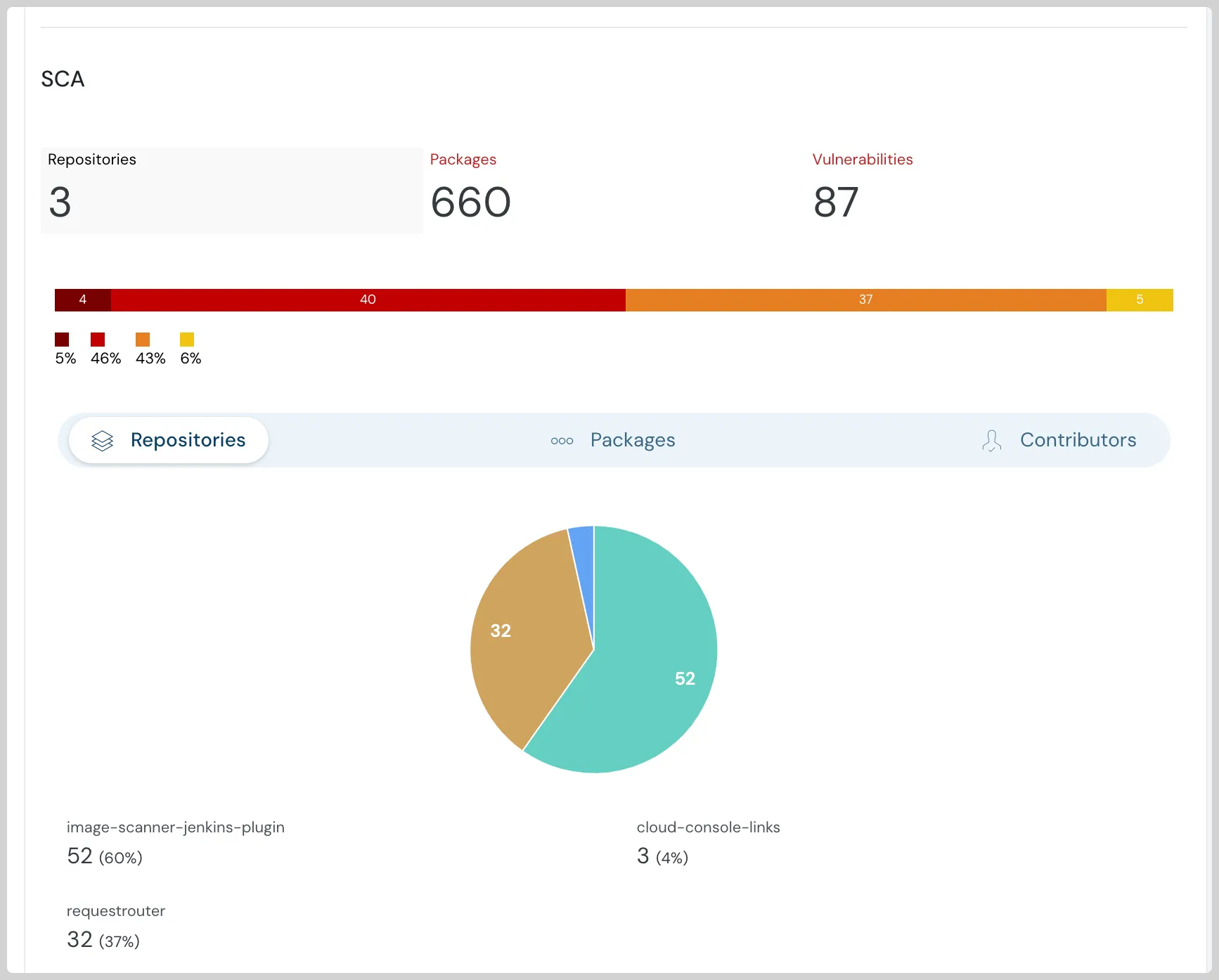
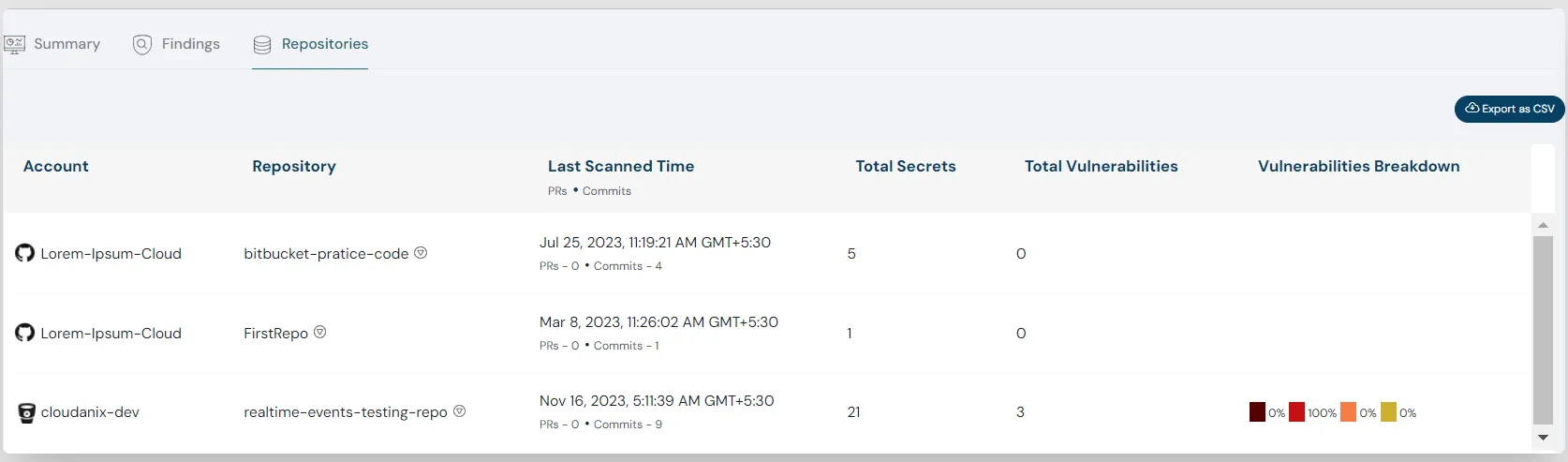
Instead of static analysis in one product and dependency scanning in another, Cloudanix analyzes every pull request for static-analysis findings, dependency risk via SCA, and secret exposure — deduplicated and ranked in a single view across all repositories. There is no reconciliation step because there is one source of findings.
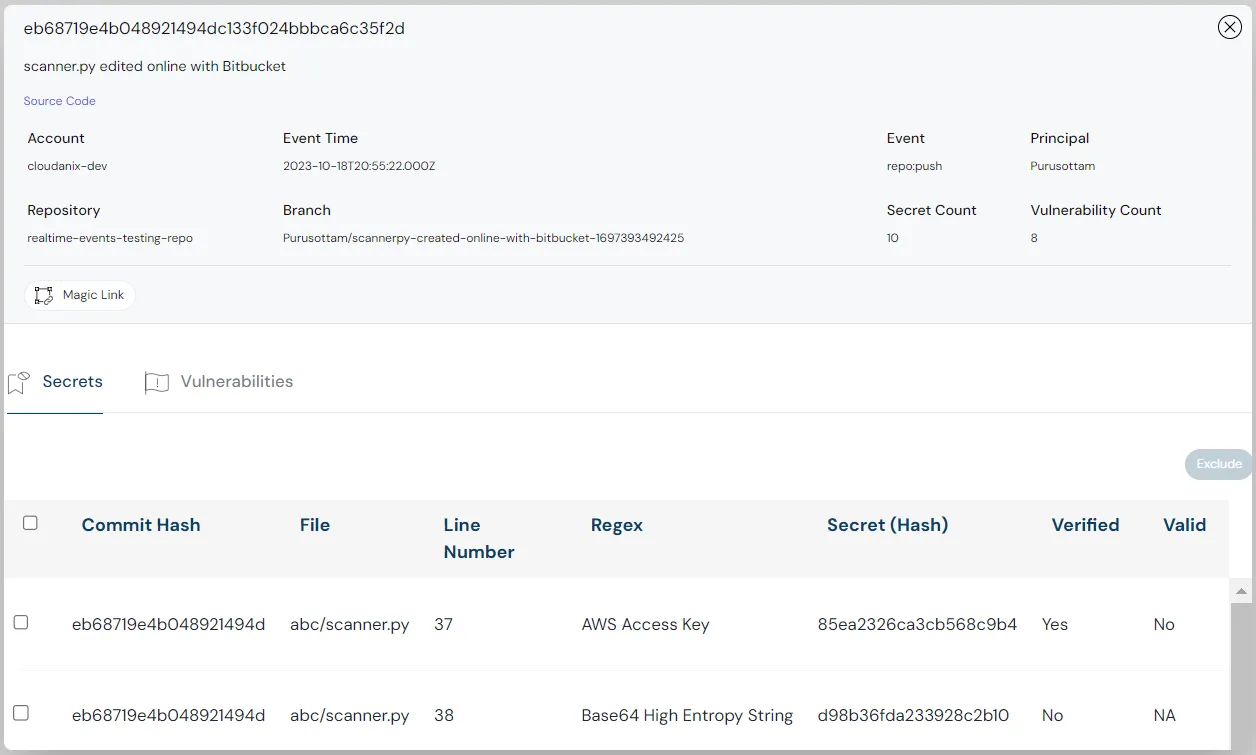
Secrets detection ships with 2,000+ patterns plus bring-your-own-pattern support, so the AWS keys, database connection strings, and custom internal token formats specific to this team are caught with the same confidence as standard patterns.
Findings at the Pull Request, Not in a Quarterly Export
Findings surface as pull request annotations — inline comments at the relevant code line, during review. Developers are invited into the platform with appropriate roles (editor for engineering managers and reviewers, developer for those raising PRs) and see findings in their own workflow. Developers only see the Code Security area and their findings; they do not see unrelated cloud misconfiguration data. This replaces the manual export exercise entirely: the security signal meets developers where they already work, in real time, not on a six-month cadence.
GenAI-Powered Remediation, Not Just a CVE Number
Every finding arrives with actionable remediation context — which version to upgrade to and whether it breaks, the secure alternative for a flagged code pattern, or the steps to rotate an exposed secret — so the fix is a next step, not a research task.
Code Risk Connected to Cloud Risk
Because Cloudanix runs code security and cloud posture on the same asset graph, a permissive IAM policy in a Terraform file can be traced to the role it becomes in the cloud and the resources that role can reach. IaC scanning catches the misconfiguration at merge time, before it is deployed — turning two disconnected findings in two tools into one attack path on one graph.
A Note on Comparison
Both incumbent tools this team used are capable products. SonarCloud is a strong static-analysis and code-quality platform; Snyk is a strong software composition analysis tool. The issue was not that either was bad at its job — it was that running two separate code-security tools, neither connected to cloud posture, left the security team reconciling outputs and left developers without findings in their workflow. The value here is consolidation and correlation, not a claim that either incumbent fails at what it was designed to do.
The Outcome
The team consolidated static analysis, secrets detection, and software composition analysis into a single Code Security layer integrated with GitHub — replacing the two-tool split with one unified, prioritized findings view. Findings now reach developers as pull request annotations in their own workflow, and code-level risk is connected to cloud posture on a shared asset graph.
Key Results
✅ One Findings View: SAST, SCA, secrets, and IaC deduplicated and ranked in one place ✅ No More Reconciliation: One source of findings, one repository count ✅ PR-Level Feedback: Inline annotations at the code line during review ✅ Findings Reach Developers: Role-based access, no manual export exercise ✅ 2,000+ Secret Patterns: Plus bring-your-own-pattern for custom formats ✅ Actionable Remediation: GenAI guidance, not bare CVE numbers ✅ Code-to-Cloud Correlation: IaC findings traced to the cloud resources they create
Consolidating Your Code Security Stack?
If your code security is split across a static-analysis tool and a separate dependency scanner — with findings your developers never see and no link to your cloud posture — Cloudanix brings it into one layer.
Book a Free Assessment to see your repositories through Cloudanix.
Related Resources
- What is Code Security?
- Inside Static Source Code Analysis (SAST)
- What is Software Composition Analysis (SCA)?
- Secret Scanning: Guide to Prevent Data Breaches and Leaks
- Understanding Infrastructure as Code (IaC) Security
- Shift-Left Code Security for GitLab CI/CD Pipelines
- Code Security Best Practices for DevSecOps Teams in 2026
- Consolidating VM, Container, Code, and Cloud Security for a Conversational-AI Platform