Customer Snapshot
| Attribute | Details |
|---|---|
| Industry | Conversational AI / SaaS Platform |
| Cloud Environment | AWS (primary), Azure, GCP |
| Code & CI | GitHub, Jenkins for CI |
| Team Structure | Central InfoSec team + distributed engineering managers |
| Focus Area | Governance of security-control changes (PR quality gates) |
The Situation: The Gate Is Only a Control If Someone Watches the Gatekeeper
This team had done the hard part: they had shift-left PR quality gates in place, blocking risky pull requests based on severity thresholds. But a mature security team knows that a control is only as strong as its weakest bypass — and the weakest bypass here was human and entirely legitimate-looking.
The concern was specific and honest. Engineering managers, under pressure to ship an urgent release, might disable or relax a quality gate to get a blocked pull request through. That is a rational thing to do in a crunch — but if InfoSec has no visibility into it, a security control has just been switched off and nobody responsible for security knows. The gate might get re-enabled afterward, or it might not. Either way, there is a window where the organization believes it is protected and is not.
What the team wanted was not to prevent engineering managers from ever adjusting a gate — that would defeat the purpose of delegating gate configuration to the teams closest to the code. What they wanted was accountability: whenever a quality gate is changed or disabled, at the tenant or repository level, the security team should know, and there should be a reason on record.
The Core Challenge
Security-control configuration — specifically PR quality gates — could be changed by engineering managers with the access to do so, but the InfoSec team had no proactive line of sight into those changes. A gate could be disabled for an urgent release and the security team would only discover it later, if at all. The requirement: notify the right people whenever a quality gate is modified, and capture the justification.
Why This Is a Real Governance Gap
1. A Disabled Gate Is a Silent Change in Security Posture
Turning off a quality gate does not throw an alert by default. The pull requests simply start passing. From the outside, the pipeline looks healthy — green checks, merged code — while the control that was supposed to be enforcing minimum standards is off. Silent posture changes are among the hardest things for a security team to catch, precisely because nothing looks wrong.
2. Legitimate Urgency Creates Legitimate Bypasses
The people most likely to disable a gate are not adversaries — they are engineering managers doing their jobs under a deadline. That makes the behavior both common and easy to rationalize. Governance has to account for the well-intentioned bypass, not just the malicious one.
3. Without a Reason on Record, There Is No Accountability
Even when a change is spotted, “the gate was disabled on Tuesday” is not enough. Was it for a hotfix? A false-positive storm? A one-off exception? Without a captured justification, the security team cannot distinguish a defensible decision from a careless one, and cannot hold the process accountable at audit time.
The Cloudanix Approach: An Audit Trail for the Controls Themselves
Cloudanix Code Security — the SAST and secrets scanning that back the gates — records changes to security controls, including quality gate configuration, in an audit trail, and pairs that with exception and justification workflows so that changes are both visible and accountable. (See what code security is for the fundamentals.)
Audit Logging of Security-Control Changes
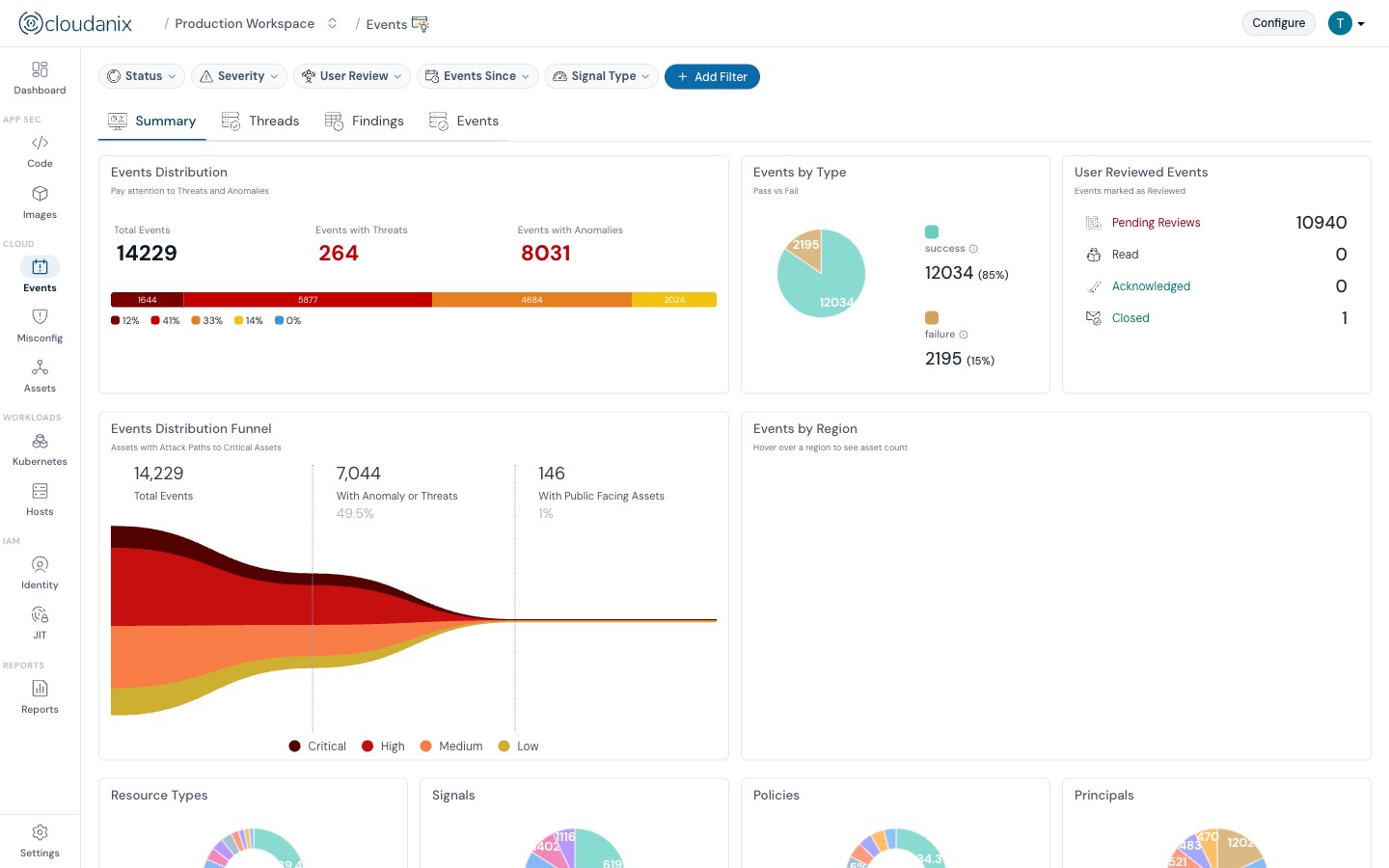
Cloudanix maintains real-time audit logs that capture configuration changes, including modifications to quality gates at the tenant and repository level. When a gate is disabled or its thresholds are relaxed, that action is recorded — so the change to the control is itself an auditable event, not an invisible flip of a switch. This gives the InfoSec team a durable record of who changed what and when, which is exactly what an auditor asks for and exactly what “who turned this off?” requires.
Exceptions With a Reason on Record
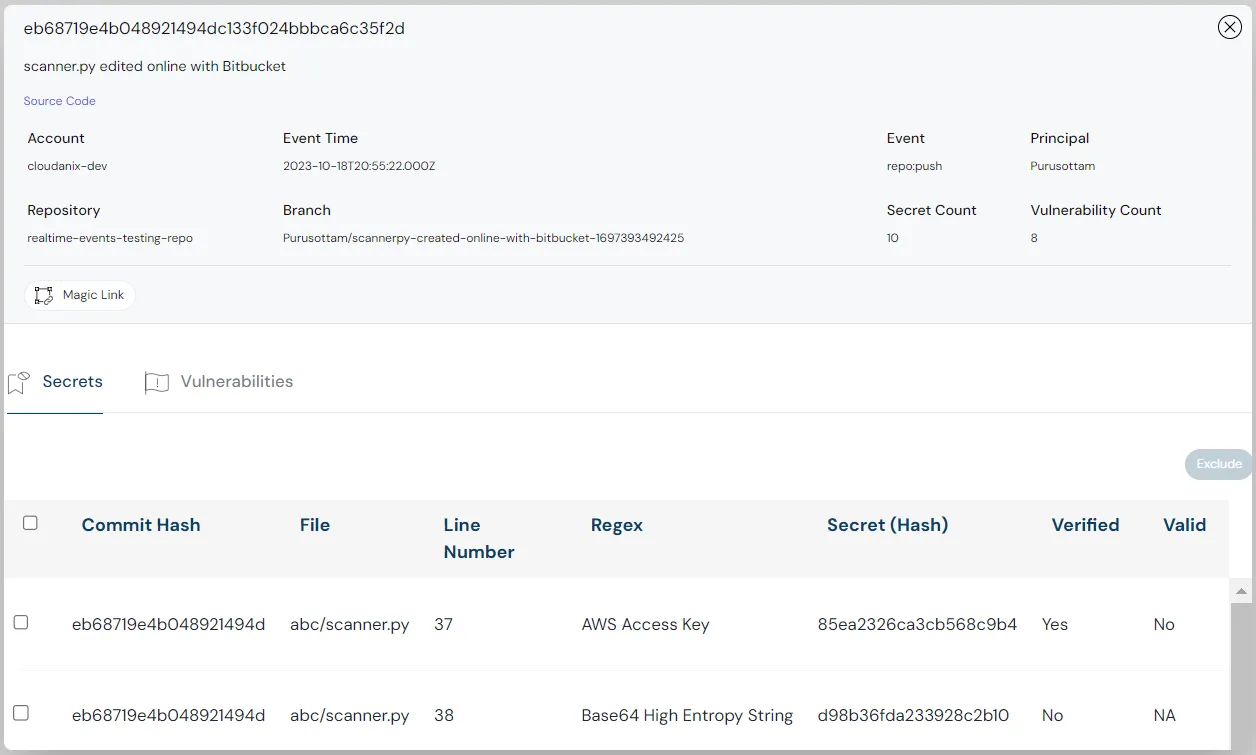
For the accountability side, Cloudanix supports exception handling with captured reasons: when a finding is excluded or an exception is created, the justification is recorded rather than left implicit. Applied to gate and vulnerability-handling decisions, this turns “someone changed the rules” into “this person made this exception, for this reason, at this time” — the difference between a gap and a governed decision.
Notifications: Where This Is Heading
Getting InfoSec actively notified — not just having the record available to review — is the natural extension of the audit trail. Cloudanix’s direction here is to surface security-control changes through notification and SIEM integration pathways (for example, feeding these events into a SIEM the team already runs), so that a gate change can trigger an alert to the right people rather than waiting to be found in the log. Teams evaluating this should confirm current notification capabilities with Cloudanix for their specific setup, since this area is actively evolving; the audit record of the change exists today, and proactive notification is the enhancement built on top of it.
Roles That Bound Who Can Change What
Cloudanix’s role model (editor for engineering managers and reviewers, developer for those raising PRs) also shapes who can touch gate configuration in the first place. Combined with the audit trail, this means gate changes are both constrained to the right roles and recorded when they happen.
The Outcome
The team gained an auditable record of changes to their PR quality gates, with captured justifications for exceptions — closing the “a gate was silently disabled for an urgent release” gap. InfoSec can see when a control was modified and why, with proactive notification as the evolving next step on top of the existing audit trail.
Key Results
✅ Control Changes Are Auditable: Gate modifications recorded, not silent ✅ Justifications on Record: Exceptions carry a captured reason ✅ Accountability for Bypasses: “Who turned this off, and why?” has an answer ✅ Role-Bounded Configuration: Gate changes constrained to the right roles ✅ Notification Path: SIEM/notification integration as the evolving next step
Want to Know When a Security Control Gets Turned Off?
If your quality gates can be disabled for an urgent release without your security team knowing, Cloudanix gives you an audit trail of control changes — and a path to proactive notification.
Schedule a Demo to see how Cloudanix governs security-control changes.
Related Resources
- What is a PR Quality Gate?
- What is Code Security?
- What is Cloud Audit?
- What is Wazuh?
- Handling Business Exceptions: Vulnerability Allow-Listing and Justification
- Secret-Aware PR Quality Gates: Failing the Pull Request on Any Leaked Secret
- Replacing SonarCloud and Snyk With a Unified Code Security Platform