

In 2020, deploying a CSPM tool meant you were ahead of the curve. In 2026, it means you have covered roughly 30% of your actual cloud risk surface.
That is not a criticism of CSPM. The category did something genuinely important: it brought visibility to a chaotic cloud environment — misconfigurations, public S3 buckets, overpermissioned IAM roles — when nobody else was watching. CSPM made the invisible visible, and that mattered.
But the threat surface has moved. Misconfigurations are now the floor, not the ceiling. Identity abuse, standing privilege, data-tier blind spots, and AI coding agent credentials are where incidents actually happen in 2026. If your cloud security platform’s primary output is still a list of misconfiguration findings, you have a hygiene tool, not a security posture.
What this article covers:
- What CSPM does well and where it structurally stops?
- The 7 criteria that define a genuinely capable cloud security platform in 2026
- A side-by-side comparison of leading CSPM tools (Cloudanix, Wiz, Cortex Cloud, Defender for Cloud, AWS Security Hub, Orca, Lacework)
- A deep dive on Cloudanix — what it is, what it covers, and who it is built for
- A practical PoC framework for evaluating any CSPM or CNAPP tool
Who this is for: Security engineers, cloud architects, DevSecOps leads, and CISOs evaluating or re-evaluating their cloud security stack.
“If your cloud security platform’s primary output is a list of misconfiguration findings — you have a hygiene tool, not a security posture.”
Section 1: What CSPM Actually Does — And What It Was Never Designed For
Before comparing tools, it is worth being precise about what CSPM covers and where it structurally ends. Senior security teams already know this intuitively, but the market still conflates “CSPM” with “cloud security” — and that conflation is where risk hides.
What CSPM does well?
Credit where it is due:
- Continuous scanning of cloud account configurations across AWS, Azure, and GCP.
- Misconfiguration detection against CIS Benchmarks, NIST, SOC 2, and ISO 27001.
- Public exposure detection — open S3 buckets, unrestricted security groups, exposed APIs.
- Compliance posture dashboards mapped to regulatory frameworks.
- Drift detection — alerting when configurations deviate from a known-good baseline.
- Network topology visibility and basic attack-surface mapping.
These are genuinely valuable capabilities. A team without CSPM is flying blind on configuration state. That is still true in 2026 — it is exactly why teams start by moving off AWS Trusted Advisor and open-source scanners to continuous CSPM.
What CSPM was never architected to solve?
- The identity layer: CSPM tells you a role exists with excessive permissions. It does not stop that role from being used 24/7 by anyone with the credential. That requires CIEM + JIT.
- The data tier: CSPM knows a database exists. It does not watch who connects to it, mask PII at query time, or block a destructive
DROP TABLE. That requires Database Activity Monitoring. - Runtime behaviour: CSPM is a snapshot of configuration state. It does not detect anomalous activity during a session. That requires CDR and UEBA.
- The code layer: Hardcoded secrets, vulnerable open-source libraries, and SAST findings are outside CSPM’s scope entirely. That requires Code Security.
- AI coding agents: The newest and fastest-growing attack surface: agents operating with long-lived cloud credentials, reading repos, calling APIs. No CSPM was designed for this. That requires a Coding Agent Firewall.
The honest framing: CSPM is essential hygiene. It is not a security posture. A list of misconfiguration findings with no identity, network, data, or behavioural context is a to-do list, not a risk picture.
“CSPM tells you the door is unlocked. It doesn’t tell you who walked through it, what they touched, or whether they’re still inside.”
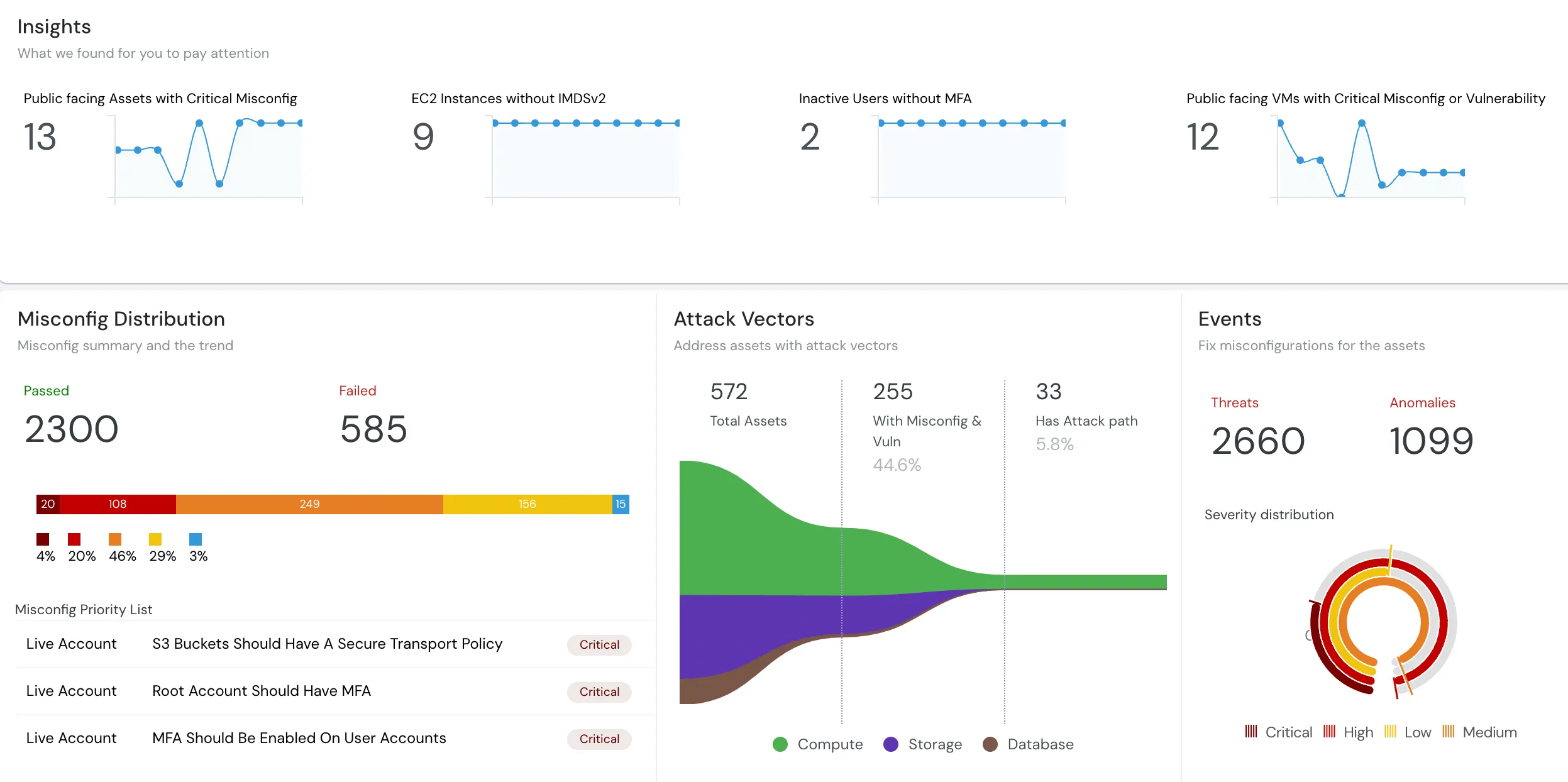
A modern CSPM dashboard provides configuration visibility — but configuration is only one layer of the full cloud risk surface.
Section 2: The 7 Criteria That Define a Capable Cloud Security Platform in 2026
Do not evaluate CSPM tools as CSPM tools, evaluate them as cloud security platforms. The question is not “which CSPM has the most checks?” It is “which platform covers the full surface your adversary will actually target?”
1. Posture Coverage Depth
Beyond check count — does it cover CSPM, CWPP, CIEM, and KSPM on a unified model? Can it query across all four surfaces in a single investigation? Does it cover AWS, Azure, GCP, and OCI with parity — not just one cloud with bolt-ons for the others?
2. Identity and Privilege Governance
CIEM tells you who has what. Does the platform go further — eliminating standing privilege via Just-In-Time access? Does JIT cover cloud consoles, databases, VMs, Kubernetes, SaaS, non-human identities (NHIs), and AI coding agents? Is there an approval workflow, session recording, and auto-revocation — not just a visibility report?
3. Data Tier Protection
Does the platform watch who connects to your databases? Dynamic PII masking at query time? Blocking of destructive queries? Identity-attributed audit trail per database session? This is the gap DSPM alone cannot close.
4. AI Coding Agent Security
In 2026, this is non-negotiable for any engineering-forward organisation. Does the platform cover JIT credentials for AI agents (Claude Code, Cursor, Copilot, Kiro) via MCP? On-host DLP that intercepts credential and PII exfiltration before a token leaves the machine?
5. Graph Extensibility and Correlation
Is the underlying asset graph open or closed? Can you bring your own detection rules (BYOR API)? Ingest your own data sources (BYO-data)? Query in natural language? Or are you locked into the vendor’s closed rule engine with no ability to correlate external signals?
6. Remediation Quality
CVE number and a link to the NVD — or GenAI-powered remediation playbooks with copy-paste-ready CLI commands, cross-cloud translation, and fix verification? The difference between the two is the difference between alert fatigue and actual risk reduction.
7. Deployment Sovereignty
SaaS-only — or can the platform run inside your own AWS/Azure/GCP account with no data egress (CloudPrem)? In-region tenancy for DPDPA, GDPR, HIPAA, RBI, MAS, APRA? This is increasingly a procurement requirement, not a nice-to-have.
“Ask every vendor this: ‘Can I bring my own detection rules, query your graph in plain English, and deploy entirely inside my own cloud account?’ The answers reveal whether you’re buying a platform or renting a dashboard.”
Section 3: CSPM Tools Compared — The 2026 Landscape
The market has evolved into three tiers:
- Pure-play CSPM — largely obsolete as standalone
- CNAPP — unified posture + workload + identity + code
- CNAPP+ — CNAPP plus JIT, DAM, and AI-agent security on a single graph
Know which tier you are buying from. For lean teams, the practical journey often looks like going from native and open-source tools to a correlated CNAPP rather than buying the biggest platform on the market.
Tools covered in this comparison:
- Cloudanix — CNAPP+
- Wiz — CNAPP (agentless, Google-owned)
- Palo Alto Cortex Cloud — CNAPP (agent-based, SOC-integrated)
- CrowdStrike Falcon Cloud Security — CNAPP (endpoint-first, agent-based)
- Microsoft Defender for Cloud — CSP-native CSPM/CNAPP (Azure-first)
- AWS Security Hub + GuardDuty — CSP-native (AWS-only)
- Orca Security — CNAPP (agentless, Fortinet-owned)
- Sysdig — CNAPP (runtime-first, open-source roots)
- Datadog Cloud Security Management — Observability-native CSPM
- Lacework (Fortinet) — CNAPP (behavioural analytics focus)
Master Capability Comparison Table
Table 1: Third-Party CNAPP Platforms
| Capability | Cloudanix | Wiz | Cortex Cloud | CrowdStrike | Orca |
|---|---|---|---|---|---|
| CSPM (multi-cloud) | ✅ | ✅ | ✅ | ✅ | ✅ |
| CWPP | ✅ | ✅ | ✅ | ✅ | ✅ |
| CIEM | ✅ | ✅ | ✅ | ⚠️ | ⚠️ |
| KSPM | ✅ | ✅ | ✅ | ✅ | ✅ |
| JIT Access (Human + NHI + AI Agent) | ✅ | ❌ | ❌ | ❌ | ❌ |
| Database Activity Monitoring + Masking | ✅ | ❌ | ❌ | ❌ | ❌ |
| Coding Agent Firewall | ✅ | ❌ | ❌ | ❌ | ❌ |
| Code Security (SAST/SCA/Secrets) | ✅ | ⚠️ | ⚠️ | ⚠️ | ❌ |
| GenAI Remediation Playbooks | ✅ | ⚠️ | ⚠️ | ⚠️ | ❌ |
| BYOR + BYO-Data + NL Search | ✅ | ❌ | ❌ | ❌ | ❌ |
| CloudPrem / Sovereign Deployment | ✅ | ❌ | ❌ | ❌ | ❌ |
| 15+ Compliance Frameworks | ✅ | ⚠️ | ✅ | ⚠️ | ⚠️ |
| Agentless Deployment | ✅ | ✅ | ⚠️ | ⚠️ | ✅ |
| Shared Slack / Eng. Support | ✅ | ❌ | ❌ | ❌ | ❌ |
| 30-min Onboarding | ✅ | ✅ | ❌ | ❌ | ✅ |
Table 2: CSP-Native & Specialized Platforms
| Capability | Cloudanix | Defender for Cloud | AWS Security Hub | Sysdig | Datadog | Lacework |
|---|---|---|---|---|---|---|
| CSPM (multi-cloud) | ✅ | ⚠️ Azure-first | ⚠️ AWS-only | ✅ | ✅ | ✅ |
| CWPP | ✅ | ✅ | ⚠️ | ✅ | ⚠️ | ✅ |
| CIEM | ✅ | ⚠️ | ⚠️ | ⚠️ | ❌ | ⚠️ |
| KSPM | ✅ | ⚠️ | ❌ | ✅ | ✅ | ✅ |
| JIT Access (Human + NHI + AI Agent) | ✅ | ❌ | ❌ | ❌ | ❌ | ❌ |
| Database Activity Monitoring + Masking | ✅ | ❌ | ❌ | ❌ | ❌ | ❌ |
| Coding Agent Firewall | ✅ | ❌ | ❌ | ❌ | ❌ | ❌ |
| Code Security (SAST/SCA/Secrets) | ✅ | ⚠️ | ❌ | ⚠️ | ❌ | ❌ |
| GenAI Remediation Playbooks | ✅ | ⚠️ | ❌ | ❌ | ❌ | ❌ |
| BYOR + BYO-Data + NL Search | ✅ | ❌ | ❌ | ❌ | ❌ | ❌ |
| CloudPrem / Sovereign Deployment | ✅ | ✅ Native | ✅ Native | ❌ | ❌ | ❌ |
| 15+ Compliance Frameworks | ✅ | ✅ | ⚠️ | ⚠️ | ⚠️ | ⚠️ |
| Agentless Deployment | ✅ | ✅ | ✅ | ⚠️ | ✅ | ⚠️ |
| Shared Slack / Eng. Support | ✅ | ❌ | ❌ | ❌ | ❌ | ❌ |
| 30-min Onboarding | ✅ | ⚠️ | ⚠️ | ❌ | ✅ | ❌ |
✅ Full | ⚠️ Partial | ❌ Not available
Section 4: Tool Deep Dives
4.1 Cloudanix: CNAPP+
Category: CNAPP+ - the only platform that ships CSPM + CWPP + CIEM + KSPM + Code Security + JIT (humans/NHIs/AI agents) + DAM + Coding Agent Firewall on a unified asset graph.
The CSPM foundation:
- 1,000+ misconfiguration checks with cross-cloud parity across AWS, Azure, GCP, OCI, and Kubernetes.
- Cartography-style unified asset graph: 300+ resource types, typed relationships, recursive attack-path traversal.
- One query correlates a misconfig, the IAM that touches it, the CVE on the EC2 in front of it, and the CloudTrail event when it was accessed, not five separate tools.
- UEBA v2 with a 0–100 composite identity risk score.
- External attack-surface module — Shodan-fed outside-in view plus outbound IOC traffic monitoring on every VM.
- AI-powered threat intelligence enrichment correlating KEV/EPSS/exploit data to specific customer assets.
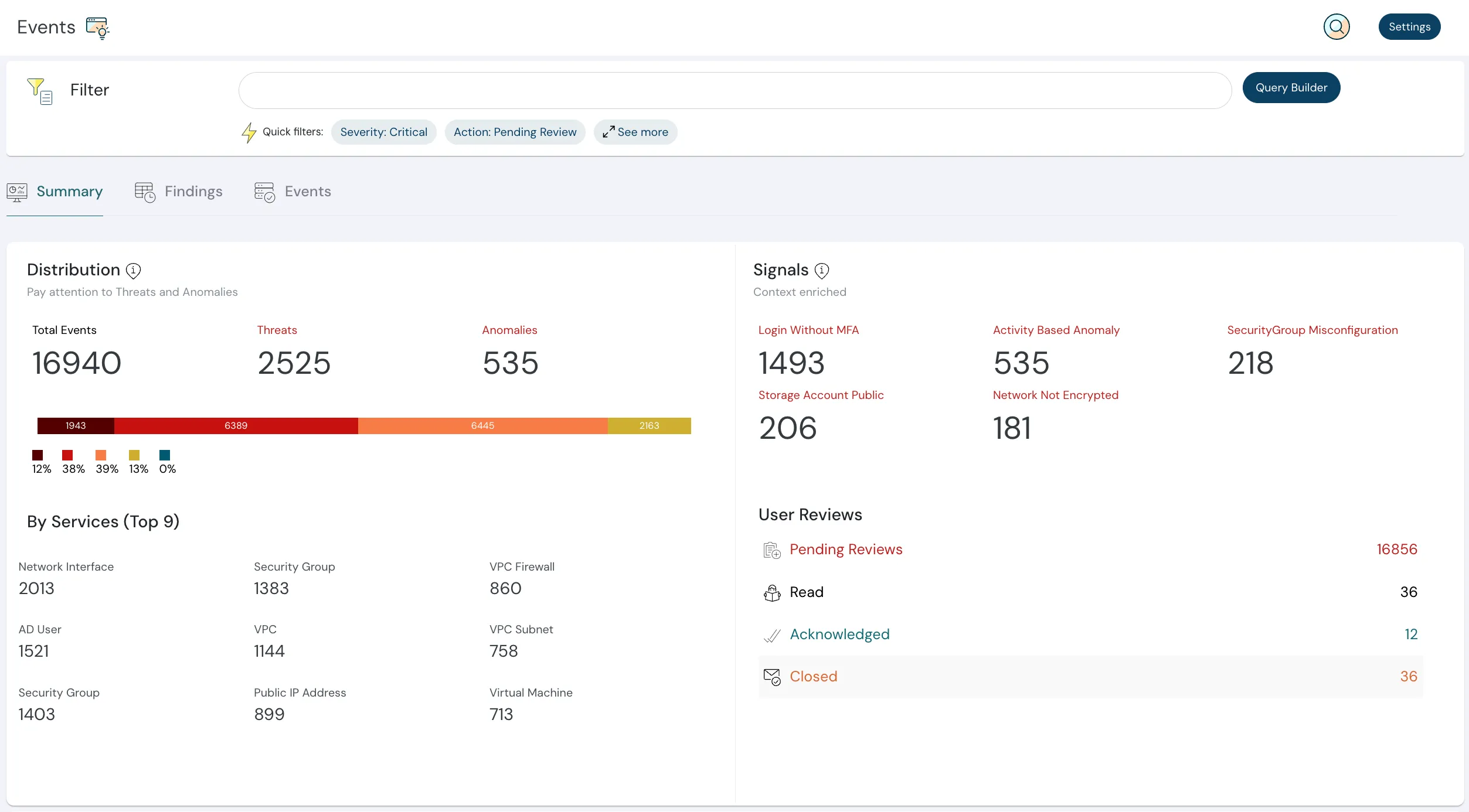
Cloudanix correlates configuration, identity, workload, and runtime data on a single asset graph.
What goes beyond CSPM:
- JIT as a first-class primitive: Time-bound, approval-gated access for cloud consoles, databases (MS SQL, Azure SQL, PostgreSQL, MongoDB), VMs, Kubernetes, SaaS, NHIs, and AI coding agents via MCP — brokered through Slack/Teams with identity-stamped audit trail and auto-revoke.
- Database Activity Monitoring: Dynamic PII masking at query time, destructive query prevention, keyless DB access from DBeaver, DataGrip, TablePlus, pgAdmin — audit stored in the customer’s own S3, not Cloudanix’s infrastructure.
- Coding Agent Firewall: On-host DLP for Claude Code, Cursor, Copilot, Kiro, Aider — intercepts credential and PII exfiltration before a token leaves the developer’s machine. No other platform ships this today.
- CloudPrem: Entire platform deployable inside the customer’s own AWS/Azure/GCP account with zero data egress. In-region SaaS in US, EU (Ireland), India, and Middle East.
- BYOR + BYO-data + NL Search: Open rule engine via API, bring your own data sources for cross-domain correlation, query the entire asset graph in plain English.
Compliance coverage: 15+ frameworks out of the box — SOC 2, ISO 27001, HIPAA, PCI-DSS, NIST CSF, FedRAMP, HITRUST, GDPR, RBI, MAS, APRA, DPDPA, CIS, OWASP, MITRE — with auto-generated, exportable audit evidence per framework per control.
Onboarding: 30 minutes, agentless, read-only IAM connector — first findings same day.
Support model: Dedicated Slack channel per customer — the engineers who built the product answer questions. Not a ticket portal.
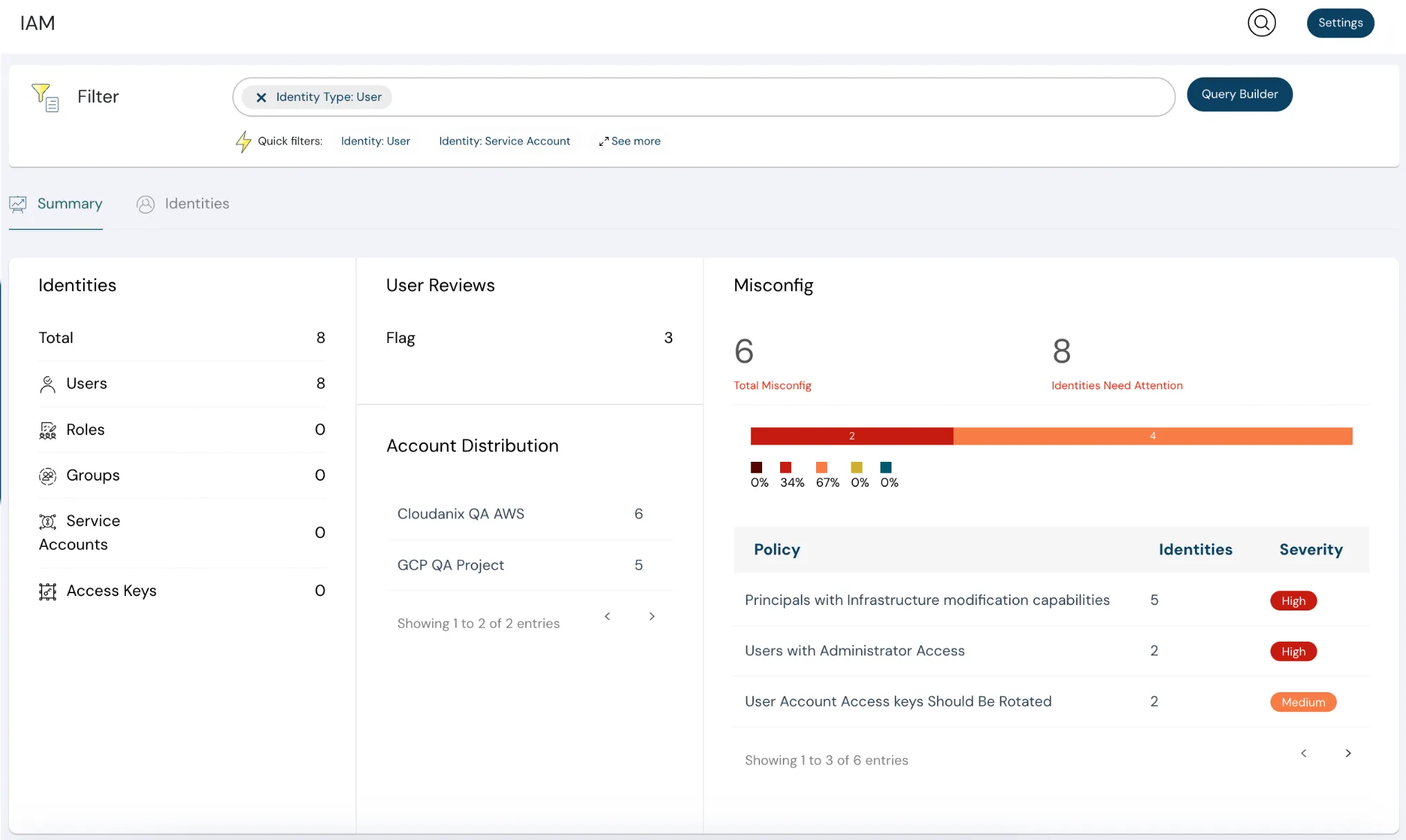
JIT Access eliminates standing privilege — access is granted only for the time needed and automatically revoked.
Real proof points from published case studies:
- Finfinity (Fintech): 100% reduction in privileged access exposure with JIT Cloud.
- Kapittx (Fintech): Real-time data masking and query prevention via DAM; full coverage on minimal security headcount.
- FleetX (Logistics): 60% faster remediation and unified cloud governance across multi-account AWS.
- Tech Inspira (MSP, Middle East): Zero standing privileges; JIT used as a competitive differentiator with Tier-1 banking clients.
- Meesho (E-commerce): Multi-cloud posture visibility across AWS and GCP with real-time alerting.
Best fit for:
- Multi-cloud organisations (AWS + Azure + GCP) that need posture + identity + data + code on one graph
- Regulated industries: FSI, Healthcare — organisations under DPDPA, HIPAA, ISO 27001, RBI, MAS
- AI-forward engineering teams with coding agents in production
- Organisations consolidating 5–8 point tools
- Teams requiring data sovereignty, in-region deployment, or CloudPrem
Honest limitations:
- Smaller brand footprint than Wiz or Palo Alto in pure enterprise outbound — less analyst-tier recognition today
- Growing enterprise reference base — not yet at Wiz-scale logo density in North American enterprise
4.2 Wiz
Category: CNAPP — agentless, Google-owned, enterprise-dominant.
Genuine strengths:
- Industry-defining agentless CSPM/CNAPP — the benchmark for cloud posture visibility at scale.
- Attack-path visualisation and toxic combination detection — genuinely strong and well-marketed.
- Fast deployment with broad multi-cloud coverage.
- Strong enterprise sales motion, analyst recognition, and Google-backed roadmap.
- Good KSPM and container posture coverage.
Where it falls short against the 7 criteria:
- No JIT access broker: CIEM identifies excessive permissions but does not eliminate standing privilege.
- No Database Activity Monitoring, dynamic masking, or query prevention.
- No Coding Agent Firewall: the AI-agent credential surface is uncovered.
- SaaS-only: no CloudPrem, limited sovereign deployment options for regulated industries.
- Closed rule engine: no BYOR API, no BYO-data correlation, no natural language graph search.
- Ticket-based support model.
Best fit for: Large enterprises that need best-in-class agentless CSPM/CWPP at massive scale and where JIT, DAM, and AI-agent security are not yet on the roadmap.
4.3 Palo Alto Cortex Cloud
Category: CNAPP — agent-based, deeply integrated with Cortex XDR/XSIAM.
Genuine strengths:
- Best-in-class runtime CWPP via agent-based telemetry.
- Deep SOC integration — best for mature SOC teams running Cortex XDR/XSIAM.
- Broad enterprise credibility and analyst recognition.
Where it falls short:
- Agent footprint on every workload — significant operational overhead.
- No JIT, no DAM, no Coding Agent Firewall.
- Credit-based pricing — TCO complexity is a recurring buyer objection.
- No CloudPrem, queue-based support.
Best fit for: Large enterprises with mature SOC operations where runtime telemetry and XDR integration take priority over access governance and data-tier protection.
4.4 CrowdStrike Falcon Cloud Security
Category: CNAPP — endpoint-first, agent-based.
Genuine strengths:
- Deep runtime threat detection leveraging the same Falcon agent that protects endpoints — strong lateral movement detection.
- Integrated threat intelligence from the CrowdStrike Intelligence team.
- Good for organisations already invested in the CrowdStrike Falcon platform (unified endpoint + cloud).
- Strong adversary-focused detection logic — indicators of attack (IOA) model.
Where it falls short:
- Agent-first architecture — requires Falcon agent on workloads for full coverage. Agentless posture alone is limited.
- No JIT access broker for cloud, database, or AI agents.
- No Database Activity Monitoring or dynamic masking.
- No Coding Agent Firewall.
- CSPM coverage depth varies by cloud (strongest on AWS).
- Pricing can be complex when bundling cloud modules with existing endpoint contracts.
Best fit for: Organisations already running CrowdStrike Falcon for endpoint protection that want unified endpoint + cloud visibility with strong adversary-focused threat detection.
4.5 Microsoft Defender for Cloud
Category: CSP-native CSPM/CNAPP; Azure-first.
Genuine strengths:
- Deep native Azure integration with minimal deployment overhead.
- Cost-efficient within existing Microsoft security licensing.
- Good compliance coverage for Azure-centric workloads.
Where it falls short:
- Structurally Azure-first: Cross-cloud AWS/GCP coverage is limited and bolted-on.
- No unified JIT access broker across cloud + DB + AI agents (Azure PIM covers Azure RBAC only).
- No Database Activity Monitoring with dynamic PII masking.
- No Coding Agent Firewall, no BYOR, no BYO-data.
Best fit for: Azure-dominant organisations with existing Microsoft security investment and no material multi-cloud requirements.
4.6 AWS Security Hub + GuardDuty
Category: CSP-native — AWS-only.
Genuine strengths: Native AWS integration, no deployment overhead, free signal for AWS-only environments.
Where it falls short: AWS-only by design; no cross-cloud correlation, no JIT, no DAM, no code security, no compliance evidence generation beyond AWS-native controls.
Best fit for: AWS-only environments in early security maturity stages — as a complement to, not replacement for, a CNAPP.
4.7 Orca Security
Category: CNAPP — agentless.
Genuine strengths: Fast agentless posture visibility, clean UI, SideScanning workload coverage.
Where it falls short: No JIT, no DAM, no Coding Agent Firewall, limited code security, SaaS-only, Fortinet acquisition creating roadmap uncertainty for some buyers.
Best fit for: SMB/mid-market teams needing fast agentless posture visibility without complex requirements.
4.8 Sysdig
Category: CNAPP — runtime-first, open-source roots (Falco).
Genuine strengths:
- Best-in-class runtime container security powered by Falco (the open-source runtime detection engine Sysdig created).
- Deep Kubernetes and container-native visibility — strong for teams running heavy K8s workloads.
- Real-time threat detection at the syscall level — catches runtime anomalies other tools miss.
- Good integration of CSPM + runtime in a single view for container-focused teams.
- Strong DevSecOps workflow integration — shift-left scanning in CI/CD pipelines.
Where it falls short:
- Runtime-first approach means full value requires the Sysdig agent on workloads — not purely agentless.
- No JIT access broker for cloud, database, or AI agents.
- No Database Activity Monitoring or dynamic PII masking.
- No Coding Agent Firewall.
- Multi-cloud CSPM coverage is developing but not as mature as posture-first vendors for Azure/GCP.
- SaaS-only — no CloudPrem or sovereign deployment options.
Best fit for: Container-heavy and Kubernetes-native organisations that prioritise runtime threat detection and want their CSPM deeply integrated with workload security.
4.9 Datadog Cloud Security Management
Category: Observability-native CSPM — bolted onto the Datadog observability platform.
Genuine strengths:
- Unified observability + security in a single platform — infrastructure monitoring, APM, logs, and CSPM in one console.
- For teams already using Datadog for observability, adding CSPM requires no new vendor relationship.
- Good misconfiguration detection with reasonable coverage of CIS Benchmarks.
- Strong integration with development workflows — alerts surface alongside performance metrics.
- Kubernetes-aware posture monitoring for teams running containerised workloads.
Where it falls short:
- CSPM is a secondary capability within an observability platform — not the core competency. Detection depth and rule coverage lag dedicated security platforms.
- No CIEM, no JIT, no DAM — identity governance is minimal.
- No Coding Agent Firewall.
- No CWPP in the traditional sense — runtime workload protection is limited.
- Compliance framework coverage is narrower than dedicated CSPM/CNAPP vendors.
- Pricing scales with data volume (Datadog’s per-host/per-GB model) — can become expensive at scale.
Best fit for: Engineering-first teams already invested in the Datadog ecosystem that want basic CSPM without adding another vendor — and where security requirements are limited to configuration hygiene rather than full CNAPP coverage.
4.10 Lacework (Fortinet)
Category: CNAPP — behavioural analytics focus.
Genuine strengths: Strong behavioural anomaly detection, good at runtime workload visibility via the Polygraph engine.
Where it falls short: No JIT, no DAM, no Coding Agent Firewall, limited CIEM depth, integration into broader Fortinet portfolio creating product direction uncertainty, SaaS-only.
Best fit for: Organisations that prioritise behavioural anomaly detection and are already invested in the Fortinet security ecosystem.
Section 5: The 2026 Inflection Point — Three Reasons Pure CSPM Is Now a Risk in Itself
Argument 1: CSPM creates a false sense of coverage
Organisations with strong CSPM scores suffered some of the most notable cloud breaches of 2024–2025, because the misconfiguration was not the entry point. The over-privileged identity was. CSPM gives you a posture score; adversaries attack through identity, not misconfiguration rank.
The counterintuitive truth: CSPM is not security — it is hygiene. The unit of security is the attack path, not the finding.
Argument 2: CIEM without JIT is a report, not a control
Every major CNAPP now ships CIEM — it tells you who has what permissions. But knowing an identity has excessive access and doing something about it are two completely different problems.
Without JIT, CIEM is an audit artefact. With JIT, it becomes an access control. The difference is operationally significant. Finfinity achieved a 100% reduction in privileged access exposure precisely because JIT moved the conversation from “who has too much access?” to “nobody has standing access.”
“‘We have CIEM’ and ‘we have eliminated standing privilege’ are not the same statement. One is a visibility claim. The other is a security outcome.”
Argument 3: AI coding agents have made CSPM’s blind spot critical
In 2026, AI coding agents (Claude Code, Cursor, Copilot, Kiro, Codex) are operating in production engineering environments with live cloud credentials.
Long-lived AWS/Azure keys in .envrc files, accessed by agents that read repositories, call cloud APIs, and ship PRs — silently. No CSPM tool, and no CNAPP designed before 2024, was architected to monitor, control, or audit this surface.
The only control that works is JIT for agents via MCP + on-host DLP that intercepts credential exfiltration before the token leaves the machine.
“Your CSPM dashboard doesn’t have a panel for ‘what did Cursor do with your AWS key at 2am.’ In 2026, it should.”
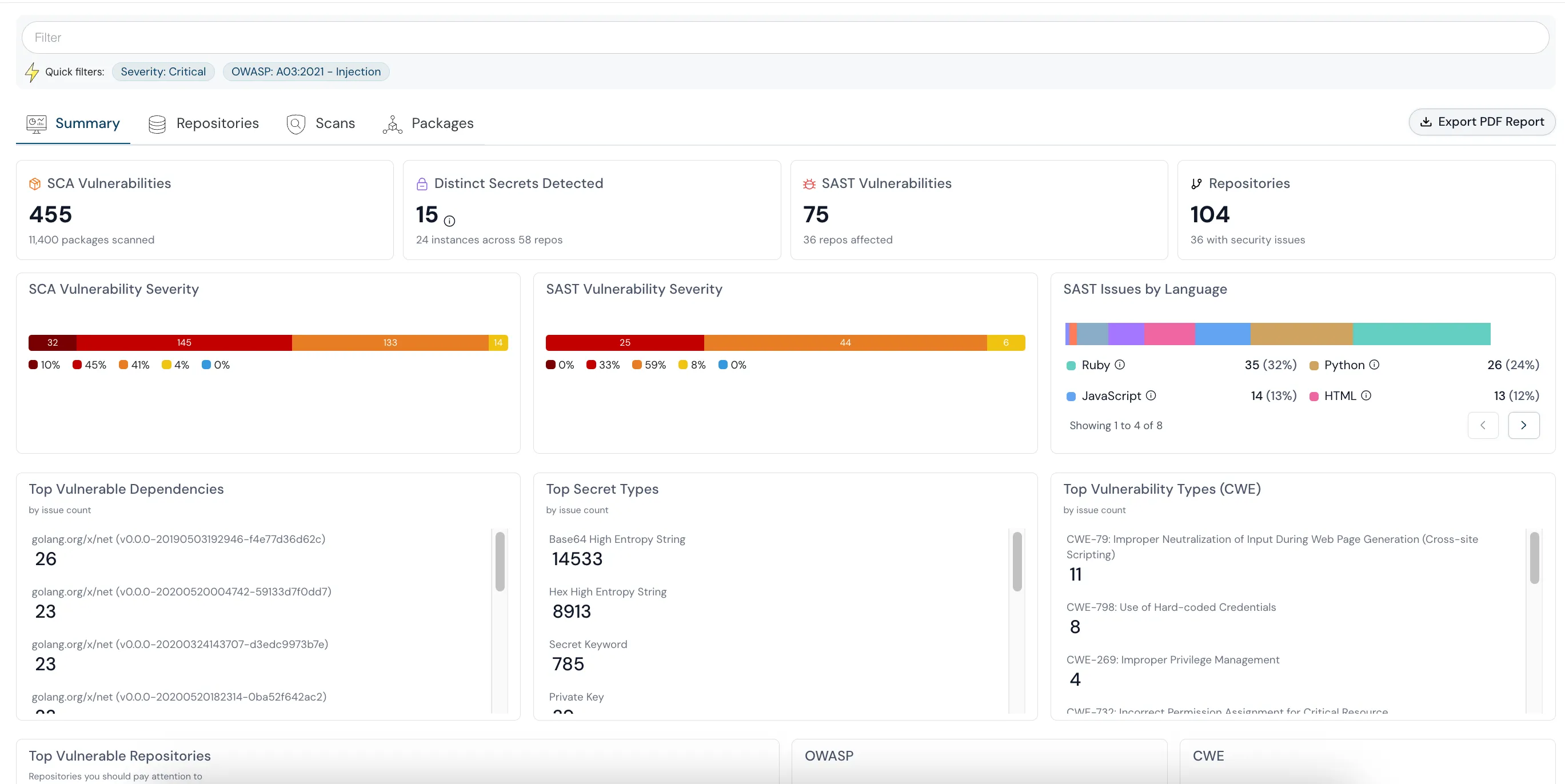
Code security scanning catches vulnerabilities at the PR level — before they reach your cloud infrastructure.
Section 6: How to Evaluate Any CSPM/CNAPP Tool — A Practical PoC Framework
The five PoC tests below reveal real platform depth. Use them with any vendor — including Cloudanix.
Test 1 — The Cross-Surface Query Test
Run this query: “Show me all identities with standing admin access to production databases that also have a critical unpatched CVE on their associated EC2 instance.”
If the answer requires three tools and a spreadsheet, you do not have a platform — you have a collection of dashboards.
Test 2 — The JIT Workflow Test
Request time-bound elevation for a production database access. Time the full cycle: request → Slack approval → session initiation → session recording → auto-revocation.
If the vendor cannot demo this end-to-end on your environment, JIT is not a first-class capability.
Test 3 — The Database Test
Connect a production database. Run a query against a table with PII fields. Does the platform mask the data dynamically? Attempt a DROP TABLE — does it block the query? Pull the audit log — is the identity attributed per query?
This test alone separates platforms from posture tools.
Test 4 — The Compliance Evidence Test
Request a SOC 2 Type II evidence package for access control (CC6.3) and an ISO 27001:2022 Control 5.18 evidence package. Time how long it takes. Is it audit-ready on export, or does it require manual formatting?
The gap between vendors on this test is measured in weeks of annual engineering time.
Test 5 — The Extensibility Test
Ask: “Can I write a custom detection rule via API and have it run on your asset graph?” and “Can I ingest my own data source for cross-domain correlation?” and “Can I search the graph in plain English?”
The answers reveal whether the platform is built for your environment or for a generic template.
Section 7: Compliance in 2026 — What Your Platform Must Cover
The compliance bar has risen significantly:
- SOC 2 auditors now ask explicitly for JIT evidence: Time-bound access logs, approval trails, auto-revocation records.
- ISO 27001:2022 Control 5.18 requires documented evidence of access rights provisioning, review, and revocation; a spreadsheet no longer passes.
- DPDPA (India): INR 250 crore penalty exposure, mid-2027 enforcement: data masking, identity-attributed audit, and data sovereignty are all mandated, not optional.
- HIPAA: Identity-attributed audit of every database access event is required. CSPM-level visibility is structurally insufficient.
- PCI-DSS v4.0 Requirement 7: access to cardholder data must be on a need-to-know basis, standing DB credentials fail this control.
Compliance Framework Coverage Comparison
| Framework | Cloudanix | Wiz | Cortex Cloud | Defender for Cloud | AWS Security Hub |
|---|---|---|---|---|---|
| SOC 2 + JIT evidence | ✅ Full | ⚠️ Partial | ✅ Partial | ⚠️ | ⚠️ |
| ISO 27001:2022 (incl. 5.18) | ✅ Full | ⚠️ | ✅ | ✅ | ❌ |
| HIPAA (incl. DB audit) | ✅ Full | ⚠️ | ✅ | ✅ | ❌ |
| DPDPA (incl. masking + sovereignty) | ✅ Full | ❌ | ❌ | ⚠️ | ❌ |
| PCI-DSS v4.0 | ✅ | ⚠️ | ✅ | ⚠️ | ⚠️ |
| RBI / MAS / APRA | ✅ | ❌ | ❌ | ❌ | ❌ |
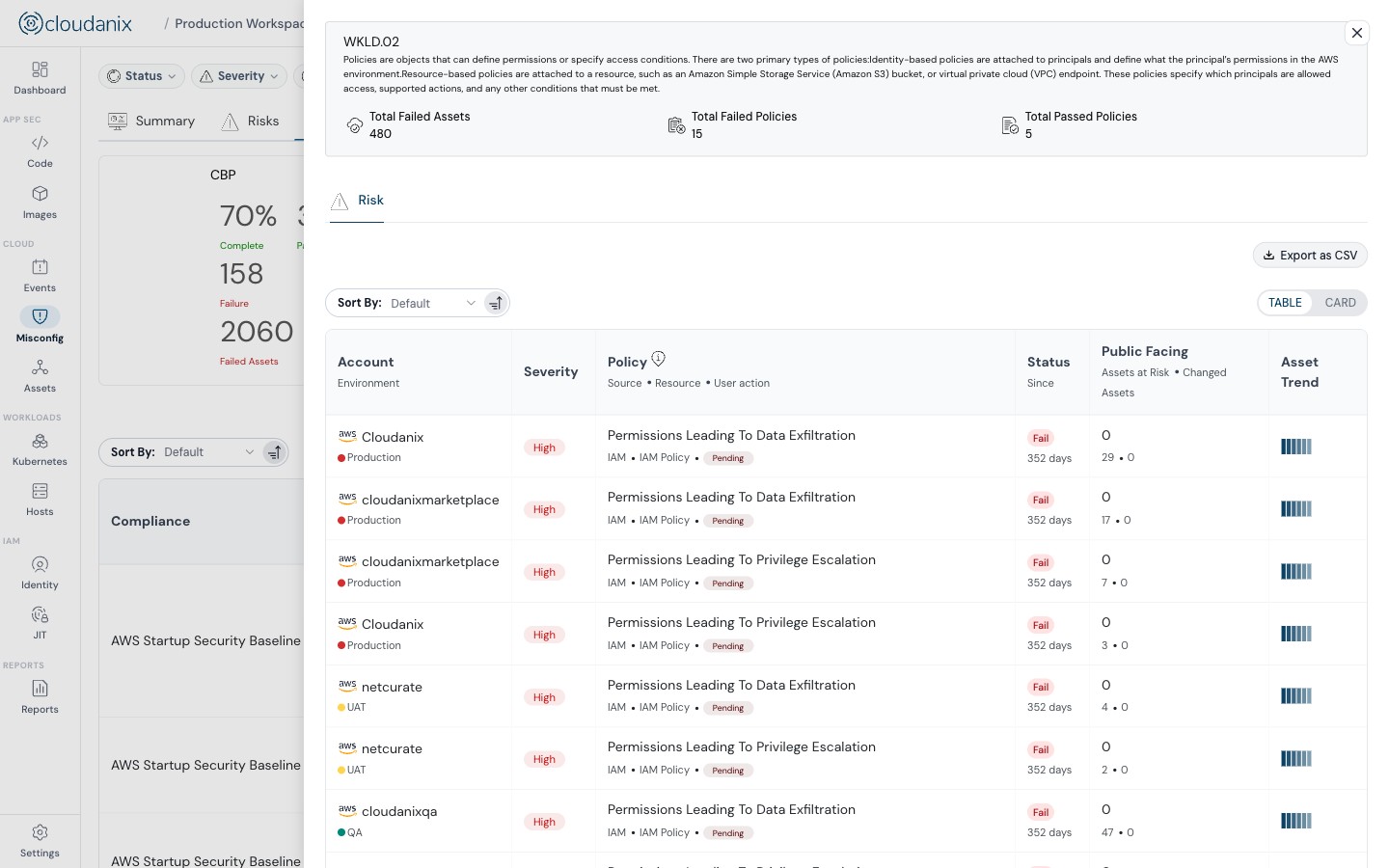
Compliance evidence generated automatically — mapped to specific controls, exportable, and audit-ready.
Section 8: Decision Guide — Which Platform Is Right for You?
Choose Cloudanix if:
- You are multi-cloud and need posture + JIT + DAM + code security + AI-agent security on one unified graph.
- You are in FSI, Healthcare, or any regulated industry with DPDPA, HIPAA, ISO 27001, RBI, or MAS obligations.
- Data sovereignty, CloudPrem, or in-region deployment is a procurement or compliance requirement.
- You are consolidating 5–8 security point tools and need a single asset graph.
- AI coding agents (Claude Code, Cursor, Copilot) are operating in your engineering environment.
- You want engineering-led support via a shared Slack channel, not a ticket portal.
Choose Wiz if:
- You need best-in-class agentless CSPM/CWPP at enterprise scale and JIT/DAM are not near-term requirements.
- Google-backed roadmap and analyst-tier brand recognition are internal procurement requirements.
Choose Cortex Cloud if:
- You have a mature SOC running Cortex XDR/XSIAM and want unified cloud + endpoint detection with agent-based runtime telemetry.
Choose Defender for Cloud if:
- You are Azure-dominant with existing Microsoft security investment and have no multi-cloud requirements.
Stay with CSP-native tools (GuardDuty/Security Hub) if:
- You are single-cloud and in early security maturity — use them as a complement, not a foundation.
Conclusion
CSPM remains an essential foundation — but in 2026, it is the floor, not the ceiling of cloud security.
The threat surface has shifted from configuration → to identity → to data → to AI coding agents. A platform that only covers the first layer leaves 70% of modern cloud risk unaddressed.
The right question for 2026 is not “which CSPM tool?” — it is “which platform covers the full attack surface my adversary will actually target?”
For teams that need posture + identity (JIT) + data (DAM) + code + AI-agent security on a single unified asset graph, with 30-minute agentless onboarding and engineering-led support; that platform is Cloudanix.
See where your current stack leaves gaps. Book a free 30-minute cloud security assessment. Agentless. Read-only. Findings the same day.
Related Resources
- Configuration Drift Management: How to Detect Cloud Drift Before It Becomes an Incident
- Agentless vs Agent-Based CNAPP: 2026 Buyer’s Guide
- CSPM vs CNAPP: Navigating Cloud Security Evolution
- Best Wiz Alternatives in 2026: A Technical Comparison
- Top 15 Cloud Misconfigurations in 2026 and How to Fix Them
- CSPM for ECS-Heavy AWS Workloads: How a Small Team Secured 9 Accounts
- From Tool Sprawl to a Single Dashboard: E-Commerce Cloud Security
- Securing a Scalable SaaS Platform
- What is CSPM? Cloud Security Posture Management
- Secrets of Cloud Security
- Masterclass in Cloud Security Risk Management