
A lot of cloud security advice is written for organisations that have a security team. It assumes a SOC, dedicated engineers, and the bandwidth to run programs across a dozen domains at once. That is not the reality for a large number of organisations, where a CISO, sometimes wearing several other hats, oversees a cloud environment with a handful of console users and no in-house development team.
For that situation, the honest starting point is triage. You cannot do everything, so the question is sequence: what delivers the most risk reduction for the least effort, given the people you actually have? Here is a practical order of operations for a lean team securing an AWS environment.
The Guiding Principle: Visibility Before Everything
You cannot secure what you cannot see. Before any remediation, before any tooling decisions about advanced capabilities, a lean team needs a baseline picture of what exists and what is wrong. That means favouring approaches that give you visibility fast and without heavy deployment, agentless connections that surface findings in minutes, not multi-week rollouts a small team cannot staff.
Everything below assumes this principle. Get the picture first, then work the sequence.
The Sequence
1. Know What You Have and What’s Misconfigured (Posture)
Start with cloud posture (CSPM). Connect your AWS environment and get a list of misconfigurations, publicly exposed resources, unencrypted storage, permissive security groups, weak logging. This is the highest-leverage first step because misconfigurations are both extremely common and frequently the entry point for real incidents. A focused CSPM is often all a small team needs to begin, as shown by this account of CSPM for ECS-heavy AWS workloads run by small security teams.
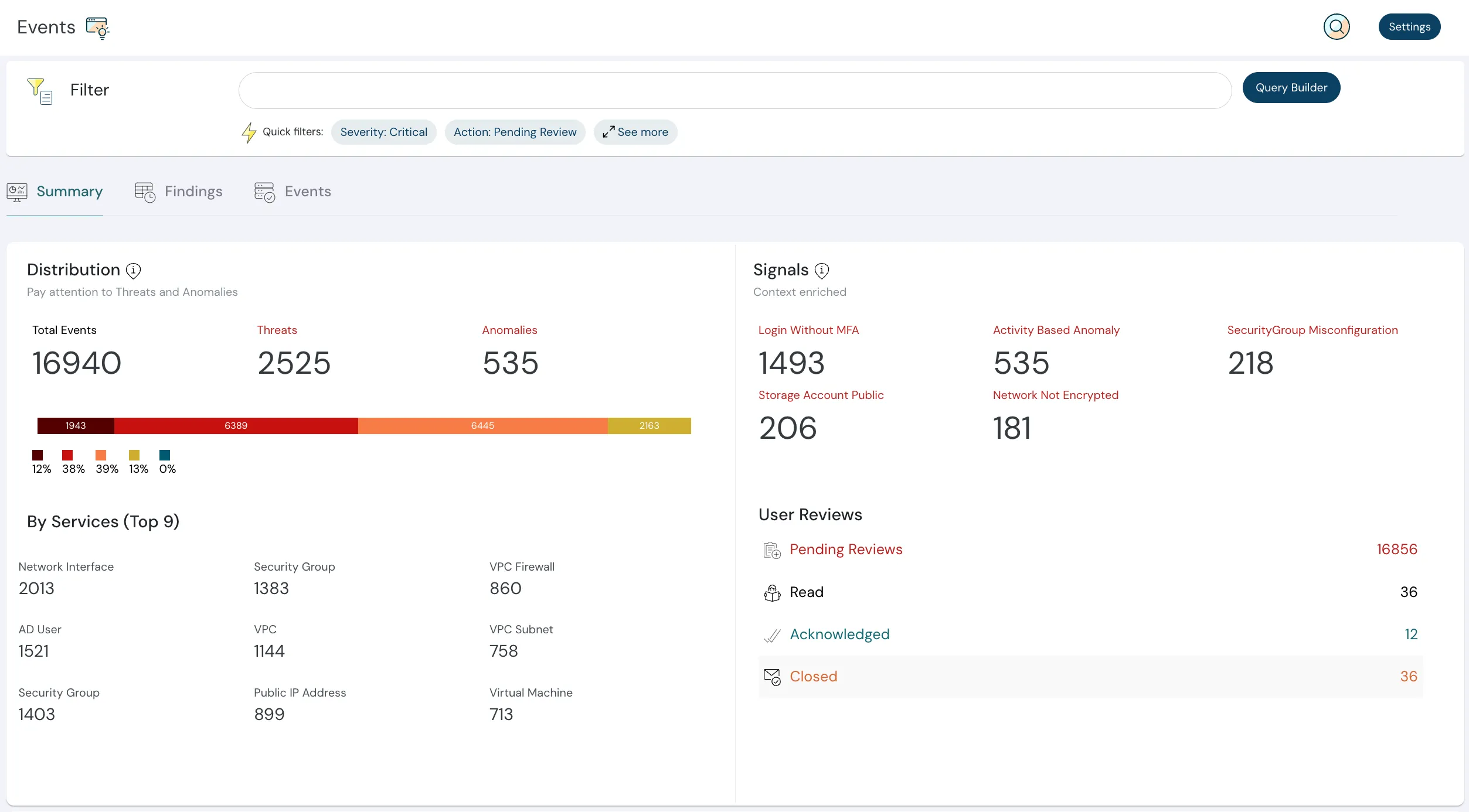 Crucially, look for tooling that does not just list problems but tells you specifically how to fix them, because you do not have engineers to research each finding. “Run this command” is worth ten times more than “this is misconfigured” when the person fixing it is not a specialist.
2. Understand Who Can Do What (Identity)
Next, identity. Even a small number of users, ten or fifteen people with console access, represents real risk if nobody has mapped what each of them can actually do. This is what CIEM is for: find out effective access (what each identity can really do once all policies resolve), identify permissions that have never been used, and trim the dormant ones. Unused permissions are pure downside: they widen the blast radius of a compromised account for no operational benefit. Right-sizing them with CIEM is low-risk, high-value work a lean team can do without an identity engineer.
3. Verify the Code You’re Running (Code Security)
If your applications were built by a partner or generated by AI assistants, and for lean teams they very often were, you are running code you did not write and probably never security-reviewed. Scan it: static analysis for vulnerabilities, secret scanning for hardcoded credentials, dependency checks for known CVEs. If you have any ongoing development, put the check at the pull request so nothing insecure merges silently. The origin of the code does not reduce your responsibility for it.
4. Watch What’s Actually Running (Runtime)
Once posture, identity, and code are addressed, add runtime visibility. Posture tells you what could go wrong; runtime tells you what is happening now, inside your workloads and on the hosts beneath them. This is where an exploited application actually becomes visible. Runtime protection typically requires an agent, an honest trade-off, but for workloads handling sensitive data with no other runtime visibility, it is the layer that turns a silent compromise into an alert.
5. Prioritise by Attack Path, Not by List Length
By this point you will have findings across posture, identity, code, and runtime, and a lean team cannot fix all of them. The final shift is in how you prioritise. Instead of working a flat list sorted by severity, think in attack paths: which findings chain together into an actual route to your sensitive data, and which one or two fixes break the most of those routes at once. “Fix these two things and close seven paths” is the only prioritisation model that respects how little time a lean team has.
What to Deliberately Defer
Part of triage is deciding what not to do yet. A lean team should generally defer the advanced, high-maintenance capabilities until the fundamentals above are in place, elaborate detection engineering, custom threat hunting, complex compliance automation for frameworks you are not yet obligated to. These matter, but they consume bandwidth you need for the basics, and the basics deliver more risk reduction per hour. Sequence beats simultaneity when the team is small.
Choosing Tools for a Lean Team
Two properties matter more than feature checklists when you have no dedicated staff:
- Time to value. Can you connect and see findings in minutes, agentlessly, without a deployment project? A small team cannot afford a tool that takes months to stand up.
- Actionability. Does it tell you exactly how to fix what it finds? A tool that generates work you cannot action is a tool that generates a backlog and alert fatigue.
Consolidation also matters more for lean teams than for large ones. Four separate tools for four problems means four dashboards, four integrations, and four things to maintain, all falling on the same overstretched person. A single platform that spans posture, identity, code, and runtime, and shows how findings connect, reduces not just cost but cognitive load. This is precisely the journey one team describes in moving from native and open-source tools to a correlated CNAPP for a lean security team.
The Bottom Line
A lean team cannot out-resource its cloud security problem, so it has to out-sequence it. Get visibility first. Fix misconfigurations, right-size identities, verify the code you inherited, then watch it at runtime, and prioritise everything by the paths that actually reach your data. Consolidation helps too, a unified CNAPP spanning these layers means fewer dashboards for an already-stretched team. Do the high-leverage basics well before reaching for the advanced work. For a CISO with no dev team, disciplined sequencing is not a compromise; it is the strategy.
People Also Read
- What is CSPM (Cloud Security Posture Management)?
- What is CIEM (Cloud Infrastructure Entitlement Management)?
- What is CNAPP (Cloud-Native Application Protection Platform)?
- What Is an Attack Path, and Why Isolated Security Findings Mislead You
- Is Your Partner-Built Application Actually Secure? A CISO’s Checklist
- CNAPP vs CSPM: Which Do You Need?