Customer Snapshot
| Attribute | Details |
|---|---|
| Industry | SaaS Platform |
| Cloud Environment | AWS (multiple accounts) |
| Workloads | ECS-heavy, with EC2 and EKS |
| Code & CI/CD | GitLab (SaaS), GitLab Pipelines |
| Existing Tools | AWS Trusted Advisor, Security Hub, open-source scanners |
| Team Size | 4 people; DevOps fixes what breaks |
| Focus Area | Consolidation — one correlated view instead of several fragmented ones |
The Situation: Every Tool Is Doing Its Job, and It’s Still Not Enough
Nothing this team had deployed was wrong. Trusted Advisor was checking best practices. Security Hub was aggregating findings. An open-source scanner was running periodic audits. Each tool did what it was built to do. And the team of four was still overwhelmed, because none of these tools talk to each other, and none of them alone answers the question a small team actually needs answered: of everything flagged across all these places, what should we fix today?
This is the tool-sprawl pattern almost every growing company eventually recognizes: three or four free or open tools, each competent at its narrow job, adding up to no coherent picture. Findings live in separate dashboards with separate severity models. Nobody can correlate a cloud misconfiguration with the identity that can reach it, or with the code that runs behind it. The team spends real hours reconciling instead of remediating — and reconciliation does not reduce risk.
The Core Tension
More tools should mean more coverage. In practice, uncorrelated tools mean more noise without more insight, because each tool sees a slice of the environment and none of them sees the relationships between slices. For a 4-person team, the constraint is not tool count — it is attention. The tension is between “we should add more coverage” and “we cannot afford another disconnected dashboard.” What the team actually needed was not another tool. It was one correlated view across everything the existing tools were only partially seeing.
Where the Gaps Were
Fragmented Severity, No Shared Context
Trusted Advisor has its own severity model. Security Hub aggregates but does not resolve conflicting priorities across sources. The open-source scanner has its own scoring again. A misconfiguration that is genuinely dangerous because of who can reach it looks the same as a low-risk one, because none of these tools factor in identity or blast radius. Three tools, three opinions, zero correlation.
No View That Spans Code, Cloud, and Identity
The team was also GitLab-based with growing ECS workloads, but code findings, cloud posture, and identity all lived apart. A vulnerability in a repository, the ECS task it deploys to, and the identity that task assumes were three separate facts in three separate places — never assembled into the single attack path they actually represent.
The Manual Reconciliation Tax
Every audit cycle, every incident review, and every “what should we prioritize this sprint” conversation required someone to manually pull findings from each tool and cross-reference them by hand. For a team of four, this is not a one-time cost — it recurs every cycle, and it consumes exactly the senior time that should be spent reducing risk instead of assembling a picture of it.
The False Choice: Buy Everything, or Keep Deferring
Faced with this, the instinct is often either to procure a large, all-in CNAPP platform and turn on every module at once, or to keep deferring because the decision feels too big for a team this size. Neither serves a 4-person team well. A wall-to-wall rollout is disruptive and slow to show value; indefinite deferral leaves the fragmentation exactly as it is.
How Cloudanix Addresses This Situation
One Asset Graph, Not Another Silo
Cloudanix is a CNAPP+: CSPM, CIEM, Code Security, and Compliance running on a single asset graph rather than as separate products glued together after the fact. Connecting AWS accounts and the GitLab organization brings cloud posture, identity, and code findings into one correlated model from day one — the fragmentation the team lived with across Trusted Advisor, Security Hub, and open source is resolved by construction, not by manual reconciliation.
Contextual Severity Replaces Three Competing Scoring Models
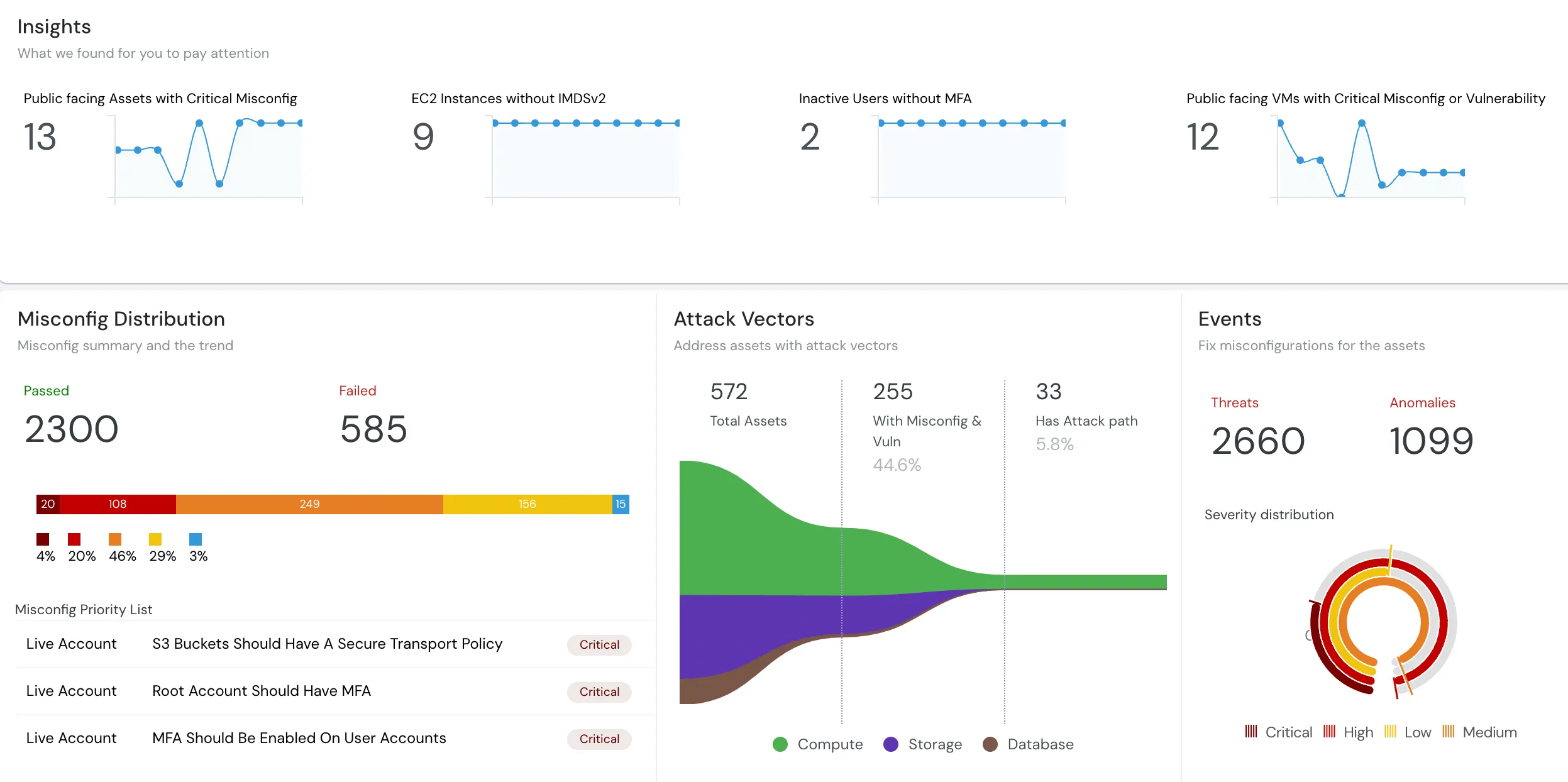
Instead of three tools with three severity opinions, Cloudanix recomputes severity per asset from the graph — factoring exposure, environment, data sensitivity, and identity — and shows its reasoning. The team gets one ranked list instead of three lists to cross-reference, and the ranking reflects real blast radius rather than a rule’s fixed label.
Land Narrow, Expand on Your Own Timeline
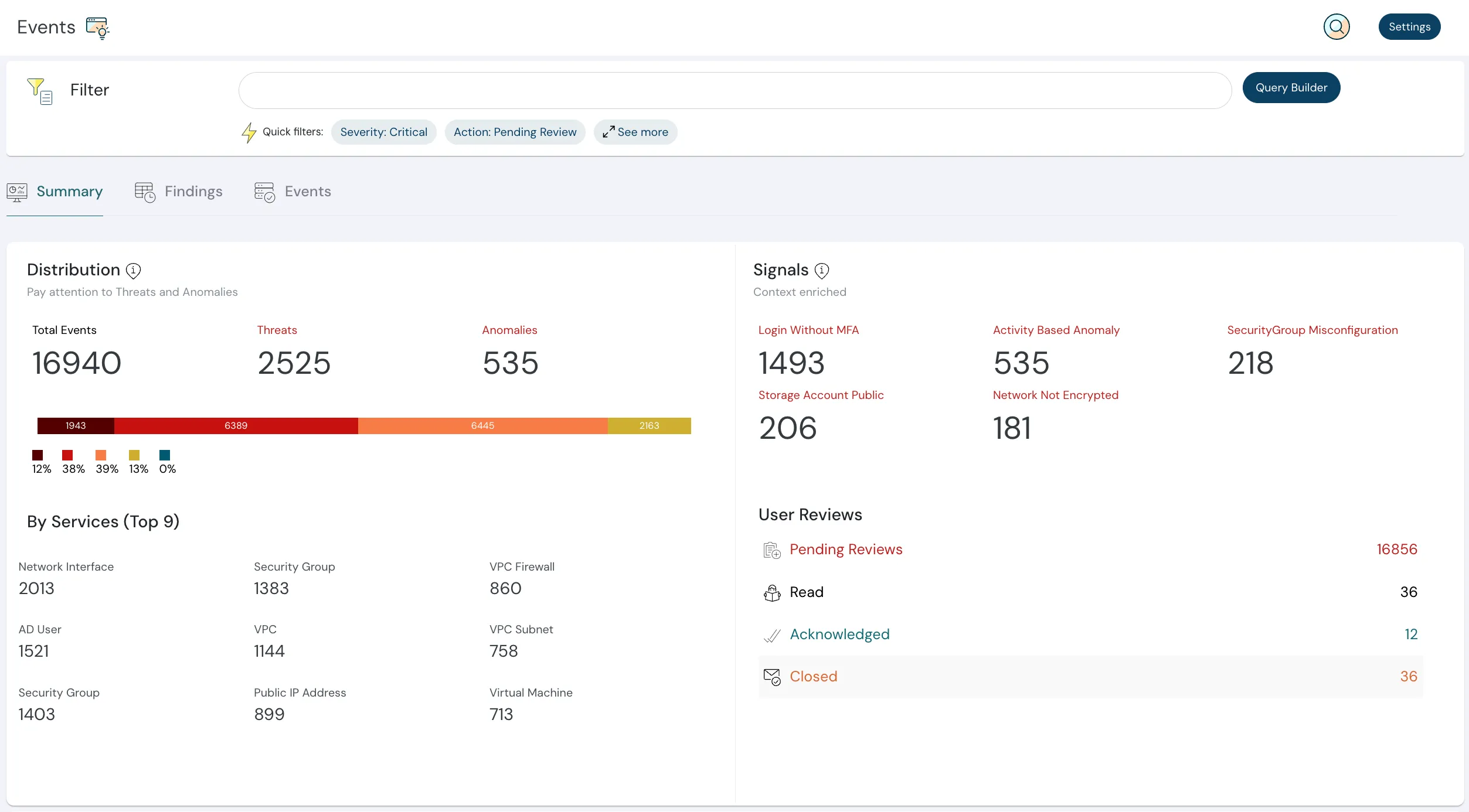
Consolidation does not have to mean an all-at-once rollout. The practical path for a 4-person team is to land on CSPM and Compliance first — replacing Trusted Advisor and the open-source scanner’s job with continuous, unified, mapped coverage — and see value within 30 minutes of connecting the first account. CIEM (identity visibility) and Code Security (GitLab scanning) activate independently, whenever the team is ready, on the same platform and graph. Nothing is all-or-nothing, and nothing requires a big-bang cutover.
Identity Correlated With Posture From the Start
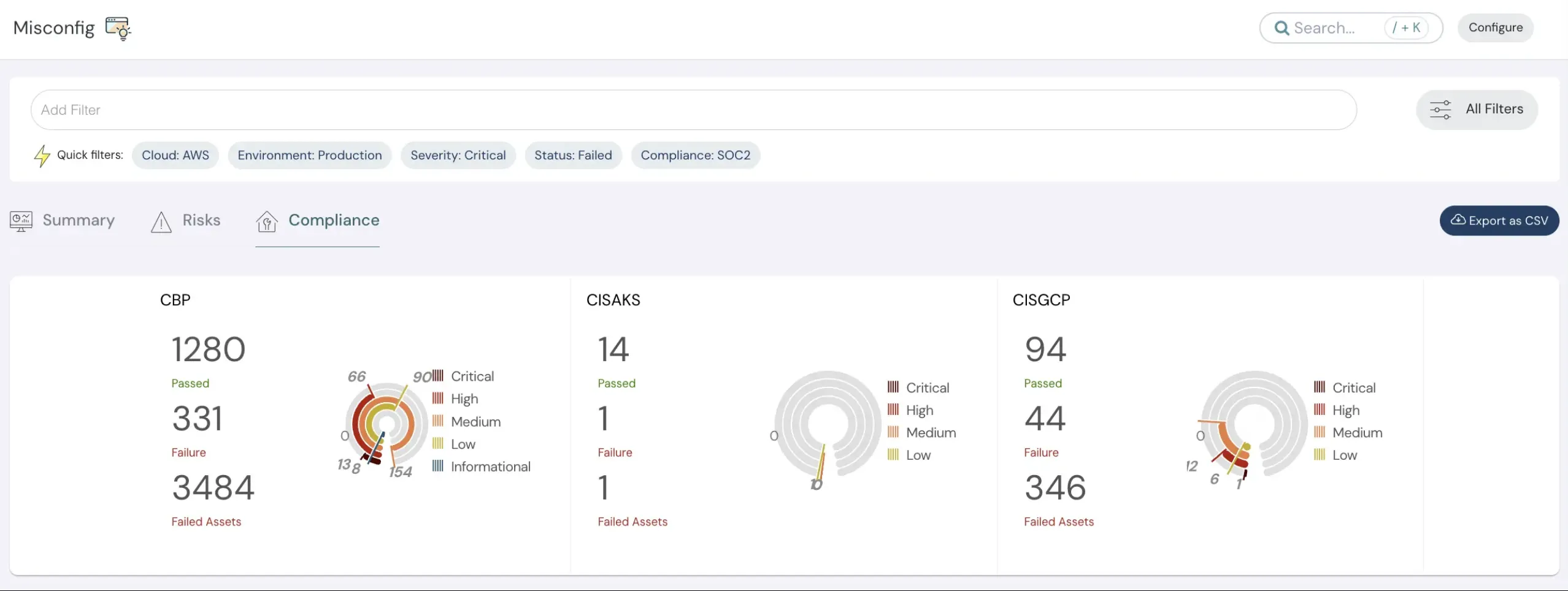
Because identity and posture share the same graph, the team does not need a separate identity project to get identity-aware severity. The moment CIEM is turned on, the misconfigurations already being tracked get more accurate, blast-radius-informed rankings — closing the exact gap that fragmented tools could never close.
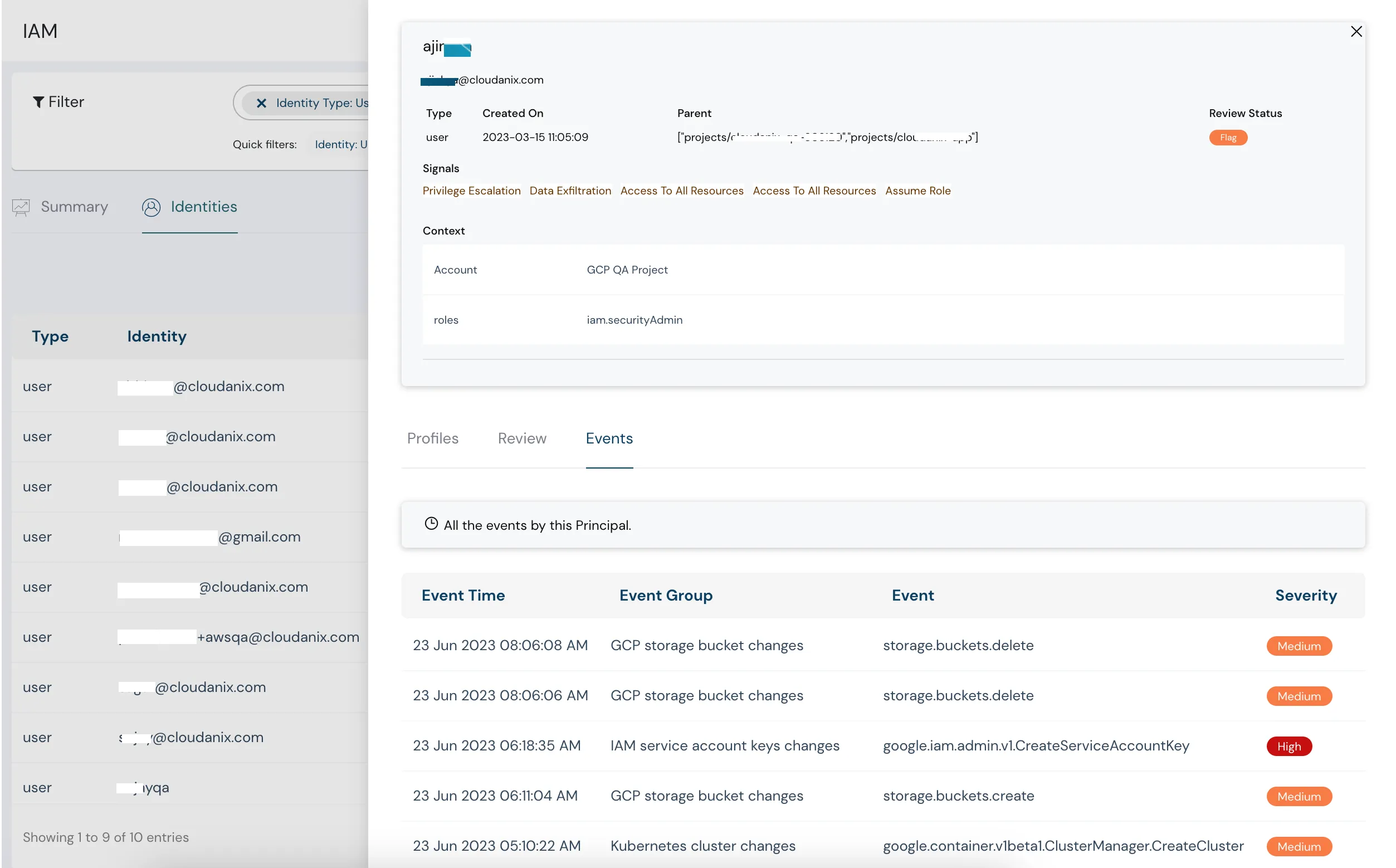
Code Findings on the Same Graph as Cloud
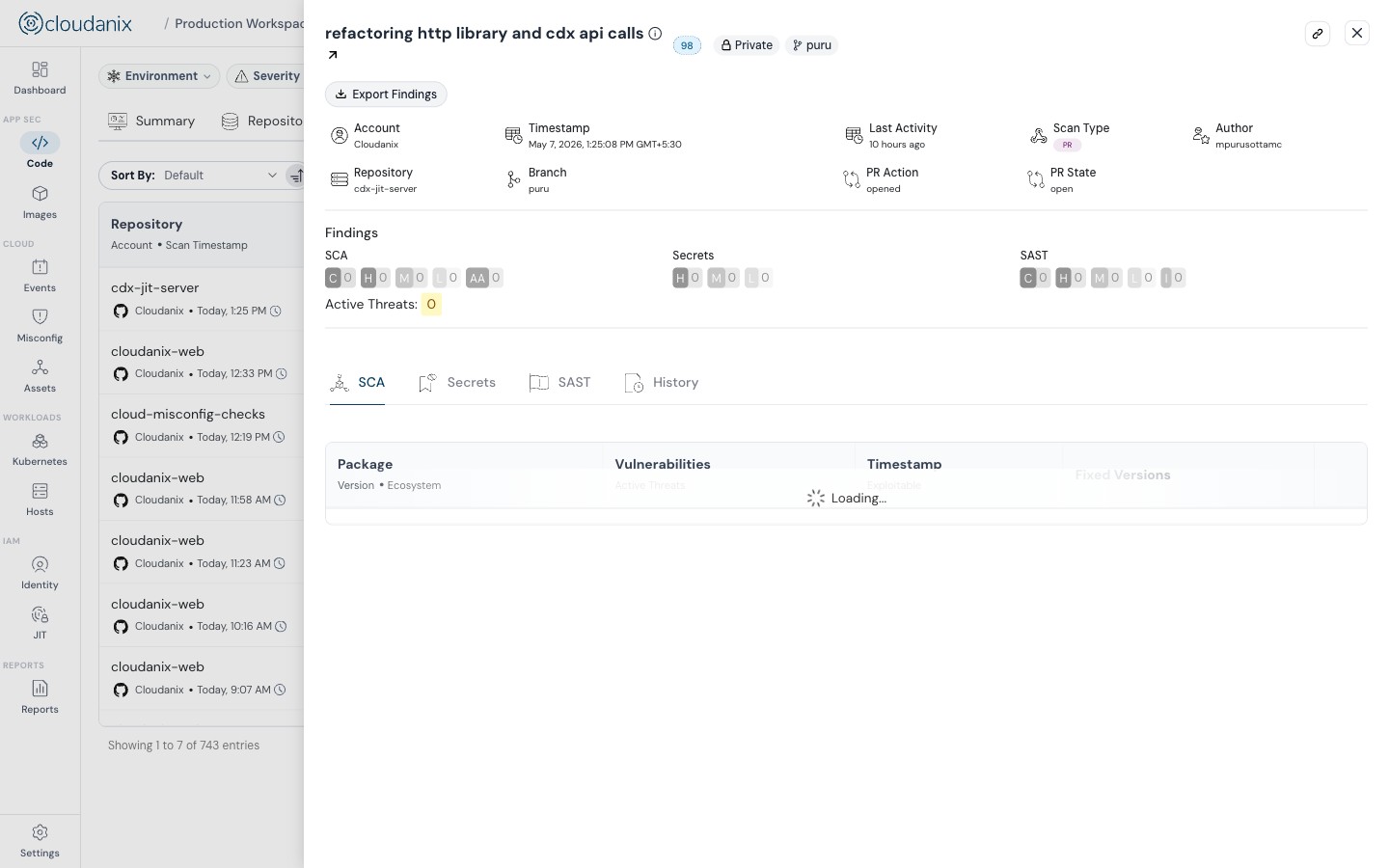
For the team’s GitLab-based, ECS-heavy stack, Code Security findings correlate with cloud posture rather than living in a fourth silo. A vulnerability, the image it builds, and the ECS task it runs in are visible as one connected path — the correlation that separate scanners can never produce.
One Set of Integrations, Not Three
Findings — regardless of source module — flow into the team’s existing Jira workflow, with Slack and PagerDuty available. Adaptive notifications with auto-snooze prevent repeat alerts from burying the team. Instead of checking three tools and reconciling by hand, the team works from one queue, in the tools it already uses to get work done.
Platform Impact
| Dimension | Fragmented (Native + Open Source) | Correlated (Cloudanix CNAPP+) |
|---|---|---|
| Severity models | Three, disagreeing | One, identity- and context-aware |
| Cloud + identity | Separate | Same graph, correlated from day one |
| Code + cloud | Separate | Same graph, path-aware |
| Reconciliation work | Manual, every cycle | Eliminated — one correlated view |
| Rollout | All-at-once or indefinitely deferred | Land narrow, expand independently |
| Workflow | Findings scattered across tools | One queue into Jira/Slack/PagerDuty |
| Time to first value | — | 15–30 minutes per account |
The Right-Sized Path to Consolidation
For a lean team, the mistake is rarely choosing the wrong individual tool — Trusted Advisor, Security Hub, and open-source scanners are all reasonable choices in isolation. The mistake is assuming that adding them together produces a security program. It produces three narrow views and a permanent reconciliation tax, and neither of those things scales with a team of four.
The fix is not more tooling. It is one platform, one asset graph, and a rollout that starts where the pain is sharpest — CSPM and compliance, in this team’s case — and expands to identity and code on its own schedule. Consolidation, done this way, is not a disruptive migration. It is the quiet retirement of a reconciliation problem the team never has to solve by hand again.
Key Outcomes
- ✅ One Asset Graph: Cloud, identity, and code correlated from day one, not bolted together.
- ✅ One Severity Model: Contextual, identity-aware ranking replaces three competing scores.
- ✅ Land Narrow, Expand Freely: Start with CSPM + Compliance; add CIEM and Code Security when ready.
- ✅ No Manual Reconciliation: Correlation is structural, not a recurring project.
- ✅ Existing Workflow Preserved: Jira, Slack, and PagerDuty — not a fourth dashboard.
- ✅ Fast First Value: 15–30 minutes to first findings per account.
Running Trusted Advisor, Security Hub, and Open Source in Parallel?
If your 4-person team is reconciling findings across native AWS tools and open-source scanners by hand, the fix isn’t another dashboard — it’s one correlated platform. Cloudanix consolidates CSPM, CIEM, and Code Security on a single asset graph, and you can land narrow and expand on your own timeline.
Book a Free Assessment to see your environment correlated in one view in under 30 minutes.
Related Resources
- From Tool Sprawl to a Single Dashboard: E-Commerce Cloud Security
- CSPM for ECS-Heavy AWS Workloads: Small Security Teams
- What is CNAPP (Cloud Native Application Protection Platform)?
- CSPM vs CNAPP: Navigating Cloud Security Evolution
- Cloud Security for Lean Teams: What a CISO With No Dev Team Should Do First