

Most security tools are very good at producing findings. They will tell you a security group is too permissive, an IAM role has more permissions than it uses, an EC2 instance is exposed to the internet, and a database contains sensitive data. Each of these arrives as its own alert, with its own severity score, in its own row of a long list.
The problem is that attackers do not experience your environment as a list. They experience it as a set of connections. An attack path is the chain of those connections, and understanding it is the difference between drowning in findings and knowing what to actually fix.
The Core Idea: Severity Is Contextual
Consider four findings, each rated “medium” on its own:
- An EC2 instance is reachable from the internet.
- The application running on it has a dependency with a known vulnerability.
- The instance runs under an IAM role with broader permissions than it needs.
- That IAM role can reach a database containing sensitive records.
Reviewed individually, each is a medium-severity item that competes with dozens of others for attention. A team prioritising by isolated severity might get to any of them eventually, or might not.
But chain them and the picture changes completely. An attacker reaches the internet-facing instance, exploits the known vulnerability to gain execution, assumes the over-permissioned role, and uses it to read the sensitive database. Four “medium” findings compose into a direct, high-severity route from the public internet to your most sensitive data. The severity of the chain is nothing like the severity of any single link.
This is the central insight: the risk is in the relationships, not in the individual findings. A tool that only scores findings in isolation will systematically under-rate the ones that matter most, because it cannot see what they connect to. Scoring by contextual severity instead of a flat per-rule label is what surfaces the chains that matter — the same principle behind correlating identity with misconfigurations so contextual severity reflects the real IAM graph.
What an Attack Path Actually Is
An attack path is a route through your environment that an attacker could traverse to reach a valuable target, built by connecting individual weaknesses into a sequence. Constructing it requires understanding the relationships between resources:
- Which assets are reachable from the outside (network exposure).
- What weaknesses exist on those assets (vulnerabilities, misconfigurations).
- What identities and permissions those assets carry (IAM roles, privileges).
- What those identities can reach (data stores, other services, additional privileges).
- Where the sensitive data actually lives (the crown jewels the path leads to).
To see attack paths, you need a model of your environment as a cloud security graph, resources as nodes, relationships as edges, not as a flat list of findings. The path is a route through that graph, which is why attack path analysis depends on relationships rather than isolated scores, and why attack path mapping closes exploitable routes end to end — as in securing healthcare applications from partner code to attack-path closure.
Why Prioritising by Isolated Severity Fails
It Buries the Chains That Matter
When every finding is scored on its own, the ones that form a dangerous chain look no more urgent than the ones that lead nowhere. An internet-exposed instance with no path to sensitive data and an internet-exposed instance that begins a chain to your patient database might carry the same isolated severity. Treating them the same is a misallocation of limited attention.
It Produces an Unactionable Backlog
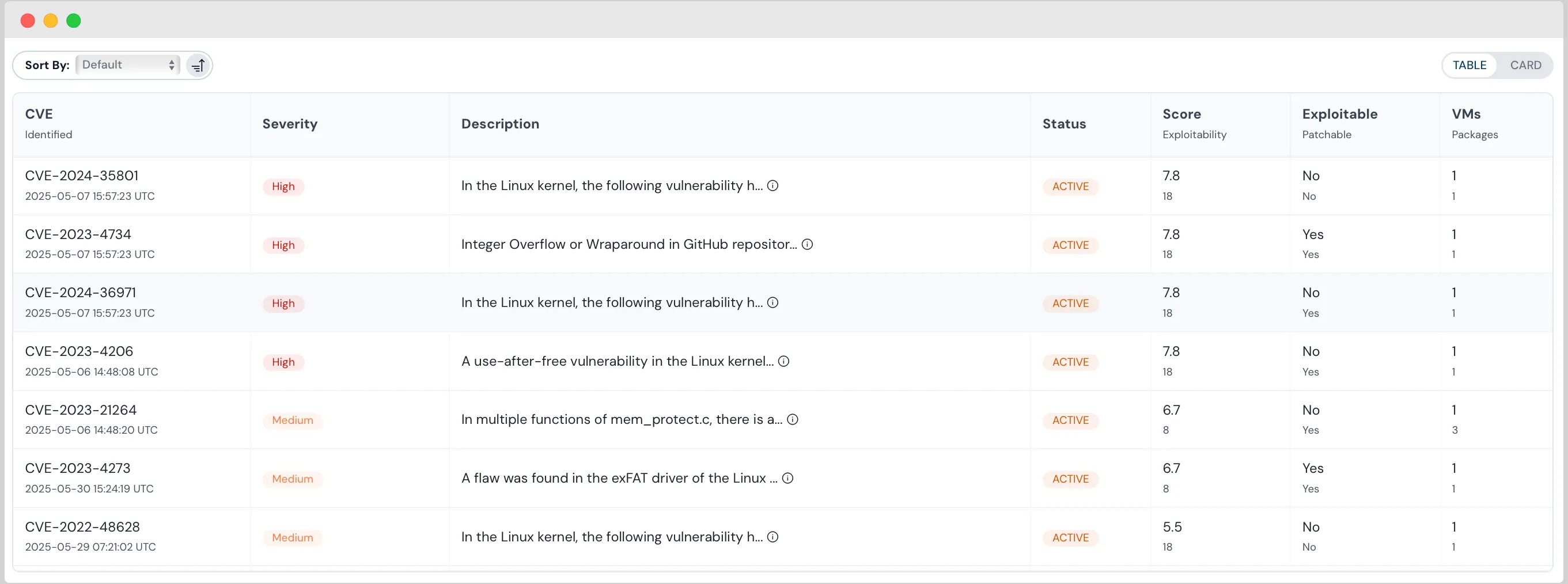
A list of hundreds of findings sorted by CVSS score is not a plan; it is a source of fatigue. Teams work down from the top, and because the scores do not reflect real reachability, they spend effort on findings that are individually severe but practically unreachable, while a chain of medium findings quietly persists.
It Misses the Efficiency of Chokepoints
Here is the most useful consequence of thinking in paths: a single fix often breaks multiple chains. In the four-finding example, tightening the one over-permissioned IAM role can neutralise the path regardless of the internet exposure or the vulnerability, because you have removed a link every version of the attack depended on. Isolated-severity prioritisation can never surface this, because it does not know the four findings were ever related. Path-based thinking reveals the one or two changes that collapse the most routes at once.
From “Fix Everything” to “Fix the Right Two Things”
The practical value of attack-path analysis is prioritisation. No team, and certainly no lean team, can fix everything. The question is not “what are all my findings?” but “which few changes most reduce my actual risk?”
Attack paths answer that question directly. Instead of a backlog sorted by a score that ignores context, you get a view of the exploitable routes to your sensitive data and the specific chokepoints that close the most of them. This is also why a unified CNAPP view across code, cloud, identity, and workload matters, the graph has to span every layer to trace a real path. “Fix these two IAM permissions and you eliminate seven paths to sensitive data” is a fundamentally more useful statement than “you have 200 medium findings.”
People Also Read
- What is Attack Path Analysis?
- What is CNAPP (Cloud-Native Application Protection Platform)?
- What is CSPM (Cloud Security Posture Management)?
- CSPM vs CNAPP: Navigating Cloud Security Evolution
- Comprehensive Guide to Threat Modeling
- Cloud Security for Lean Teams: What a CISO With No Dev Team Should Do First
The Bottom Line
Isolated findings mislead you because attackers do not attack in isolation. They compose weaknesses into paths. A single finding’s severity tells you almost nothing about the risk it contributes until you know what it connects to. If your prioritisation is a list sorted by individual scores, you are optimising for the wrong thing. Map the paths, find the chokepoints, and fix the links that break the most routes to what matters.