
Customer Snapshot
| Attribute | Details |
|---|---|
| Industry | SaaS Platform |
| Cloud Environment | AWS (multiple accounts) |
| Identity Model | Read and admin users across accounts via IAM Identity Center |
| Pain | Alert fatigue; no way to know what to look at first |
| Team Size | Small security team; DevOps handles remediation |
| Focus Area | Prioritization — turning findings into a ranked plan |
The Situation: Everything Is Critical, So Nothing Is
The team’s problem was not a lack of findings. It was a flood of them, all wearing the same badge. Their tooling assigned a fixed severity per rule: a misconfigured internal-only dev resource carried the same “Critical” as a public-facing production data store, because the rule that fired was the same rule. The result was a wall of undifferentiated alerts and a small team asking the only question that mattered — what do we look at first? — with no way to answer it.
This is the defining failure of flat, per-rule severity. It treats a misconfiguration as if its danger were an intrinsic property of the rule, independent of the asset it sits on. But a security team’s real question is never “is this rule violated?” It is “does this violation, on this asset, in this environment, reachable by these identities, actually put us at risk?” Flat severity cannot answer that, so it answers a different question loudly and repeatedly, and the team burns out triaging noise.
The Core Tension
Severity that ignores identity is severity that ignores blast radius. A misconfiguration reachable only by a locked-down internal role is not the same risk as the identical misconfiguration reachable by a broadly-privileged identity or exposed to the internet. The tension is that most CSPM computes severity from the rule alone, while real risk is a function of the asset’s context — and the single most important part of that context is who can reach it. Getting prioritization right therefore requires correlating the IAM graph with posture, not scoring findings in isolation.
Where the Gaps Were
Flat Severity Produces a To-Do List, Not a Risk Model
When every violation of a given rule scores the same, the output is a list sorted by rule, not by risk. A team working top-to-bottom spends its first hours on findings that may be genuinely low-risk while a truly dangerous one sits lower in the list because its rule happens to be rated “Medium.” The severity label actively misleads.
Identity Was Missing From the Severity Calculation
The information that would fix this — which identities can reach the misconfigured asset, and how privileged they are — existed in the environment but was not part of how severity was computed. Posture lived in one place, identity in another, and the two never met at the moment of scoring. So the calculation that most needed identity context was the one that never saw it.
No “Why” Behind the Number
Even when a tool did rank something highly, it did not explain why. For a small team that has to defend its prioritization to engineering and to leadership, an unexplained severity score is hard to act on and harder to justify. “Fix this first because the tool said Critical” is not an argument.
How Cloudanix Addresses This Situation
Severity Recomputed Per Asset, From a Security Graph
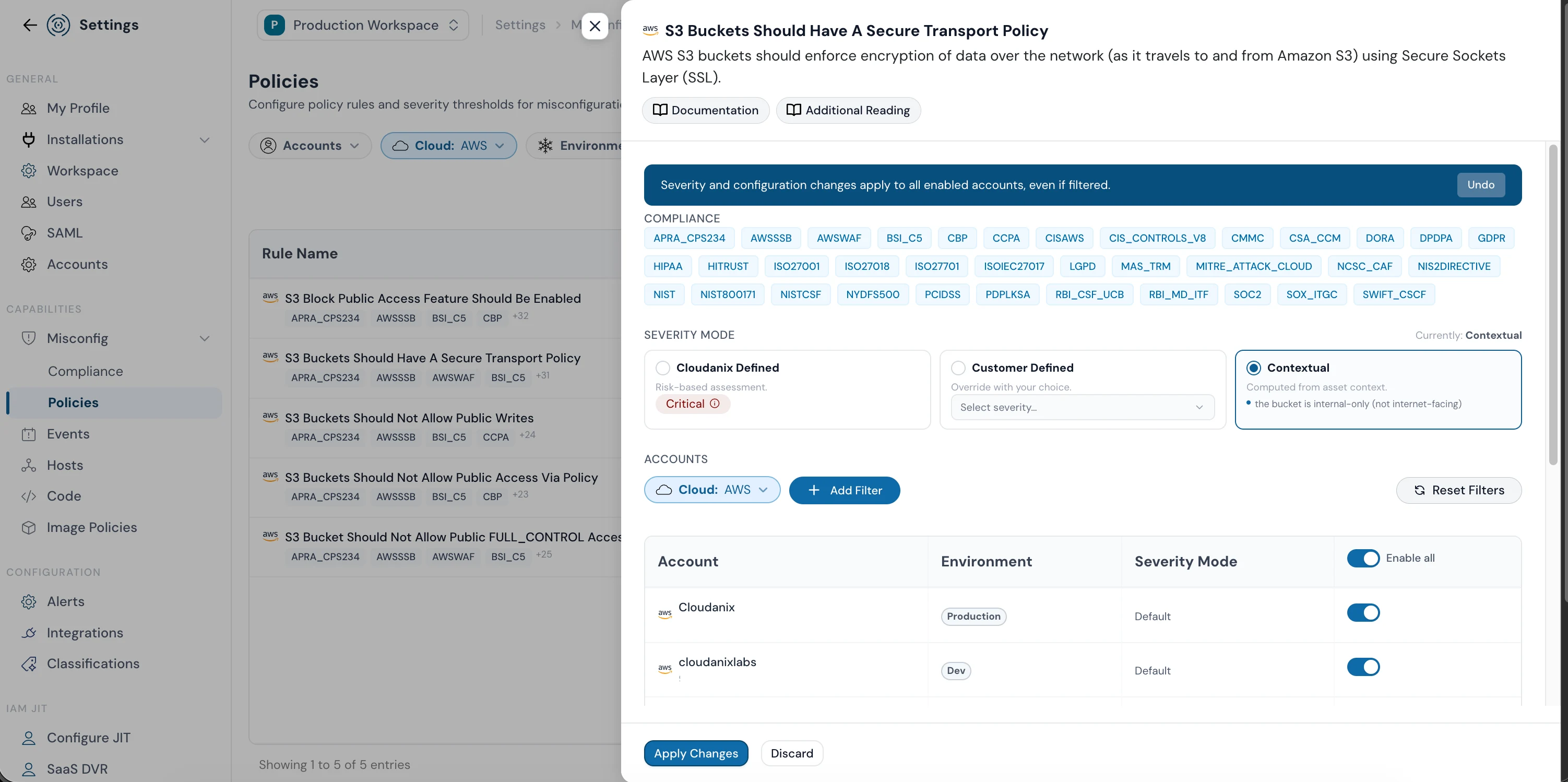
Cloudanix does not assign a fixed severity per rule. It recomputes severity per asset from a security graph that considers exposure (is it internet-facing?), environment (production vs. dev?), data sensitivity (what does it hold?), and identity (who can reach it, and how privileged are they?). The same rule violation can land as low on an isolated internal resource and critical on an exposed, broadly-reachable one — because the risk genuinely differs.

The IAM Graph as a First-Class Input
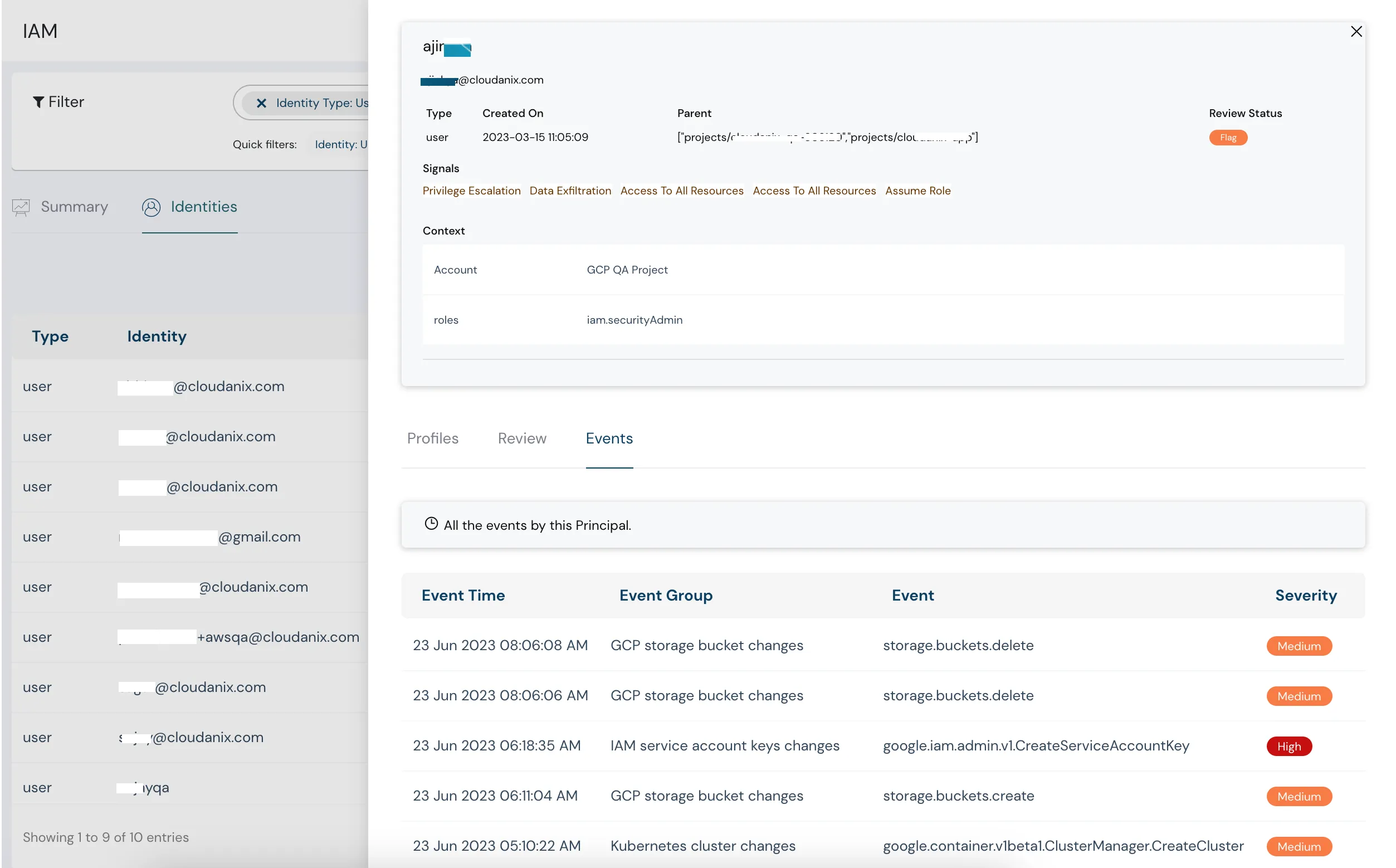
Identity is not an afterthought bolted onto posture — it is a primary input to the severity calculation. Because Cloudanix runs CSPM and CIEM on one platform and one asset graph, the effective access of every identity is known and factored in. A misconfiguration reachable by a broadly-privileged identity is elevated; the same misconfiguration reachable only by a tightly-scoped role is de-prioritized. This is the correlation the team was missing: posture and identity resolved together, at the point of scoring.
Severity That Shows Its Reasoning
Every contextual severity comes with the why. The team can see which factors drove the score — public exposure, a production environment, sensitive data, a reachable over-privileged identity — rather than a bare number. This does two things: it lets the team trust the ranking, and it gives them a defensible answer when engineering or leadership asks why a given item is at the top of the queue.
From a Wall of Critical to a Ranked Plan
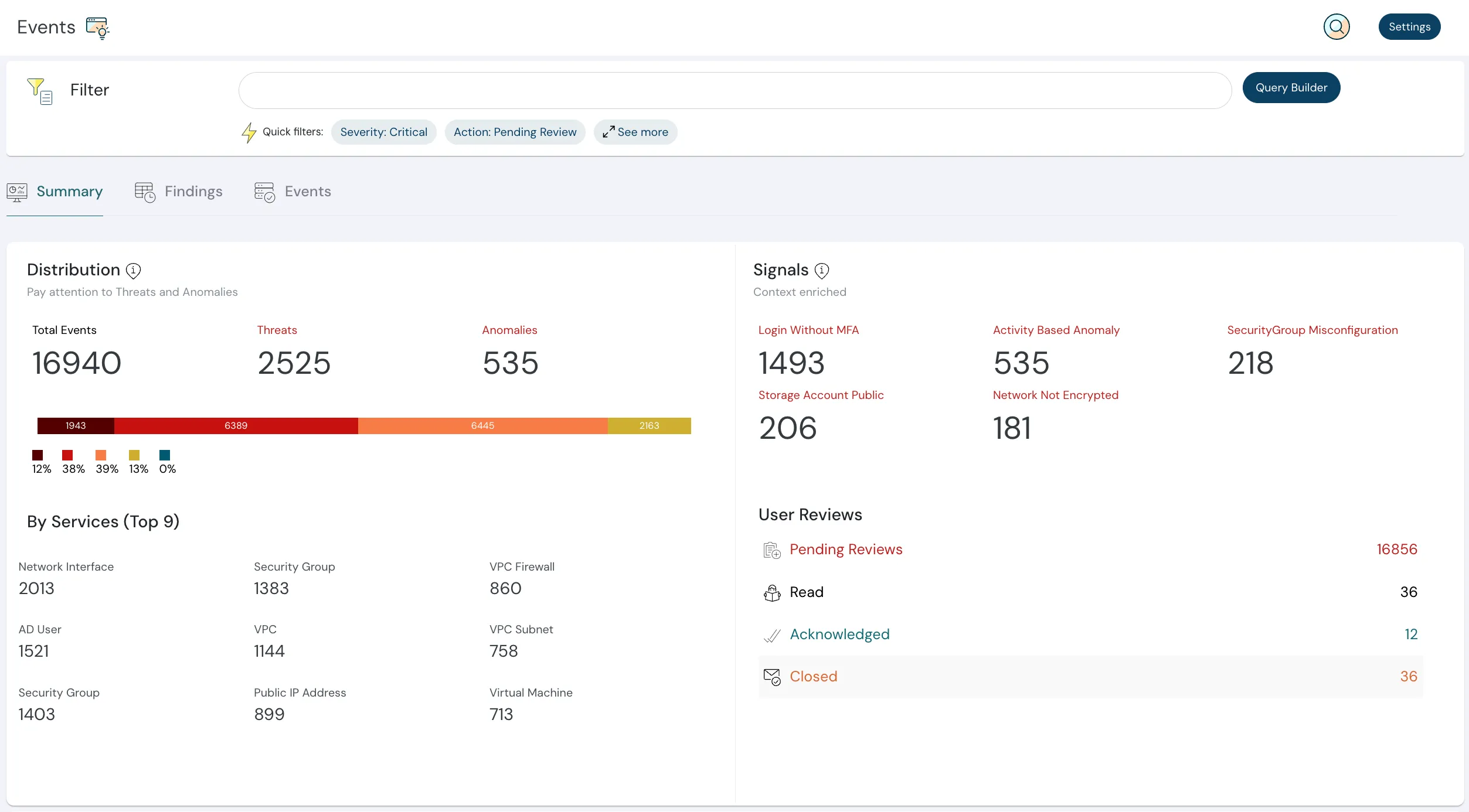
The practical outcome is that the flat wall becomes a slope. Findings are ordered by actual risk, the truly dangerous combinations rise to the top, and the internal-only, unreachable, low-sensitivity items settle where they belong. Noise is reduced without hiding anything — nothing is deleted, it is simply ranked honestly. For a small team, this converts “we can’t keep up with the alerts” into “we know exactly what to fix first, and why.”
Platform Impact
| Dimension | Flat Per-Rule Severity | Identity-Aware Contextual Severity |
|---|---|---|
| Severity basis | The rule alone | Exposure + environment + data + identity |
| Identical rule, different asset | Same score | Scored by real risk |
| Identity in the calculation | Absent | First-class input |
| Output | To-do list sorted by rule | Ranked plan sorted by risk |
| Justification | “The tool said Critical” | Reasoning shown per finding |
| Effect on the team | Alert fatigue | Clear first-things-first |
Prioritization Is the Product
For a small team, the value of a security tool is not how many findings it can produce — anyone can produce findings. The value is how confidently the team can decide what to do next. Flat severity fails at exactly that, because it scores the rule and ignores the world the rule lives in. And the most decisive part of that world is identity: a misconfiguration is only as dangerous as the reach of whoever can touch it.
Correlating the IAM graph with posture is what makes severity mean something. It is the difference between a wall of Critical badges that paralyzes a team and a ranked, explained list that lets four people secure a large environment. The findings were never the hard part. Knowing which one matters — and being able to say why — is the whole job, and it requires identity and posture to be scored together, not apart.
Key Outcomes
- ✅ Per-Asset Severity: Recomputed from exposure, environment, data, and identity.
- ✅ IAM Graph as Input: Who can reach an asset directly shapes its severity.
- ✅ Reasoning Shown: Every score explains the factors behind it.
- ✅ Noise Reduced, Nothing Hidden: Findings ranked honestly, not suppressed.
- ✅ Defensible Prioritization: A ranking the team can justify to engineering and leadership.
- ✅ One Platform: CSPM and CIEM on a single asset graph, scored together.
Drowning in Flat, Undifferentiated Findings?
If your CSPM badges an internal dev resource the same as a public production data store, your team is triaging noise instead of reducing risk. Cloudanix recomputes severity per asset using the IAM graph — so the findings that actually matter rise to the top, with the reasoning shown.
Book a Free Assessment to see identity-aware contextual severity on your own AWS environment in under 30 minutes.
Related Resources
- What is an Attack Path, and Why Isolated Findings Mislead You
- CIEM for Multi-Account AWS: Making Sense of Read and Admin Identities Without a JIT Rollout
- Top 10 Challenges of Cloud Security Posture Management
- What is CSPM (Cloud Security Posture Management)?
- How to Use CSPM to Detect and Remediate Cloud Misconfigurations