Customer Snapshot
| Attribute | Details |
|---|---|
| Industry | SaaS Platform |
| Cloud Environment | AWS (multiple accounts, grown organically) |
| Governance | No landing zone, no AWS Control Tower |
| Identity | Mix of IAM Identity Center and per-account IAM |
| Team Size | Small security team; DevOps handles remediation |
| Focus Area | Unified posture and cross-account visibility |
The Situation: Accounts Grew Faster Than Governance
This is one of the most common shapes in mid-market SaaS. The company moved fast. New AWS accounts were created as they were needed — one for a new environment, one for a new team, one for an experiment that became production. Each account was set up independently, with whatever IAM policies, logging config, and guardrails made sense at the time.
What never happened was the retroactive imposition of a centralized governance model. There is no landing zone. There is no AWS Control Tower. There is no standardized account baseline, no organization-wide guardrails, and no single place to see the aggregate security posture. Each account’s security is effectively independent, and the only person who knows how any given account is configured is whoever set it up.
None of this is a failure. It is the natural result of growing quickly. But the security team now has to secure an environment that was never designed to be secured centrally — and the standard advice (“set up a landing zone first”) is a months-long re-architecture project the team does not have the bandwidth to run before it can start seeing risk.
The Core Tension
The team needs unified, cross-account security posture now. The conventional path to that — Control Tower, a landing zone, standardized baselines — is a large infrastructure project that must complete before it delivers value. The tension is the sequencing: the team cannot afford to re-architect the entire AWS organization before it is allowed to know where its risk is. It needs visibility that works with the environment as it is today, not as it should be after a six-month project.
Where the Gaps Were
No Centralized Baseline Means No Consistency
Without Control Tower or a landing zone, each account was configured on its own terms. The practical result:
- Inconsistent IAM policies across accounts — the same role name may grant different permissions in different accounts.
- No shared security baseline — a control applied in one account is not guaranteed anywhere else.
- No centralized logging strategy — CloudTrail and log configuration vary account to account.
- No enforcement mechanism — nothing prevents the next account from being set up differently again.
No Aggregate View
Each account is an island. There is no single view that answers “what is our posture across all accounts?” To assess the environment, someone logs into each account in turn, checks it manually, and tries to hold the whole picture in their head. Systemic issues — a misconfiguration that repeats in every account because no baseline ever prevented it — are invisible, because nobody is looking at all accounts at once.
Identity Sprawl on Top of Account Sprawl
Identity mirrors the account chaos. Some teams use IAM Identity Center; others still use per-account IAM users. There is no unified view of who can access what across the organization. When accounts and identities both grew organically, the blast radius of any single compromised credential is genuinely unknown.
How Cloudanix Addresses This Situation
Connect Accounts As They Are — No Landing Zone Required
Cloudanix connects to each AWS account via a read-only IAM role. There is no Control Tower prerequisite and no landing zone prerequisite. You do not restructure the organization before you can see your posture — you connect the accounts in their current state and Cloudanix surfaces findings across all of them immediately.
This is the key sequencing change. Instead of “re-architect, then get visibility,” it is “get visibility now, then use it to decide what to standardize.” First findings appear within 15–30 minutes of connecting an account, and the rollout across remaining accounts is identical and self-paced.
One Unified Posture View Across Every Account
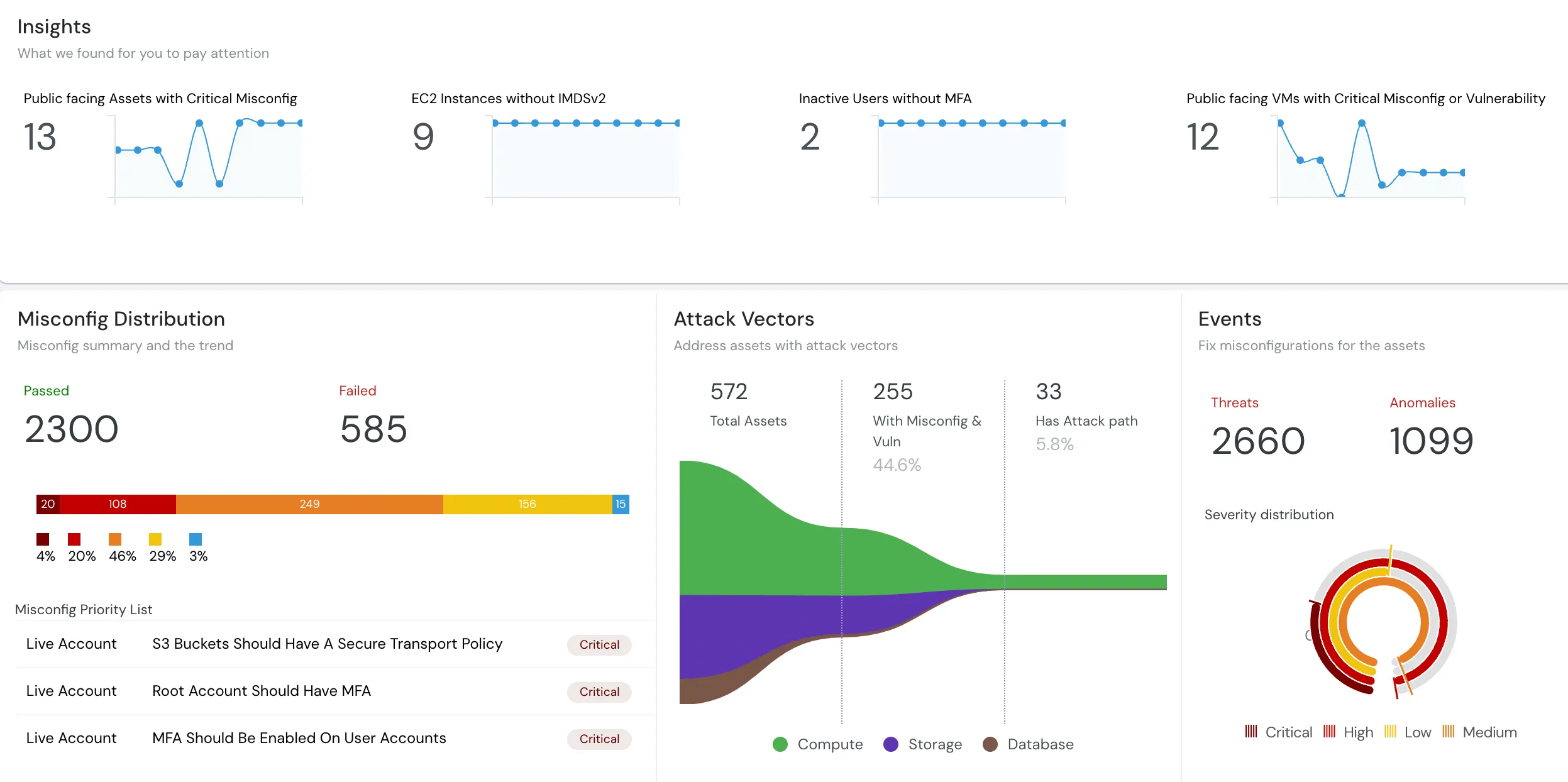
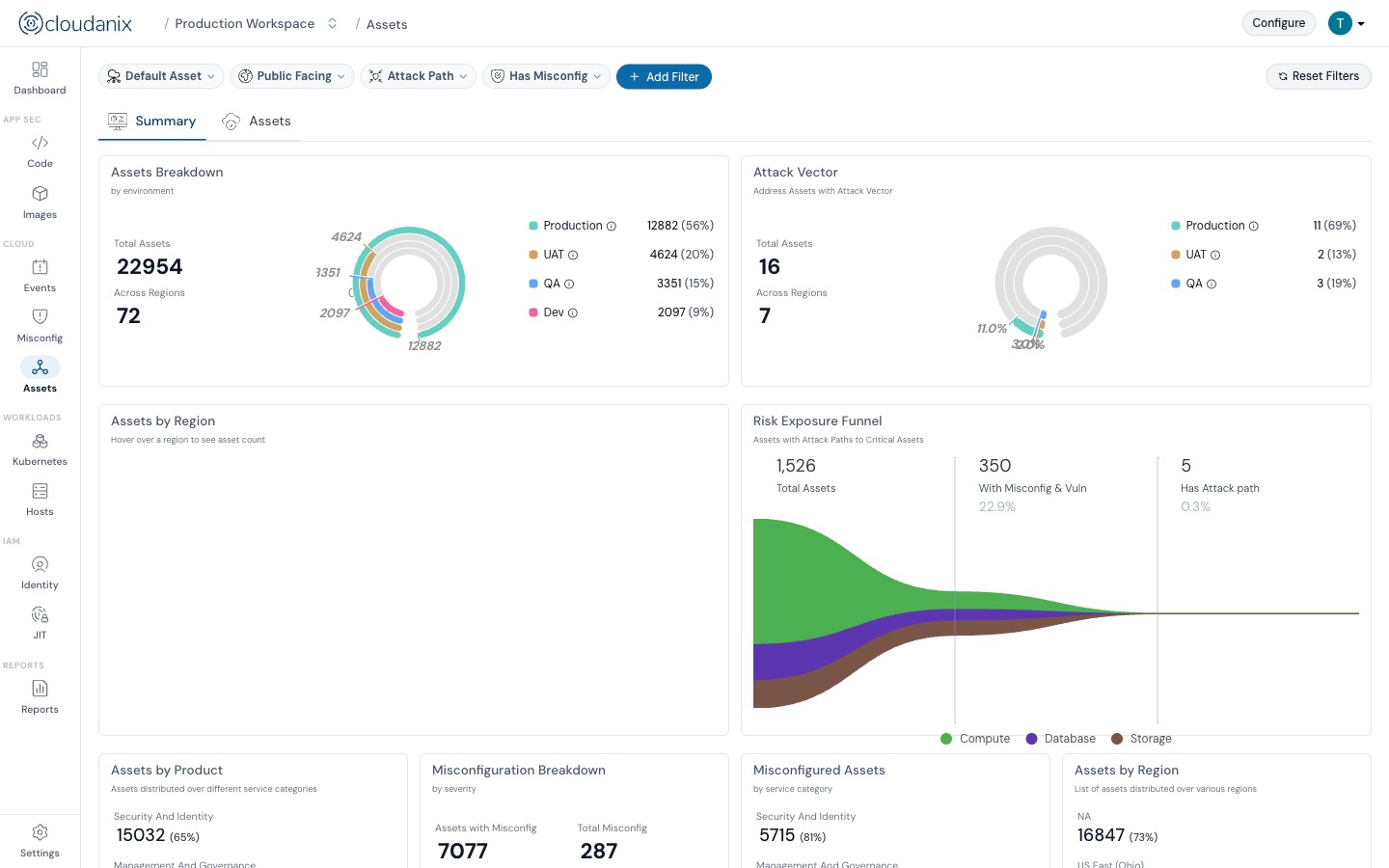
Once connected, all accounts appear in a single dashboard. Findings are aggregated, deduplicated, and ranked by severity and blast radius. The team can immediately see:
- Which misconfigurations repeat across accounts — the systemic issues that reveal a missing baseline.
- Which accounts have the weakest posture relative to the rest.
- Which services carry the highest concentration of findings.
- How overall posture maps against CIS, NIST, and other frameworks.
This is exactly the view that per-account, manual inspection cannot produce: the cross-account, cross-service picture that shows a small team where to spend its limited time.
Systemic-Issue Detection: Turning Sprawl Into a Punch List
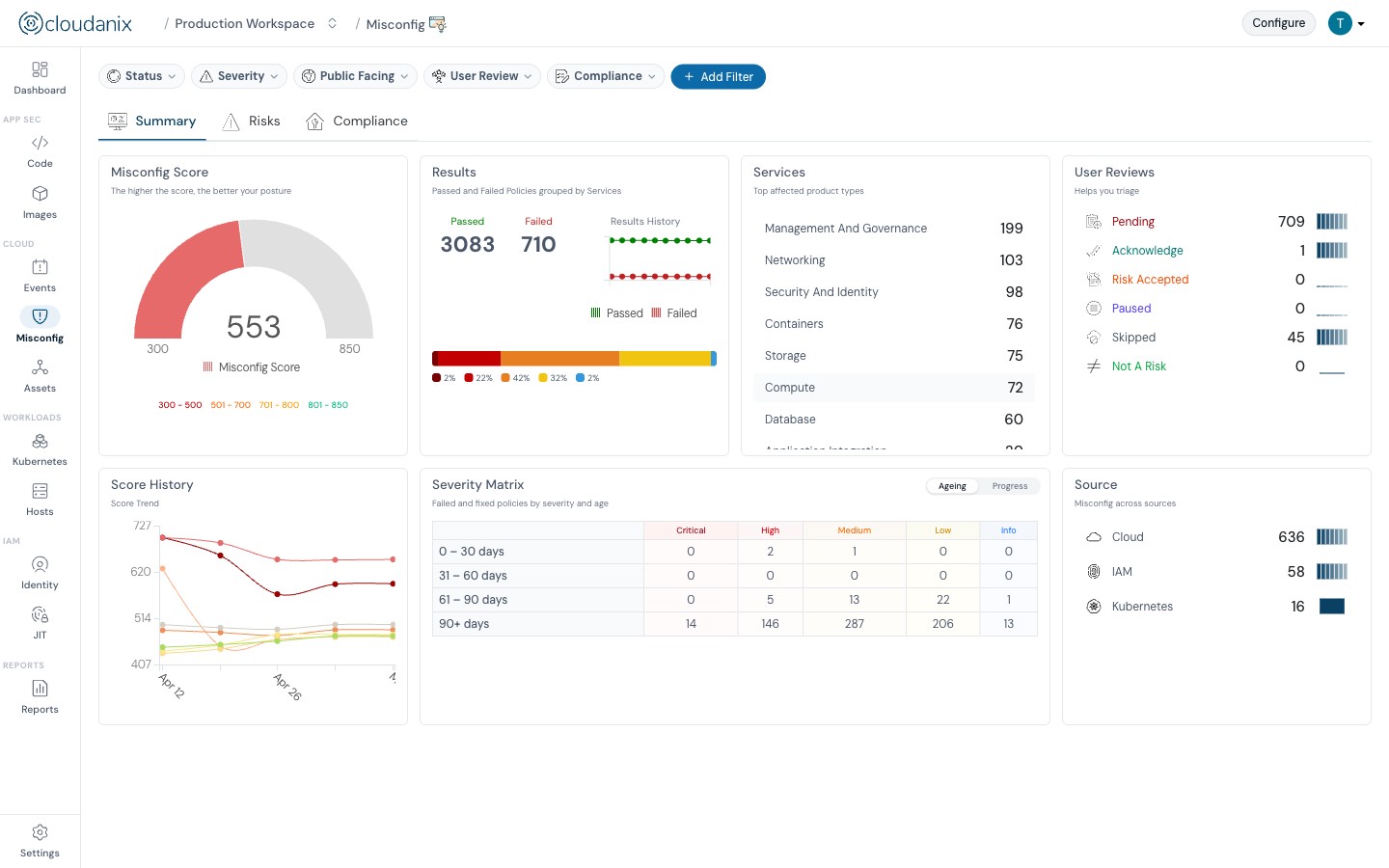
The most valuable output for an ungoverned environment is the identification of repeated misconfigurations. When the same issue appears in eight of nine accounts, that is not eight separate tickets — it is one missing baseline control. Cloudanix surfaces these patterns, which lets the team fix systemically: define the control once, apply it everywhere, and prevent the next account from repeating the mistake. This is how a team retrofits a baseline without first building a landing zone.
Identity Visibility Across the Sprawl
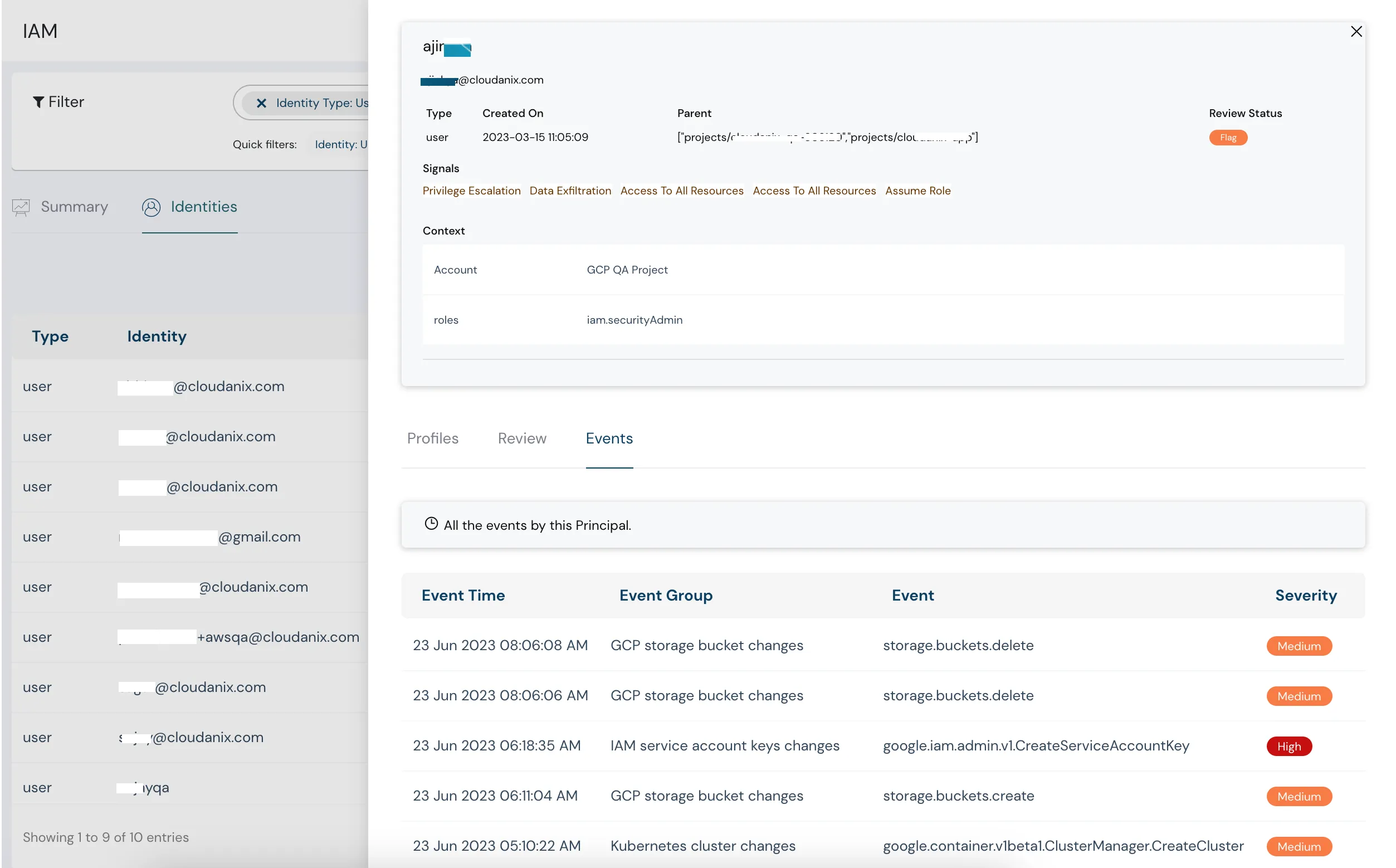
Cloudanix’s identity view (CIEM) maps who can access what across all connected accounts, whether access comes through IAM Identity Center or per-account IAM users. Over-privileged identities and unusual access patterns surface with the blast radius they actually carry. For a team that inherited identity sprawl on top of account sprawl, this answers the previously unanswerable question: if this credential is compromised, what is the reach?
Auto-Baseline and Drift Detection
Cloudanix builds a baseline automatically on connect — no customer configuration. From that point, drift is flagged immediately. When a new account is added or an existing one changes, the team sees how it deviates from the established baseline right away. This is a lightweight, tool-level substitute for the enforcement that Control Tower would provide, available today without the re-architecture.
Compliance Mapping and Remediation
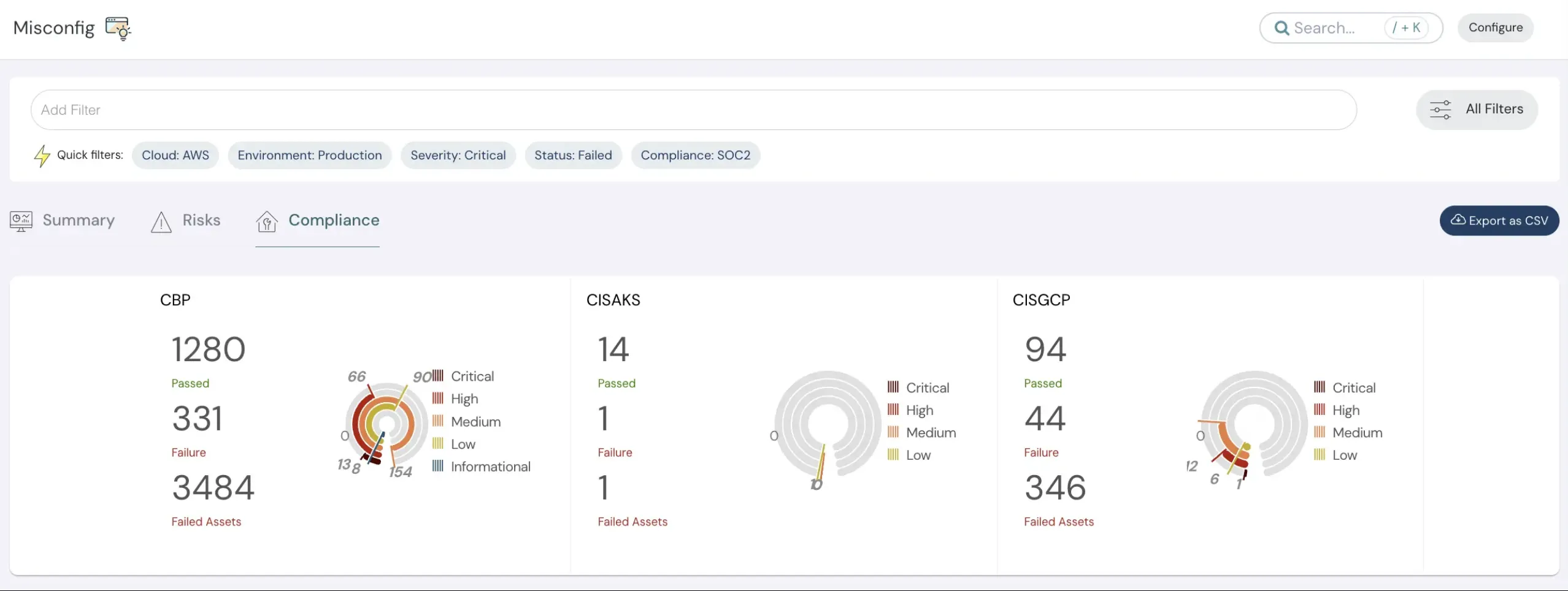
Findings map to CIS, NIST, and 15+ frameworks out of the box, and every finding carries remediation guidance — step-by-step, with copy-paste CLI and IaC for critical items. For a team whose DevOps function handles fixes, this converts a chaotic, per-account cleanup into a prioritized, actionable queue.
Platform Impact
| Dimension | Before (No Landing Zone) | After (Cloudanix) |
|---|---|---|
| Prerequisite to get visibility | Re-architect into Control Tower | None — connect as-is |
| Posture view | Per account, manual, in-head | Single unified dashboard |
| Systemic issues | Invisible | Surfaced as repeated findings |
| Identity reach | Unknown blast radius | Mapped across all accounts |
| Baseline & drift | None | Auto-baseline, immediate drift |
| Compliance evidence | Manual, per account | Mapped and exportable |
| Time to first findings | — | 15–30 minutes per account |
Governance Can Come Later — Visibility Can’t Wait
The standard guidance to stand up a landing zone and Control Tower is good long-term advice. But it is architecture work, and architecture work takes months during which the environment keeps growing and the risk keeps compounding. Making visibility contingent on that project means flying blind for the duration.
The better sequence is the reverse. Get continuous, cross-account visibility now, with the environment exactly as it is. Use the systemic-issue view to understand what a good baseline should enforce. Then, if and when the team invests in Control Tower or a landing zone, it does so from a position of knowledge — with a clear, evidence-backed picture of what actually needs standardizing. Security posture stops waiting on an infrastructure project, and the eventual governance work is better informed because of it.
Key Outcomes
- ✅ No Prerequisite Re-Architecture: Connect accounts as-is, no Control Tower needed.
- ✅ Unified Cross-Account View: One dashboard across every account.
- ✅ Systemic-Issue Detection: Repeated misconfigurations surfaced as one fix, applied everywhere.
- ✅ Identity Blast-Radius Visibility: Who can reach what, across all accounts.
- ✅ Auto-Baseline + Drift: Enforcement-style signal without the re-architecture.
- ✅ Compliance + Remediation: CIS/NIST mapping with actionable fixes.
AWS Accounts Grew Faster Than Your Governance?
If your AWS environment expanded organically — no landing zone, no Control Tower, no shared baseline — you do not need to re-architect before you can secure it. Cloudanix connects your accounts as they are and gives you unified, cross-account posture immediately.
Book a Free Assessment to see your entire multi-account AWS environment in one view, in under 30 minutes.
Related Resources
- CSPM for ECS-Heavy AWS Workloads: Small Security Teams
- What is CSPM (Cloud Security Posture Management)?
- OU-Based vs Account-Based Onboarding in Large AWS Organizations
- How to Use CSPM to Detect and Remediate Cloud Misconfigurations
- Configuration Drift Management: Detect Cloud Drift Before an Incident