Customer Snapshot
| Attribute | Details |
|---|---|
| Industry | SaaS Platform |
| Cloud Environment | AWS (multiple accounts) |
| Workloads | ECS (~90%), EC2, EKS |
| Code & CI/CD | GitLab (SaaS) with GitLab Pipelines |
| Existing Maturity | Strong application security (VAPT, code review) |
| Team Size | Small security team; DevOps handles remediation |
| Focus Area | Code and Cloud, correlated |
The Situation: Two Strong Programs That Don’t Talk
This team had done the work on both ends. On the application side, years of investment: an in-house AppSec function, regular VAPT, disciplined code review. On the cloud side, a growing CSPM practice covering multiple AWS accounts and an ECS-heavy workload.
The gap was not in either program individually. It was in the space between them. Code findings lived in one world — the GitLab repository, the pipeline, the SAST/SCA output. Cloud findings lived in another — the CSPM dashboard, the misconfiguration list, the account posture. Nobody could draw the line connecting a vulnerability in a specific repository to the specific ECS task that runs the image built from it, to the task role that task assumes, to the account and data that role can reach.
That line is the attack path. And when code and cloud are separate programs, the attack path is invisible — because no single view spans both ends of it.
The Core Tension
A vulnerability in code only matters as much as where it ends up running and what it can reach. A cloud misconfiguration only matters as much as what code and data sit behind it. Assessed separately, a code finding is “a CVE in a library” and a cloud finding is “an over-permissive task role” — each looks moderate. Assessed together, they can be a critical, exploitable path from a public endpoint to sensitive data. The tension is that the risk lives in the correlation, and two disconnected programs cannot see it.
Where the Gaps Were
A Finding Without Destination Context
A SAST or SCA tool reports a vulnerability in a GitLab repo. On its own, the team cannot easily answer the questions that determine urgency:
- Which container image is built from this repo?
- Which ECS service and task run that image?
- Is that task internet-facing, or internal-only?
- What can its task role reach — which data stores, which accounts?
Without those answers, every code finding is triaged in a vacuum, and severity is a guess.
A Misconfiguration Without Code Context
The mirror problem on the cloud side. CSPM flags an over-permissive ECS task role or a service in a public subnet. But is there vulnerable code running in that task? Is the exposed service built from a repo with an unpatched dependency? Without the code half, the cloud finding is also triaged in a vacuum.
Duplicated, Uncorrelated Triage
Because the two programs are separate, the same underlying risk generates work in two places with no shared context. The AppSec team triages the code finding. The cloud team triages the misconfiguration. Neither knows they are looking at two ends of the same path, so the combined, genuinely critical risk is under-prioritized by both.
How Cloudanix Addresses This Situation
One Platform Spanning Code and Cloud
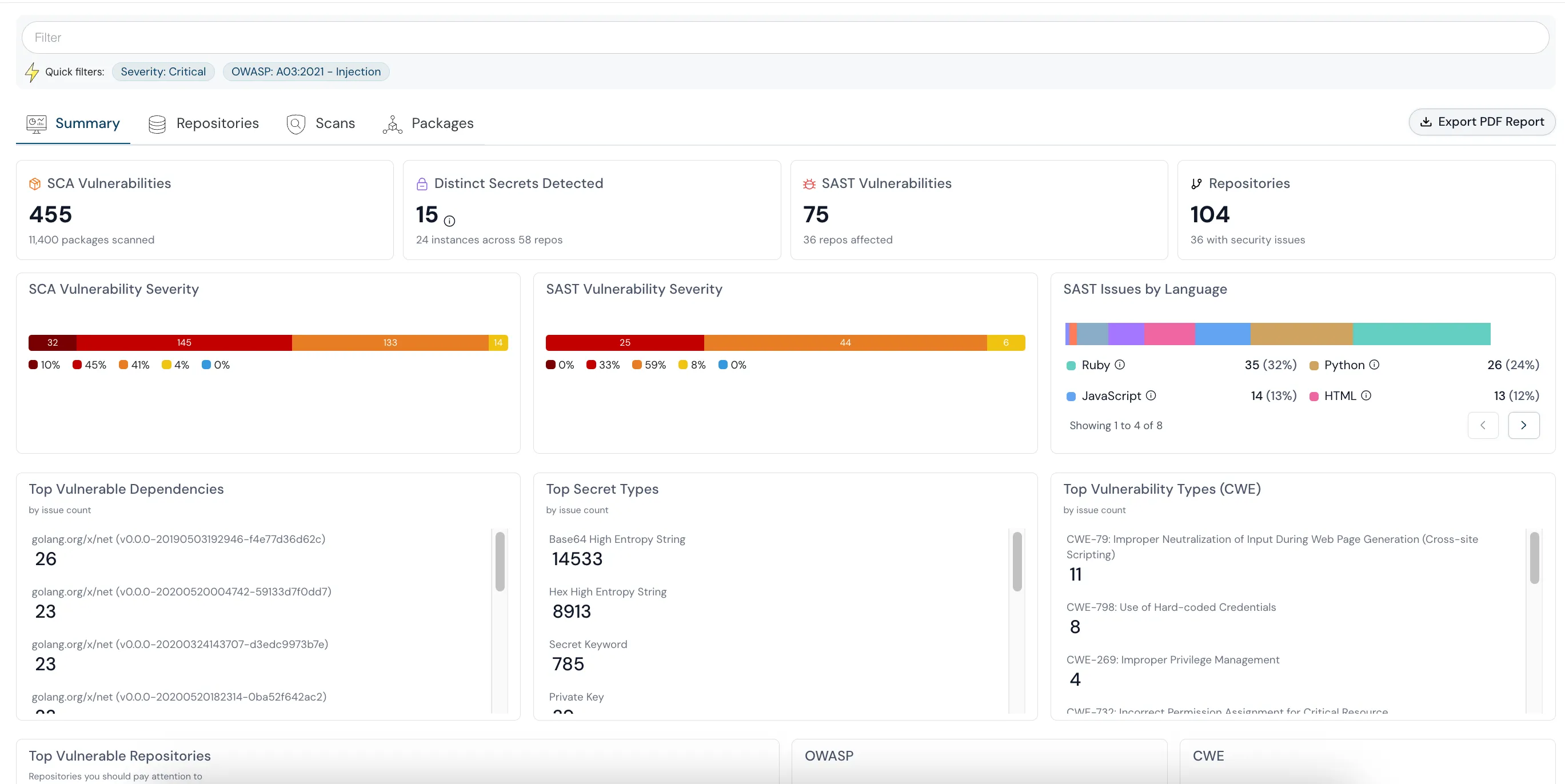
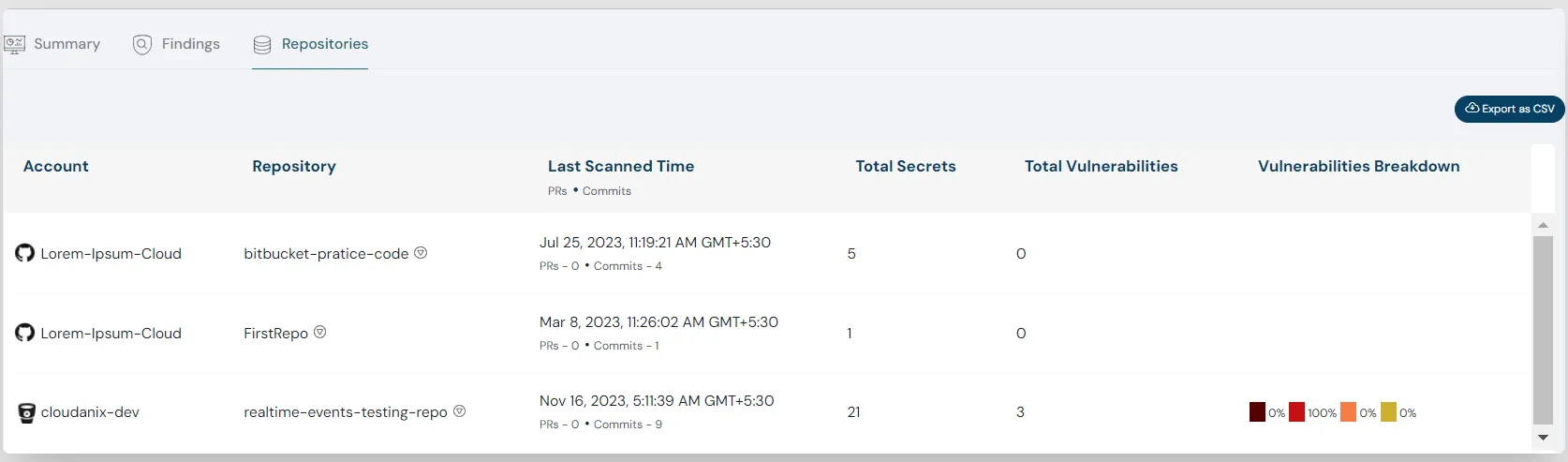
Cloudanix covers Code Security (SAST, SCA, secrets, IaC scanning) and CSPM on the same platform, built on a single asset graph. A GitLab repository, the image it produces, the ECS task that runs it, the task role, the account, and the data are all nodes in one graph with typed relationships between them. That shared model is what makes correlation possible at all.
Following the Path: Repo → Image → Task → Role → Data
With code and cloud on one graph, the platform can trace the full path:
- A dependency vulnerability is found in a GitLab repository.
- The repository builds a specific container image.
- That image runs in a specific ECS task and service.
- The service is internet-facing behind a permissive security group.
- The task assumes a role with broad access to a sensitive data store.
Individually, each step is a moderate finding. Traversed as a path, it is a critical, exploitable route from a public endpoint to sensitive data — and Cloudanix presents it as one correlated risk, not five disconnected ones.
Contextual Severity That Uses Both Ends
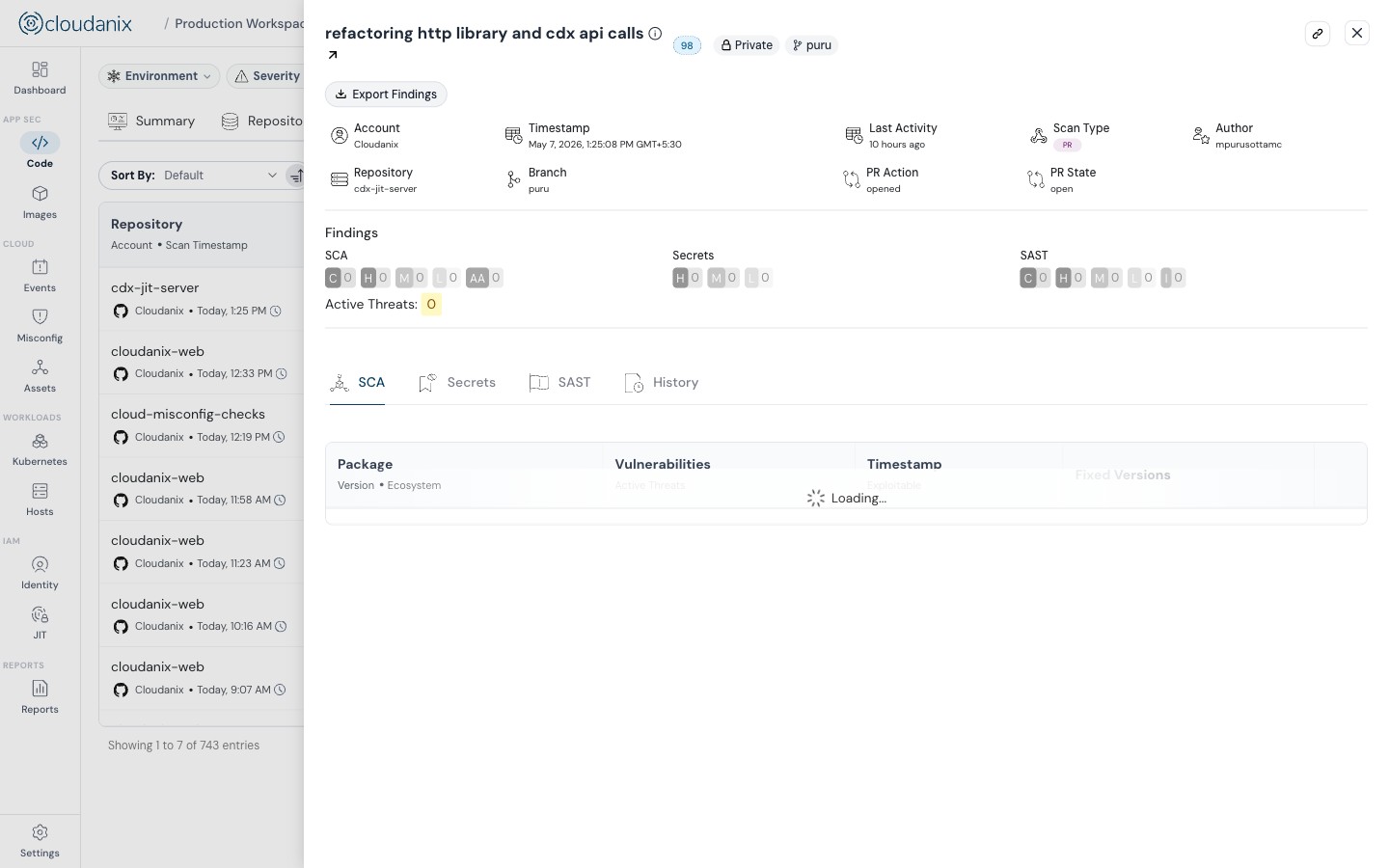
Because severity is recomputed from the graph, it reflects the whole path. A code vulnerability that only runs in an internal, low-privilege task is de-prioritized. The same vulnerability running in an internet-facing task with a broad role is elevated. The team stops guessing at severity and starts seeing it computed from where code actually runs and what it can reach.
GitLab-Native, Pipeline-Fit Code Scanning
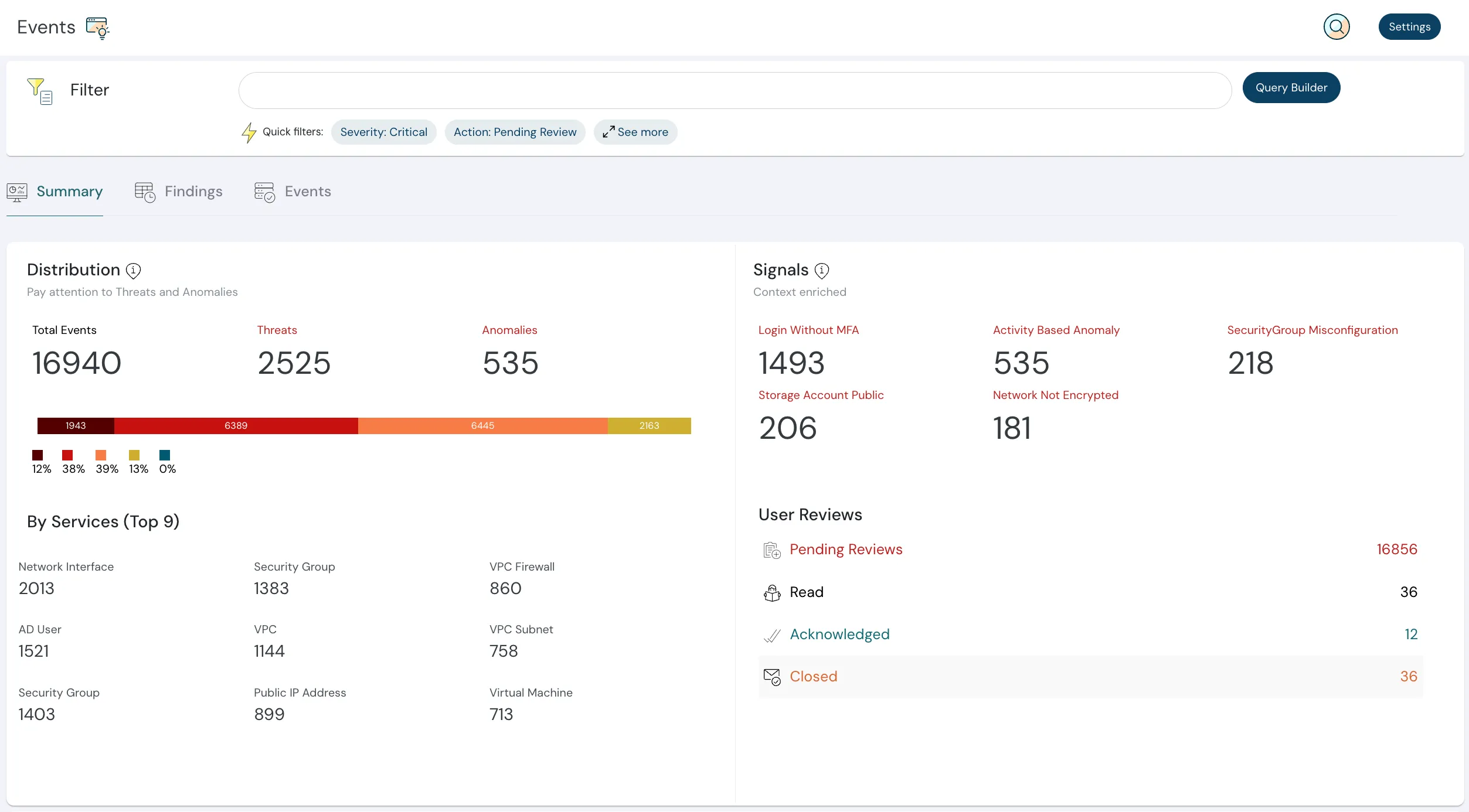
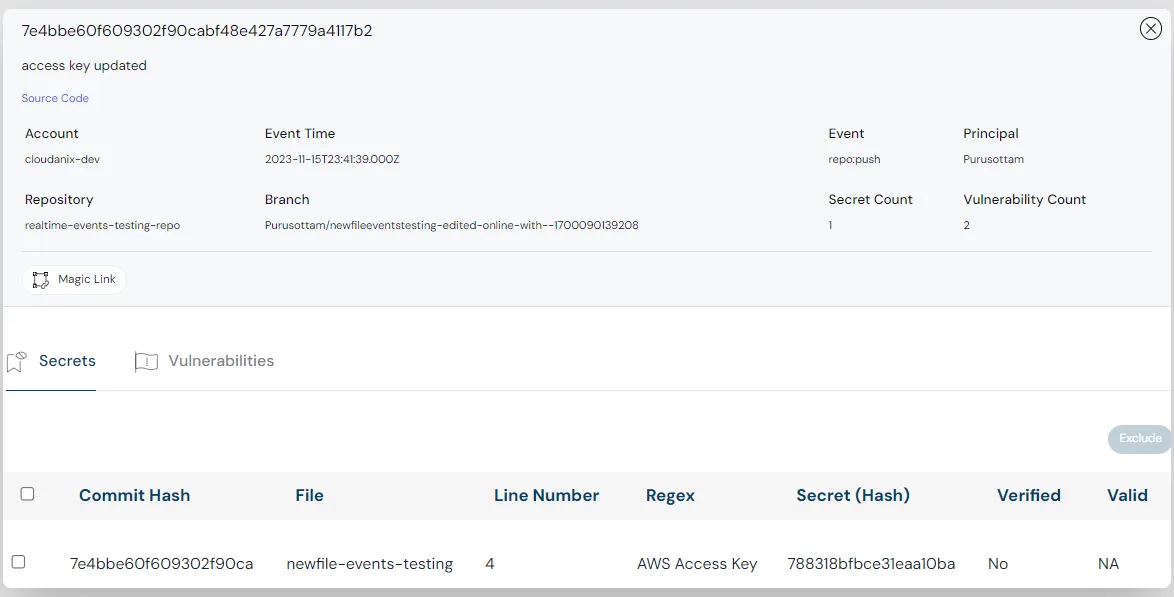
Code Security integrates with GitLab and GitLab Pipelines, scanning for vulnerabilities, vulnerable dependencies, leaked secrets, and IaC misconfigurations as part of the workflow the team already uses. Findings appear as PR-style annotations, and quality gates can fail a pipeline on serious issues — so problems are caught before the image is ever built and deployed to ECS.
One Prioritized Queue, Not Two
Instead of AppSec and cloud teams triaging in parallel with no shared context, both ends feed one correlated view. The team works a single prioritized queue where the top items are the true attack paths — the places where a code weakness and a cloud exposure combine. For a small team, this is the difference between two half-pictures and one clear one.
Platform Impact
| Dimension | Code and Cloud Separate | Code-to-Cloud Correlated |
|---|---|---|
| Code finding context | “A CVE in a library” | Which image, task, role, and data it reaches |
| Cloud finding context | “An over-broad task role” | Whether vulnerable code runs behind it |
| Severity | Guessed per finding | Computed from the full path |
| Triage | Duplicated across two teams | One prioritized queue |
| Attack paths | Invisible | Surfaced as single correlated risks |
| Catch point | After deployment | At the pipeline, before the image ships |
Why Correlation Is the Whole Point
“Code and cloud” as two separate programs is where most teams are, and it is a genuine improvement over having neither. But two strong programs that do not share a view will systematically under-rate the risks that span them — and those spanning risks are exactly the ones attackers use. The path from a vulnerable dependency to a public ECS service to a broad task role to sensitive data is not hypothetical; it is the anatomy of a large fraction of real cloud breaches.
Closing that gap does not require a third program. It requires the two you already have to run on one graph, so a finding in a GitLab repo and a misconfiguration on an ECS task can be recognized as two ends of the same path. That is what code-to-cloud correlation delivers: not more findings, but the right findings, ranked by the reality of where code runs and what it can touch.
Key Outcomes
- ✅ One Asset Graph: Code and cloud on a single correlated model.
- ✅ Full-Path Visibility: Repo → image → ECS task → role → data.
- ✅ Path-Aware Severity: Urgency computed from where code runs and what it reaches.
- ✅ GitLab-Native Scanning: SAST, SCA, secrets, and IaC in the existing pipeline.
- ✅ Catch Before Deploy: Quality gates stop issues before the image ships to ECS.
- ✅ One Prioritized Queue: True attack paths at the top, not two half-pictures.
Running Code and Cloud as Separate Programs?
If your GitLab code findings and your AWS cloud posture live in different worlds, the risks that span them — the actual attack paths — are slipping through both. Cloudanix puts code and cloud on one graph so you can see and rank the full path from repo to running ECS task to sensitive data.
Book a Free Assessment to see code-to-cloud correlation on your own environment in under 30 minutes.
Related Resources
- Shift-Left Code Security for GitLab CI/CD Pipelines
- What is an Attack Path, and Why Isolated Findings Mislead You
- CSPM for ECS Task Definitions: Securing the Container Surface That Isn’t Kubernetes
- What is CNAPP (Cloud Native Application Protection Platform)?
- Code Security Best Practices for DevSecOps Teams in 2026