Customer Snapshot
| Attribute | Details |
|---|---|
| Industry | SaaS Platform |
| Cloud Environment | AWS (multiple accounts) |
| Workloads | ECS (~90%), EC2 (~9%), EKS (~1%) |
| Primary Compute | Amazon ECS (Fargate and EC2 launch types) |
| Team Size | Small security team; DevOps handles remediation |
| Focus Area | Container security for ECS |
The Situation: The Container Platform Everyone Forgets to Secure
Search for container security guidance and you will find Kubernetes. Pod security standards, admission controllers, RBAC, network policies, EKS hardening. The tooling market has followed the same path — most container security products assume your containers run on Kubernetes.
This team’s containers do not. Roughly 90% of their workloads run on Amazon ECS, with only a sliver on EKS. ECS is their primary compute surface, and it has a distinct security model that the Kubernetes-shaped tooling largely ignores. Task definitions, task IAM roles, service networking, and image provenance on ECS are just as consequential as their Kubernetes equivalents — and far more likely to go unchecked, precisely because the ecosystem’s attention is elsewhere.
For a team whose infrastructure is overwhelmingly ECS, this is not an edge case. It is the main event, and it deserves first-class coverage.
The Core Tension
The team’s largest attack surface is the one the security ecosystem covers least. Kubernetes-centric tools either skip ECS or treat it as an afterthought, so the workloads that matter most get the shallowest assessment. The tension is coverage misalignment: 90% of the risk sits in ECS, while most tooling puts 90% of its depth into Kubernetes. Closing that gap requires a platform that treats ECS as a primary citizen — evaluating task definitions and their surrounding resources with real depth.
Where the ECS Gaps Are
Task Definition Misconfigurations
The task definition is the ECS unit of deployment, and it is where the most common misconfigurations live:
- Privileged mode enabled — a container running privileged has near-host-level capability.
- Host networking / host PID — breaking container isolation boundaries.
- Excessive Linux capabilities — added capabilities that the workload never needs.
- Read-write root filesystem — where a read-only root would sharply limit tampering.
- Missing log configuration — no
awslogsor FireLens driver, so container output and security-relevant events vanish. - Secrets as plaintext environment variables — credentials hardcoded in the task definition instead of referenced from Secrets Manager or Parameter Store.
Task IAM Roles: The Quiet Over-Privilege Problem
Every ECS task assumes a task role and a task execution role. These are frequently over-scoped — copied from a working example, granted broad access to “make it work,” and never tightened. An over-permissive task role means that if the container is compromised, the attacker inherits whatever that role can do across the account. This is the ECS equivalent of an over-privileged pod service account, and it is rarely reviewed.
Service Networking
ECS services attach to security groups and run in subnets. Common exposures:
- Security groups that are far broader than the service requires.
- Services placed in public subnets without a documented reason.
- Load balancer configurations that expose more than intended.
Image Provenance
Containers are only as trustworthy as the images they run. On ECS it is common to see images pulled from public registries without vulnerability scanning, without digest pinning, and without a record of what is actually inside them.
How Cloudanix Addresses This Situation
ECS as a First-Class Citizen
Cloudanix runs 1,000+ checks across AWS services, with specific rules for the ECS surface — task definitions, task and execution IAM roles, service networking, logging, and image configuration. For a 90%-ECS environment, this means the primary compute surface is assessed with the same depth most tools reserve for EC2 or EKS.
Checks include:
- Task definition security — privileged mode, host networking, capabilities, root filesystem, logging.
- Task IAM roles — least-privilege analysis on both task role and execution role.
- Service networking — security group breadth, subnet placement, load balancer exposure.
- Container image security — registry source, vulnerability findings, digest pinning.
Cross-Resource Correlation: The Whole Task, Not One Setting
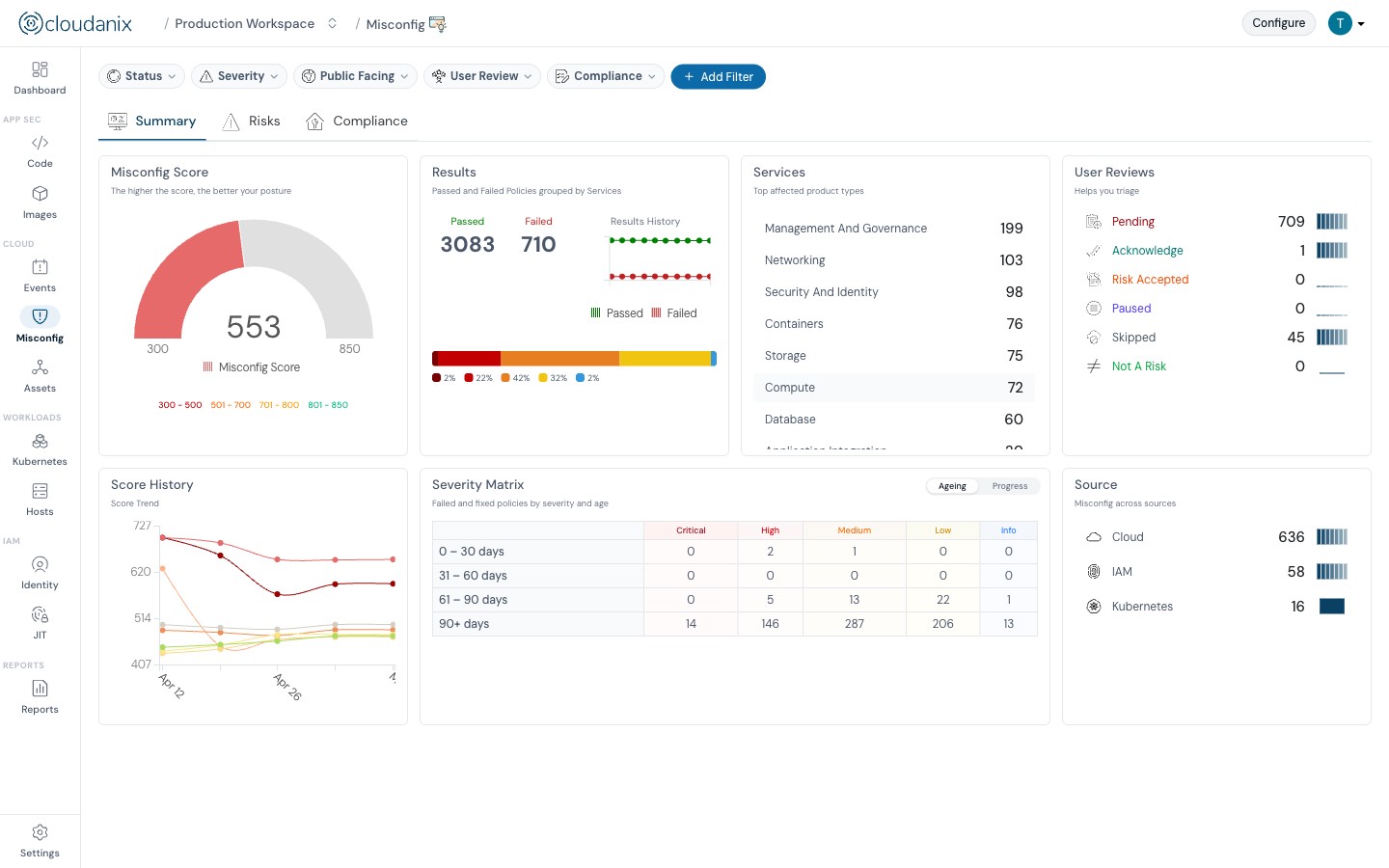
An ECS risk is rarely a single setting in isolation. What matters is the relationship: a task definition with an over-broad task role, running in a public subnet, behind a permissive security group, pulling an unscanned image. Cloudanix correlates these into a single picture of the task’s actual exposure — so the team understands the blast radius, not just a list of disconnected flags.
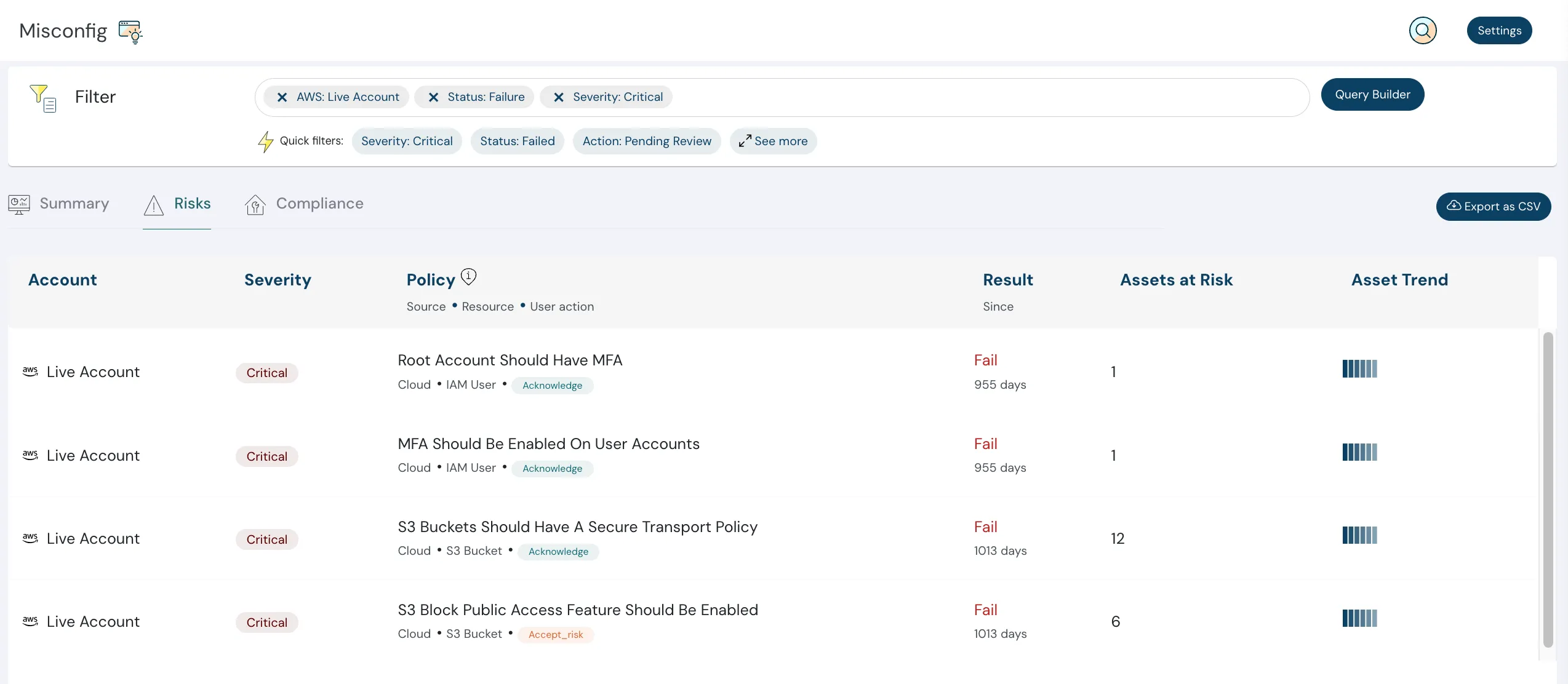
Contextual Severity for ECS Findings
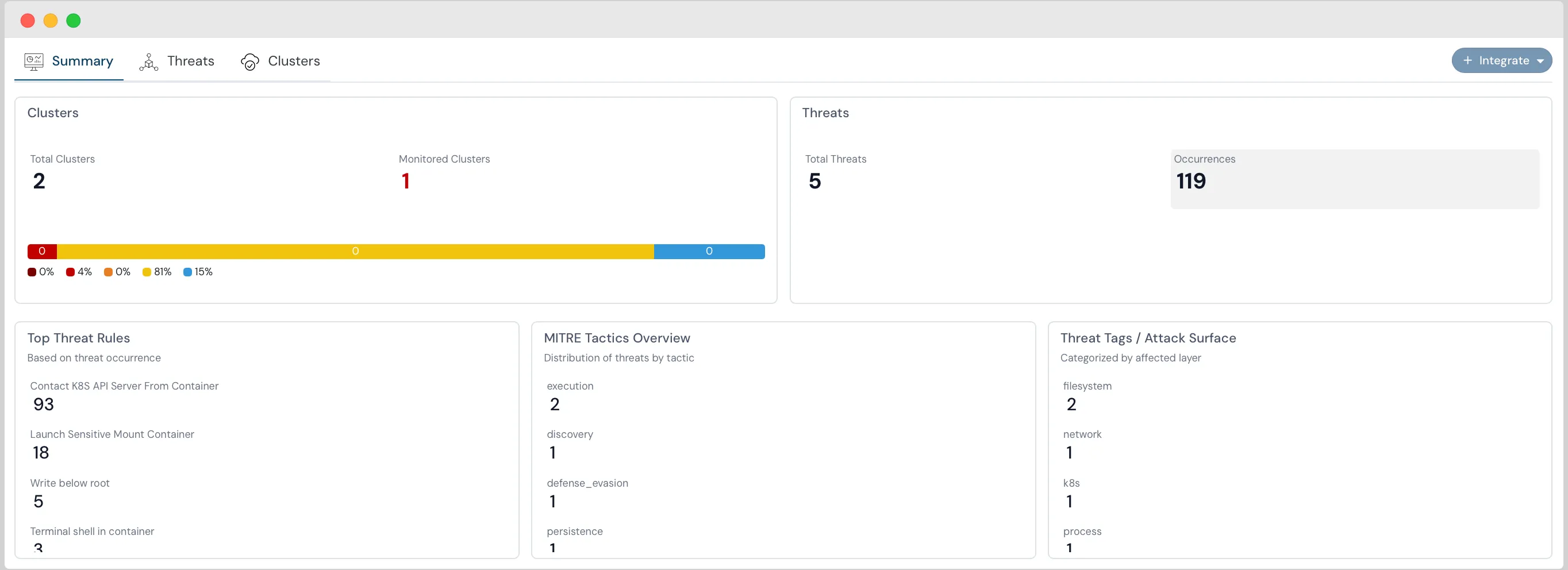
Not every ECS finding is equally urgent. A read-write root filesystem on an internal batch task is not the same risk as a plaintext secret in a task running in a public subnet. Cloudanix recomputes severity per asset using exposure, environment, data sensitivity, and identity — and shows the reasoning. The team gets a ranked, defensible list of what to fix on ECS first, instead of a wall of equally weighted warnings.
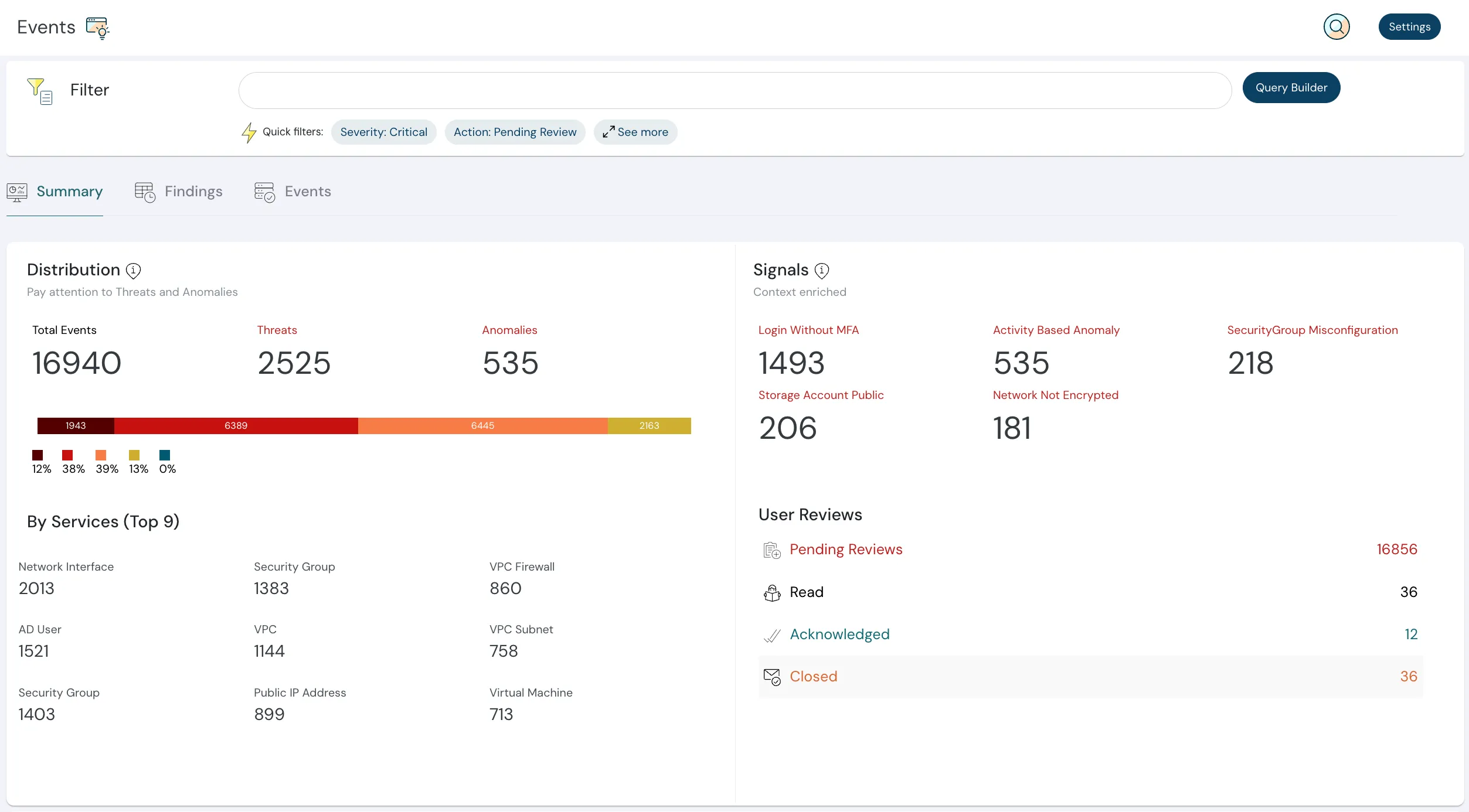
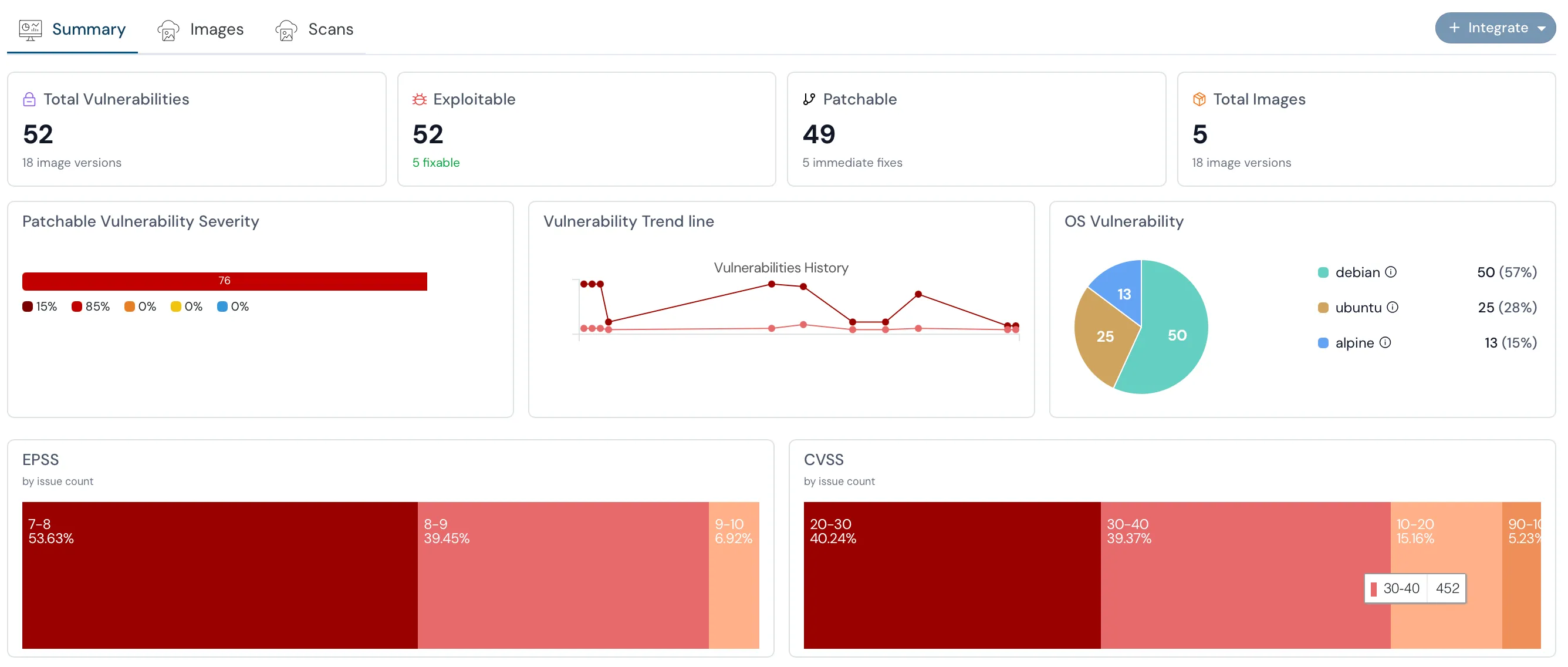
Image Vulnerability Visibility
For image provenance, Cloudanix surfaces vulnerability findings on the container images running in ECS, with prioritization that reflects reachability and exposure rather than raw CVSS alone. This closes the “what is actually inside the image we are running?” gap.
Remediation Built for the Person Fixing It
Every ECS finding carries remediation guidance: what to change in the task definition, how to scope the task role down, copy-paste-ready CLI, and infrastructure-as-code snippets where applicable. When DevOps owns remediation, the fix instructions arrive with the finding — no separate research step.
Platform Impact
| ECS Surface | Typical Tooling | Cloudanix |
|---|---|---|
| Task definition config | Shallow or skipped | Privileged mode, networking, capabilities, root FS, logging |
| Task IAM roles | Rarely reviewed | Least-privilege analysis on task + execution roles |
| Service networking | Generic SG checks | SG breadth, subnet placement, LB exposure |
| Image provenance | Often ignored | Registry source, vuln findings, digest pinning |
| Prioritization | Flat severity | Contextual severity with reasoning |
| Correlation | Per-setting flags | Whole-task exposure picture |
Why ECS Deserves First-Class Treatment
The industry’s Kubernetes focus is understandable — but for a large population of AWS teams, it is a blind spot with real consequences. If most of your compute runs on ECS, then most of your container risk lives in task definitions and their surrounding IAM and networking, and a tool that treats ECS as an afterthought is leaving your largest surface under-assessed.
Securing ECS well is not exotic. It is task definitions without privileged mode and host networking, task roles scoped to least privilege, services in the right subnets behind tight security groups, and images that are scanned and pinned. What makes it hard in practice is that nothing evaluates all of that continuously, in context, across every account. That is precisely the gap contextual CSPM closes — and it is why an ECS-heavy team gets disproportionate value from a platform that treats ECS as a first-class citizen rather than a Kubernetes footnote.
Key Outcomes
- ✅ ECS-First Coverage: Task definitions, task IAM roles, networking, logging, images.
- ✅ Least-Privilege on Task Roles: Analysis of both task and execution roles.
- ✅ Whole-Task Correlation: Exposure understood across definition, role, network, and image.
- ✅ Contextual Severity: ECS findings ranked by real risk, with reasoning.
- ✅ Image Provenance: Vulnerability visibility and pinning checks.
- ✅ Actionable Remediation: Task-definition fixes with copy-paste CLI and IaC.
Running Most of Your Workloads on ECS?
If ECS is your primary compute surface and your container security tooling was built for Kubernetes, your largest attack surface is under-covered. Cloudanix treats ECS as a first-class citizen — task definitions, task roles, networking, and image provenance, all assessed continuously and in context.
Book a Free Assessment to see your ECS security posture across every account in under 30 minutes.