

Here is a story that repeats itself a few times a year, and it is worth pausing on because the lesson is not the one most teams take away.
A critical vulnerability gets a patch. Weeks pass. Then the reports come in: hundreds of servers compromised — running the exact version the patch was meant to fix. The instinct is to say “people need to patch faster.” That is true, but it misses the more useful point. In most organizations, the blocker is not the patching itself. It is knowing which of your systems is exposed, reachable, and worth fixing first out of the thousands of findings competing for attention.
The Zimbra flaw from late August 2026 is a clean example. Let us walk through it, then talk about the part you can actually control.
What Happened
The vulnerability: CVE-2026-73570 is a critical flaw (CVSS 8.9) in the Zimbra Collaboration Suite. In plain terms, it is a command-injection bug in Zimbra’s SNMP monitoring component. When SNMP notifications are enabled, an unauthenticated attacker — one who has not logged in and has no credentials — can send a specially crafted request that causes the server to run operating system commands as the zimbra user. That is remote code execution, the most serious class of vulnerability, requiring nothing more than the ability to reach the server over the network.
The timeline is the uncomfortable part:
- The vendor shipped a fix in Zimbra Collaboration Suite version 10.1.20.
- On August 21, 2026, the US CISA added the CVE to its Known Exploited Vulnerabilities catalog — an official confirmation that attackers were actively using it.
- National response teams including CERT Polska warned of active exploitation.
- By August 24, 2026, the Shadowserver Foundation counted at least 274 internet-facing Zimbra servers already compromised.
So the fix was available, the warnings were loud, and hundreds of servers were breached anyway. Why?
The Real Gap: Not “Did You Patch?” but “Did You Know It Was Exposed?”
Most teams do not have a patching-discipline problem. They have a prioritization problem, and it comes from three things happening at once:
1. Too many findings, all shouting. A mid-sized cloud environment generates thousands of vulnerability and misconfiguration findings. When everything is labeled “Critical,” nothing is. A CVSS 8.9 on an internal test box and a CVSS 8.9 on an internet-facing mail server look identical in a flat list — but they are worlds apart in real risk.
2. Incomplete visibility of what is actually reachable. You cannot prioritize a server you do not know is internet-facing. Shadow infrastructure, a forgotten staging box, a system a team spun up outside the standard process — these are exactly the ones that stay unpatched, because they are not on anyone’s list. This is a common outcome for teams still relying on point tools, and a driver behind moving off AWS Trusted Advisor and open-source scanners to continuous CSPM.
3. No link between the vulnerability and its context. A CVE score tells you how bad the flaw is in theory. It does not tell you whether this instance is exposed to the internet, whether it holds sensitive data, or whether it sits one hop from something that does. Without that context, teams either patch everything (impossible) or guess (dangerous).
CVE-2026-73570 is the perfect illustration. The vulnerability is only remotely exploitable by an unauthenticated attacker if the server is reachable and SNMP notifications are enabled. The servers that fell were the internet-facing ones. A team that could instantly answer “which of my Zimbra instances are exposed to the internet with this configuration?” would have had a short, actionable list — not a wall of undifferentiated red.
The Question That Actually Matters
For any critical vulnerability, the prioritization question is not “how high is the CVSS score?” It is:
“Is this specific instance exposed, reachable, and connected to something that matters — and is it being exploited in the wild right now?”
Break that into the parts you should be able to answer quickly:
| Question | Why it changes the priority |
|---|---|
| Is this asset internet-facing? | An unauthenticated RCE only matters remotely if attackers can reach it. |
| Is the exploited feature actually enabled? | CVE-2026-73570 needs SNMP notifications on. Config context filters out false urgency. |
| What identity and data sit behind it? | RCE on a box with broad cloud permissions or sensitive data is a very different problem than one on an isolated system. |
| Is it in an active exploitation list (like CISA KEV)? | A flaw being used today jumps the queue over a theoretical one. |
When you can answer these in one place, a scary catalog of thousands of findings collapses into a handful of “fix these first.” That is the difference between a findings generator and a security tool.
What You Can Do About It
None of this requires heroics. It requires visibility and context working together.
1. Know your external attack surface — continuously
You cannot protect what you cannot see. Maintain a continuously updated, outside-in view of everything you expose to the internet: hosts, ports, services, and the software versions running on them. When a CVE like this lands, the first question — “do we run this, and is it exposed?” — should take minutes, not a fire drill of manual checks.
2. Prioritize by exposure and exploitability, not raw score
Layer real-world signal on top of the CVSS number: is the asset internet-facing, is the vulnerable feature enabled, is the CVE on CISA KEV, is there an active campaign. This kind of vulnerability prioritization is what turns “3,000 criticals” into “these 12, today,” and it is the core of any effective vulnerability management program. Teams that outgrow self-run tooling often formalize this by moving to managed VM vulnerability management, replacing self-run Wazuh at scale.
3. Correlate the vulnerability with identity and data
An RCE is far more dangerous when the compromised host can assume a powerful cloud role or reach a database of customer records. Being able to see that connection — the vulnerability, the identity it touches, the data one hop away — tells you the true blast radius and sharpens the order you fix things in.
4. Watch for the config that makes it exploitable
Detecting the CVE is half the job. Detecting the conditions that make it exploitable — SNMP notifications enabled, the service exposed — is the other half, and it often lets you reduce risk immediately (disable the feature, restrict access) while the patch is scheduled.
5. Close the loop with clear remediation
A finding without a fix is homework. Every high-priority item should come with the specific action — upgrade to ZCS 10.1.20, disable the exposed SNMP path, restrict network access — so the person who has to act is not left researching.
How Cloudanix Approaches This
Cloudanix was built on a straightforward principle: a vulnerability or misconfiguration only matters in the context of the asset it sits on, the identity that can reach it, and the data behind it. For a scenario like the Zimbra flaw, that principle shows up in a few concrete ways.
Attack surface management gives you a continuously updated, outside-in view of what you expose to the internet — the same vantage point an attacker uses. When a CVE like CVE-2026-73570 hits the news, “which of our internet-facing assets are affected?” is a query, not a scramble.
Contextual severity is the part that fixes the “everything is Critical” problem. Instead of assigning a fixed severity from a rulebook, Cloudanix recomputes it against real context: whether the asset is internet-facing, what environment it lives in, whether known-exploited (CISA KEV) and exploitability (EPSS) signals apply, what identity touches it, and what data is nearby. A theoretical high-CVSS finding on an isolated box drops down the list; a genuinely exposed, actively exploited one rises to the top with the reasoning attached.
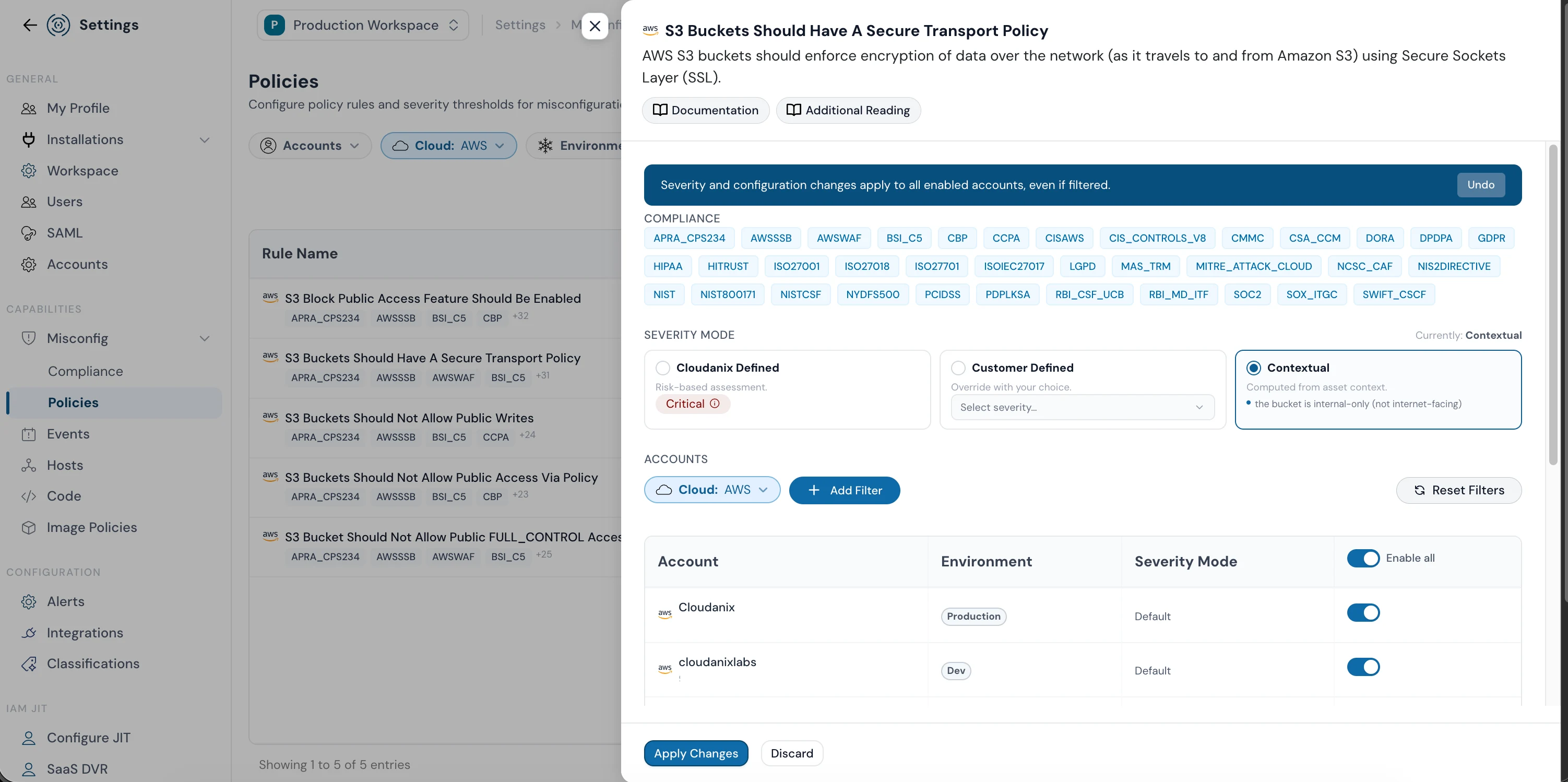
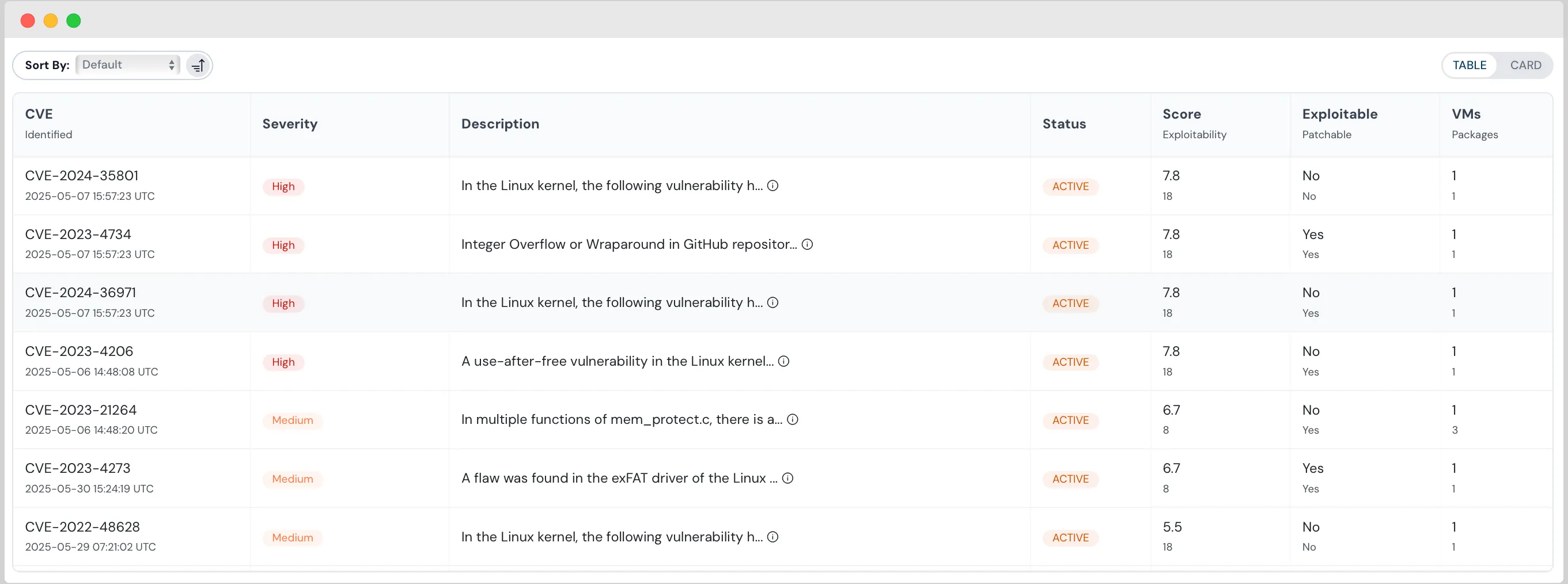
The result is a ranked, explained worklist instead of a flat wall of criticals — so the exposed, actively exploited findings surface first:
Code-to-cloud correlation on one asset graph means the vulnerability, the IAM that surrounds it, and the data one hop away are a single view rather than three tools you manually cross-reference. That is what lets you see true blast radius instead of guessing.
This complements the patch and vulnerability management you already do — it does not replace it. The value is in turning a flat, overwhelming list into a short, ranked, explained one, so the servers that would have been in next month’s breach report get fixed this week.
Key Takeaways
- The patch is rarely the bottleneck. The bottleneck is knowing which of your systems is exposed and worth fixing first, out of thousands of findings.
- CVSS is a starting point, not a priority. The same score means very different things on an exposed mail server versus an isolated test box. Exposure and exploitability are what separate them.
- You cannot prioritize what you cannot see. A continuous external attack-surface view turns “do we run this, exposed?” into a minutes-long answer.
- Context is the multiplier. Correlating a vulnerability with the identity and data around it reveals the real blast radius — and the right order to fix.
- This is solvable, calmly. Exposure visibility plus contextual prioritization means the next CVE-in-the-news is a short worklist for your team, not an emergency.
Want to see which of your internet-facing assets would be affected by the next critical CVE — ranked by real exposure, not raw score? Book a demo to see Cloudanix attack surface management and contextual severity on your own environment.
People Also Read
- What is CSPM?
- Top 15 Cloud Misconfigurations in 2026 - How to Fix Them?
- How to Use CSPM to Detect and Remediate Cloud Misconfigurations
- 3.6 Million Azure Records Stolen — Why Your CSPM Needs to Correlate Identity with Posture
- Cloudanix: Attack Surface Management
- Cloudanix: Contextual Severity
- Cloudanix: Cloud Security Posture Management