

On October 16, 2026, Nikkei Inc. disclosed its third data breach within a month, revealing that roughly 1.83 million records were exposed through unauthorized access to a cloud service used for system development. The root cause reported was credential compromise — stolen credentials used to reach a cloud environment that, as it turned out, held a large volume of sensitive data.
Two details make this worth a close look. The first is the repetition: three breaches in a month at one organization is not bad luck, it is a structural gap that keeps getting walked through. The second is the location: the data was reached through a development cloud service. Not production. Not the hardened, monitored, compliance-scoped environment where the security controls live — the dev environment, where teams move fast and the controls are usually thinner.
This post is about why credential compromise keeps turning into a breach, why development environments are a persistent blind spot, and why posture management that ignores identity will keep missing exactly this class of incident. The good news is that the fix is well understood: see the whole picture — misconfiguration, identity, and data together — and remove the standing access that makes a stolen credential dangerous.
What Happened
The reported facts are compact, and each one is a lesson:
- Stolen credentials were the entry point. No zero-day, no exotic exploit. An attacker obtained valid credentials and used them. Credential compromise remains the single most common way into cloud environments, because it does not require breaking anything — the login works as designed.
- The target was a cloud dev service. The exposed data lived in a cloud environment used for system development. Dev environments routinely accumulate copies of real data (for testing against realistic datasets) and broad access (so engineers are not blocked), while carrying lighter monitoring than production.
- 1.83 million records were exposed. Whatever the dev environment was supposed to hold, it held nearly two million sensitive records that an attacker with one set of credentials could read.
- It was the third breach in a month. The repetition signals that the response to the earlier incidents treated symptoms rather than the underlying exposure — otherwise the third would have been caught by the controls added after the first two.
Put together, the pattern is clear and common: a credential is compromised, it has standing access to a dev environment, and that dev environment quietly holds production-grade data with production-grade consequences and development-grade oversight.
Why Credential Compromise Keeps Becoming a Breach
If stolen credentials are the number-one way in, the real question is why we keep letting one working login reach so much. Three reasons, all addressable.
1. Standing access is everywhere. Most cloud identities hold durable, always-on access to far more than they use day to day. The credential that was stolen did not have to be used at the moment of theft to be dangerous — it was valid 24/7, so the attacker simply logged in and read. A credential that only worked during the brief windows it was genuinely needed would have given an attacker almost nothing.
2. Dev environments are under-scoped and over-trusted. The security rigor applied to production — tight access, monitoring, data minimization — is frequently relaxed in development. Engineers get broad access so they can work quickly; real data gets copied in so tests are realistic; alerting is lighter because “it’s just dev.” Each of those is reasonable in isolation, and together they turn dev into a soft, data-rich target sitting next to production.
3. Posture tools that ignore identity miss the actual risk. A traditional CSPM tells you a resource is misconfigured. It often does not tell you which identities can reach it, how privileged they are, or what data sits behind them. So a dev environment with a public-ish configuration and broad standing credentials and a copy of 1.83 million records gets reported as a handful of separate, medium-severity findings — none of which, alone, screams “this is where your next breach happens.”
Every one of these is a version of the same gap: access and exposure are being evaluated in isolation, when the risk only becomes visible when you see them together.
The Dev-Environment Blind Spot, Spelled Out
It is worth dwelling on the dev angle, because it is where this breach actually lived and where many teams are most exposed.
The traditional security model draws a hard line between development and production. Production is where the customer data lives, so that is where the controls go: least privilege, monitoring, compliance scoping, data handling rules. Development is for building and testing, so it gets room to move.
That model breaks the moment dev environments start holding real data and real access — which they almost always do. Engineers test against production-like datasets because synthetic data misses edge cases. Dev accounts get cross-environment access because splitting them cleanly is work. Service accounts and CI/CD identities span dev and prod because that is simpler to wire up. The result is a development environment that is production-adjacent in the ways that matter to an attacker — it holds sensitive data and the credentials to reach it — while being governed like a sandbox.
An attacker with a stolen credential does not care which environment is labeled “production.” They care which environment they can reach and what data is in it. Nikkei’s dev service had the data; the credential had the access; the label on the environment was irrelevant to the outcome.
The Immediate Checklist
Work through these in order. They directly address the Nikkei pattern regardless of your cloud.
1. Inventory what your dev environments actually hold
Find out, honestly, which development and staging environments contain real or realistic sensitive data, and which identities can reach them. This is usually uncomfortable, because the answer is “more than we thought.” You cannot protect data you do not know is there.
2. Minimize sensitive data in non-production
Where dev environments hold production data, ask whether they need to. Use masked, synthetic, or subset datasets for testing wherever feasible. The less real data sits in a lightly-governed environment, the smaller the prize when a credential leaks.
3. Rotate and scope credentials that reach dev
Treat credentials with standing access to dev environments as the risk they are. Rotate them, and scope them down to what each identity actually uses. A developer who needs read access to one service should not hold durable access to the whole environment.
4. Extend monitoring to dev, not just prod
If your detection only watches production, you have a blind spot exactly where this breach happened. Bring posture monitoring and anomalous-access detection to development and staging accounts with the same seriousness as production.
5. Correlate access anomalies with identity
Watch for credentials used from unusual locations, at unusual times, or to reach resources the identity does not normally touch — and tie that signal to the specific human or service behind the credential. Repetition like Nikkei’s three-breaches-in-a-month suggests the earlier signals were not being connected.
The Structural Fix: Identity-Aware Posture and Short-Lived Access
The checklist addresses the immediate exposure. The structural work is to stop evaluating misconfiguration, identity, and data in separate silos — because the risk in this breach only becomes obvious when you see them together — and to remove the standing access that turned one stolen credential into 1.83 million exposed records.
See the whole path, not isolated findings
A misconfiguration matters because of what it exposes and who can reach it. Cloudanix CSPM is built around that principle: a finding is not scored on its own, it is correlated with the identities that can reach the resource and the data that sits behind it. A dev environment that is loosely configured, holds a copy of sensitive records, and is reachable by broadly-scoped standing credentials is not three medium findings — it is one critical attack path, and it surfaces as one.
That identity correlation is the job of CIEM: understanding which identities (human and non-human) can reach what, how privileged they are, and where that privilege is standing and unused. Pairing posture with identity is exactly why contextual severity needs the IAM graph — without it, a CSPM reports symptoms and misses the disease. The result is contextual severity that ranks the dev-environment-with-data-and-standing-access at the top, with the reasoning attached, instead of scattering it across a flat list.
Remove the standing access that makes credentials dangerous
Now the credential side. If the identities that can reach your dev environments hold standing access, a stolen credential is a durable key — valid whenever the attacker chooses to use it, as it was here. Flip the model with Cloud JIT: access to environments and roles is requested when needed, scoped to the task, approved by policy, and auto-revoked when the window closes.
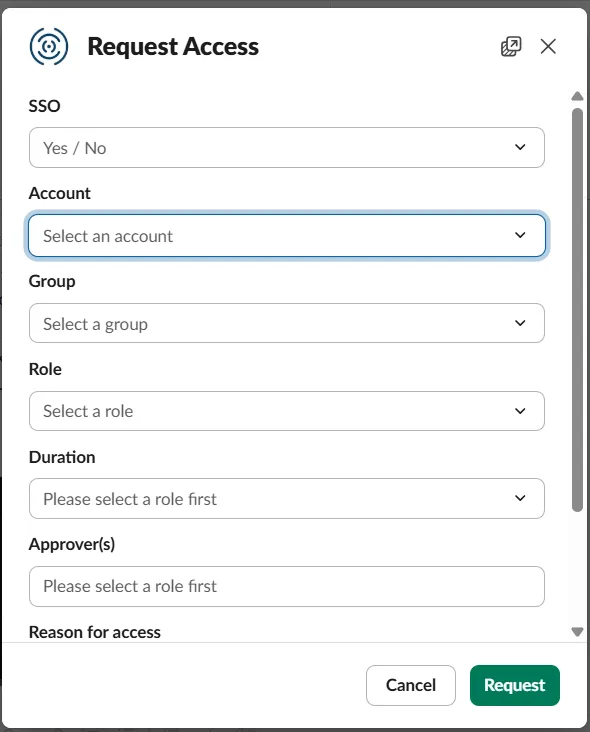
A credential stolen while no access is active inherits nothing currently elevated — the grant simply is not there to use.
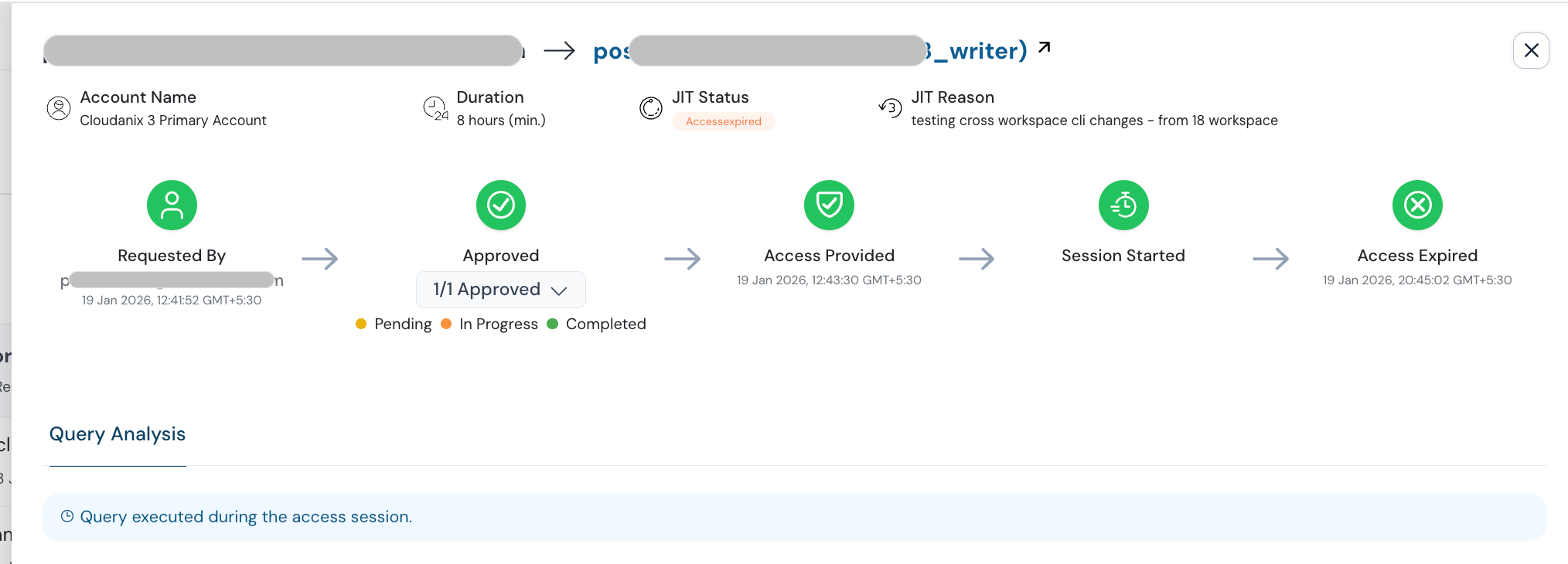
For the data layer itself — the 1.83 million records — Database JIT replaces standing database credentials with short-lived, scoped, approval-gated access, and DAM adds query-level visibility and dynamic masking so sensitive data in any environment is both monitored and not needlessly exposed in the clear. The crucial point is that posture, identity, access, and data all live in one CNAPP+ platform: the identity CIEM flags as over-privileged feeds directly into tightening its JIT policy, so “this dev credential can reach too much” leads straight to “so it should not hold that reach when it is idle.”
Being Honest About What This Covers
We would rather you deploy this understanding the boundary.
What identity-aware posture and JIT genuinely change: they make the risk visible before it is a breach, and they remove the standing access that turns a stolen credential into a data exfiltration. Correlating misconfiguration, identity, and data surfaces the dangerous dev-environment path as a single critical item instead of scattered findings; JIT ensures a compromised credential finds little or nothing currently elevated to use.
What still needs the fundamentals: this does not stop credential theft itself — phishing, infostealers, and leaked secrets will keep producing stolen credentials, so phishing-resistant MFA and secret hygiene remain essential. And it does not excuse putting production data in a lightly-governed dev environment; minimizing sensitive data in non-production is still the right move. Think of these controls as ensuring that when a credential is inevitably stolen, it inherits as little as possible and you can see where the danger was beforehand.
Being precise about this is deliberate. We are not promising you will never have a stolen credential. We are describing how to make the next one a contained event you saw coming, not the third breach in a month.
Key Takeaways
- Credential compromise is the number-one entry point. The login works as designed; the breach is what the login can reach.
- Dev environments are a real blind spot. They hold production-grade data with production-grade consequences and development-grade oversight.
- Posture without identity misses the risk. A misconfiguration, a broad standing credential, and a copy of sensitive data are one attack path — not three unrelated findings.
- Identity-aware CSPM surfaces the path. Correlating misconfiguration, identity, and data ranks the dangerous dev environment at the top, with reasoning.
- JIT removes the standing access. A stolen credential that finds nothing currently elevated turns the most common breach pattern into a non-event.
Want to see which identities can reach sensitive data across your dev and production environments — ranked by real exposure — and remove the standing access behind it? Book a demo to see Cloudanix CSPM, CIEM, and JIT on your own environment.
People Also Read
- The ASOS Breach: One Stolen Employee Login, and Why Standing Access Is the Real Exposure
- Azure Entra Credential Theft 2026: Why CSPM Needs Identity Correlation
- CIEM Solution: How Cloud Infrastructure Entitlement Management Reduces Breach Risk
- Why Your Developers Shouldn’t See Raw Production PII — and How to Prevent It
- What is CSPM?
- What is CIEM?
- Cloudanix: Just-in-Time Access