

In the modern world of 2026, the way we protect our digital assets has completely changed. We used to focus on building strong “walls” around our data centers using firewalls and physical security. But in the cloud, those walls have disappeared. Today, Identity is the new perimeter.
Whether it is a human employee, a software script, or an automated “bot,” every entity in your cloud has a set of permissions. These permissions—called “entitlements”—decide exactly what that entity can see, change, or delete. The problem is that most organizations have no idea how much power these identities actually have. In fact, roughly 90% of cloud identities are “over-privileged,” meaning they have far more power than they need to do their jobs. This creates a massive, invisible target for hackers.
To solve this, a new category of security has emerged: CIEM (Cloud Infrastructure Entitlement Management). As a critical “spoke” within a unified CNAPP (Cloud-Native Application Protection Platform), CIEM acts as a specialized tool that manages these identities across your entire cloud estate, ensuring that no one has enough power to cause a major breach.
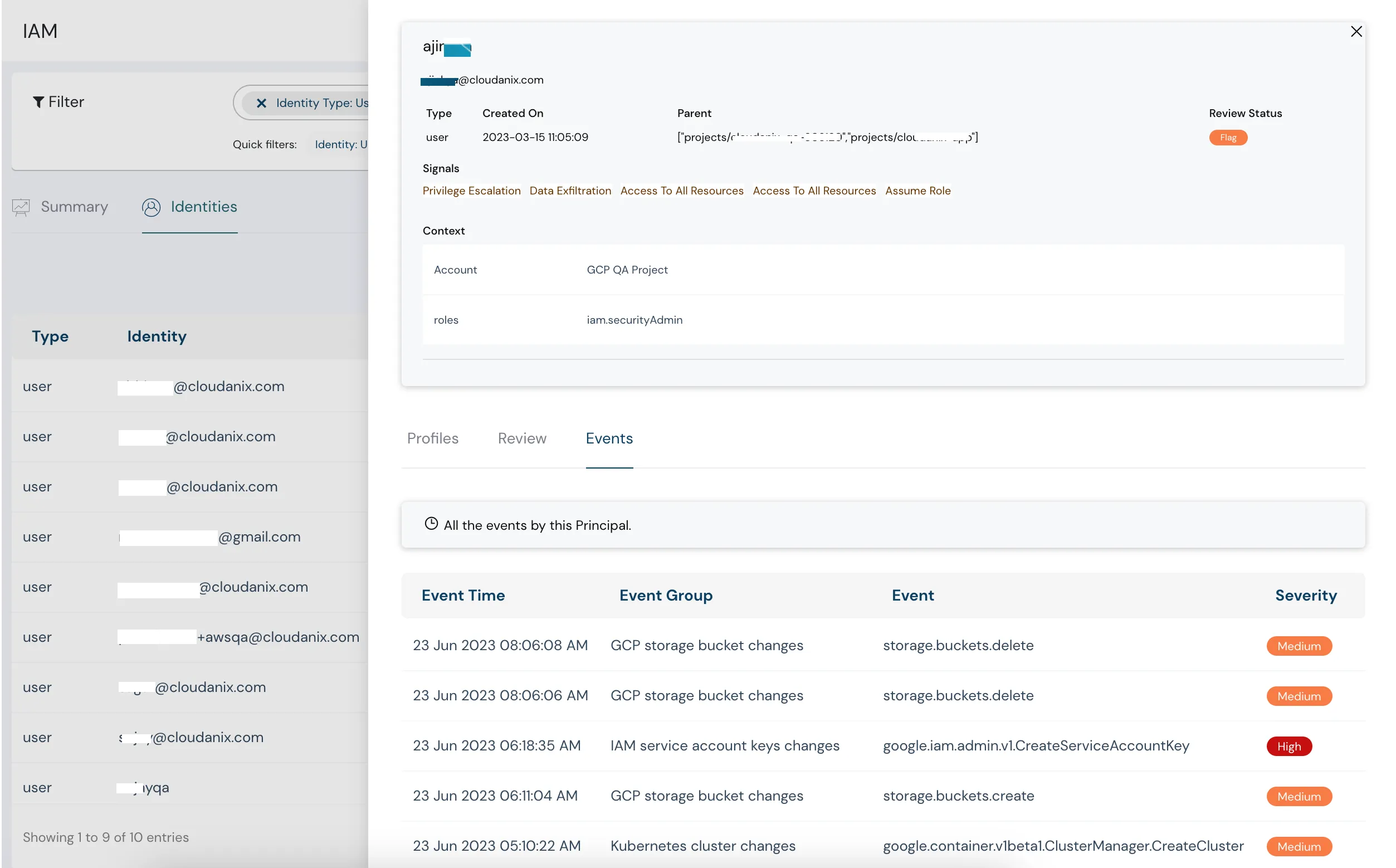
Cloudanix CIEM provides a unified view of all identities and their effective permissions across your multi-cloud environment.
The Multi-Cloud Audit Nightmare
If your organization uses more than one cloud provider—such as AWS, Azure, and Google Cloud (GCP)—you are likely facing what we call the “Multi-Cloud Audit Nightmare.”
The Complexity Gap
The biggest challenge is that every cloud provider speaks a different language when it comes to permissions.
- AWS uses “IAM Roles” and complex “JSON Policies” that can be attached to users or services.
- Azure relies on “RBAC” (Role-Based Access Control) and “Service Principals” managed through Microsoft Entra ID.
- GCP organizes everything into “Projects” and uses “Workload Identity” to give permissions to software.
Trying to understand who can access a sensitive database in AWS compared to a storage bucket in Azure is like trying to read three different languages at the same time. A real-world example of untangling this is CIEM for multi-account AWS: making sense of read and admin identities without JIT.
The Failure of Manual Audits
Many teams still try to manage these permissions using manual spreadsheets or basic command-line checks. This might work if you have ten users, but modern clouds have thousands of “machine identities”—automated processes that live and die in seconds.
Manual auditing simply cannot keep up. It leads to “audit fatigue,” where security teams become overwhelmed by the sheer volume of data. When you are tired and looking at thousands of lines of code, it is easy to miss a “toxic combination”—a single user who has just the right mix of permissions to bypass your security and steal data.
The GRC Burden (Governance, Risk, and Compliance)
For teams handled by GRC (Governance, Risk, and Compliance), the stakes are even higher. To pass audits like SOC 2, HIPAA, or PCI DSS, you must be able to prove exactly who has access to sensitive data.
Without a CIEM, proving this is a manual, high-stress nightmare that takes weeks of preparation. A CIEM automates this by providing a single, unified audit trail. Whether the identity is in AWS or GCP, the CIEM translates it into a simple format that you can show an auditor in minutes.
Uncovering Hidden Risks and Attack Paths
One of the most dangerous parts of cloud security is that what a user actually has the power to do is often hidden behind layers of complex code.
“Effective Permissions”: What Can They Really Do?
There is a big difference between the permissions written in a policy and the “effective permissions” a user actually has. For example, a user might have “Read-Only” access to a folder, but they also have the permission to “Update” a script that does have full administrative rights.
A CIEM analyzes these hidden connections to show you the truth. It looks past the surface to reveal the “Shadow Admins”—identities that aren’t officially administrators but have enough combined power to act like one.
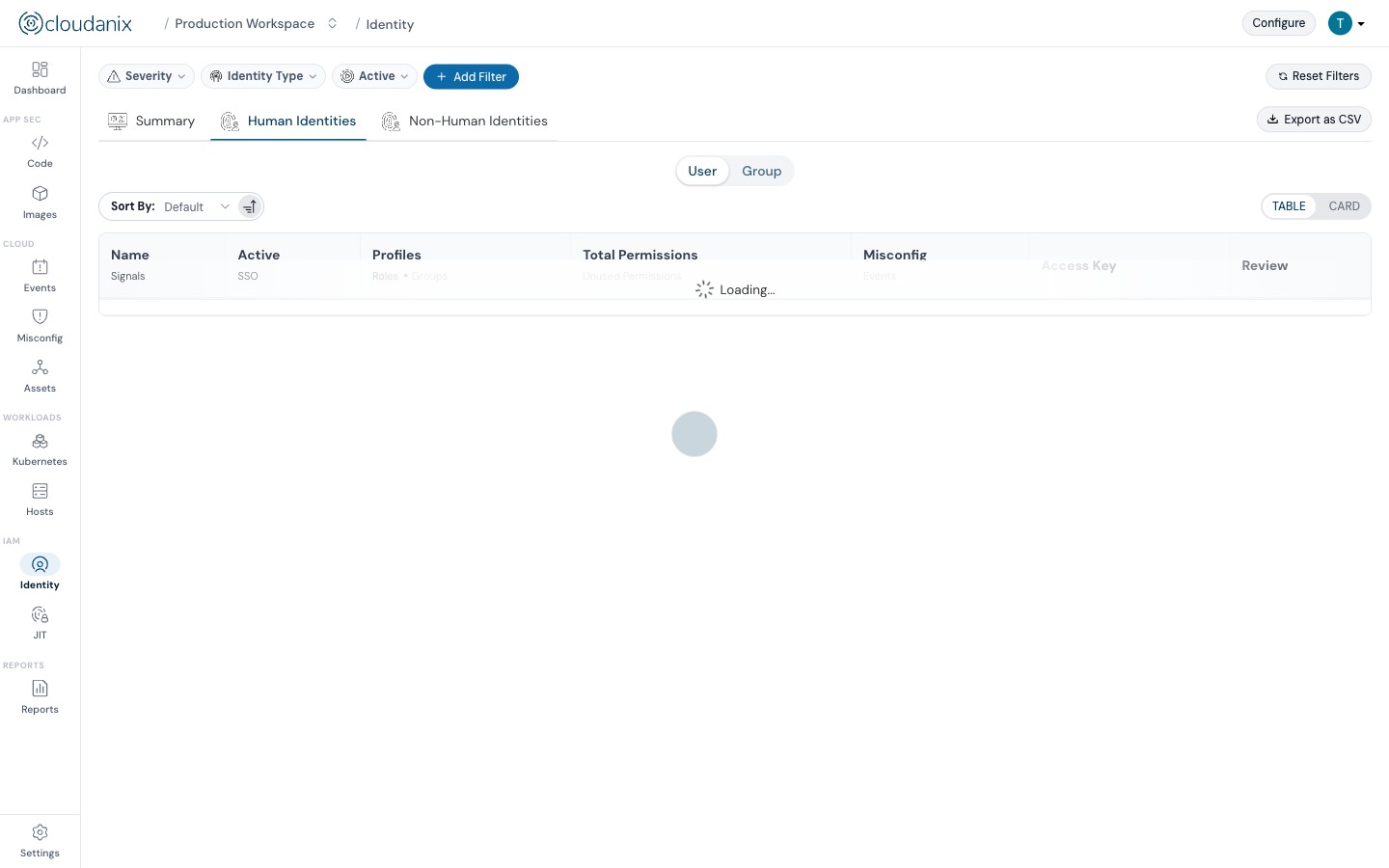
Cloudanix identifies shadow admins and over-privileged identities by analyzing effective permissions across your cloud infrastructure.
Visualizing Attack Paths
Hackers don’t just log in and steal data; they move through your cloud like a maze. This is called an “attack path.”
- A hacker might start by compromising a small, unimportant “Lambda function” in AWS.
- If that function has too many permissions, the hacker can use it to “jump” to a more important server.
- From there, they might find a “federated identity” that lets them move from your AWS environment straight into your Azure database.
CIEM visualizes these paths, showing you exactly how an attacker could move laterally across your network so you can cut off their path before they ever start. This is why identity signals matter so much for severity scoring — see correlating identity with misconfigurations: why contextual severity needs the IAM graph.
Solving Permission Sprawl
As a company grows, it suffers from “Permission Sprawl”—the buildup of thousands of unnecessary, forgotten, or “dormant” accounts.
The “Dormant Identity” Problem
Think of dormant identities like old keys to a house you no longer live in. If someone finds those keys, they can get in, even if the person they belonged to left months ago. CIEM tools continuously scan your environment to find any identity that hasn’t been used in 90 days or more. By finding and “pruning” these accounts, you significantly reduce the number of ways a hacker can get in.
Rightsizing at Scale
“Rightsizing” is the process of stripping away permissions that a user has but doesn’t use. If an automated script has 500 permissions but only uses five of them to do its job, the other 495 are just unnecessary risks.
A CIEM uses advanced analytics to watch how an identity behaves over time. It then suggests a “Least Privilege” policy—a new, smaller set of permissions that gives the identity exactly what it needs and nothing more. Because this is automated, you can rightsize thousands of accounts at once without breaking your applications.
Machine vs. Human Sprawl
In 2026, machine identities (like tokens, API keys, and secrets) now outnumber human users by 80 to 1. These machine identities are often more dangerous because they don’t have Multi-Factor Authentication (MFA) and they never sleep. CIEM makes these invisible “bots” visible, ensuring that every secret key is tracked and secured.
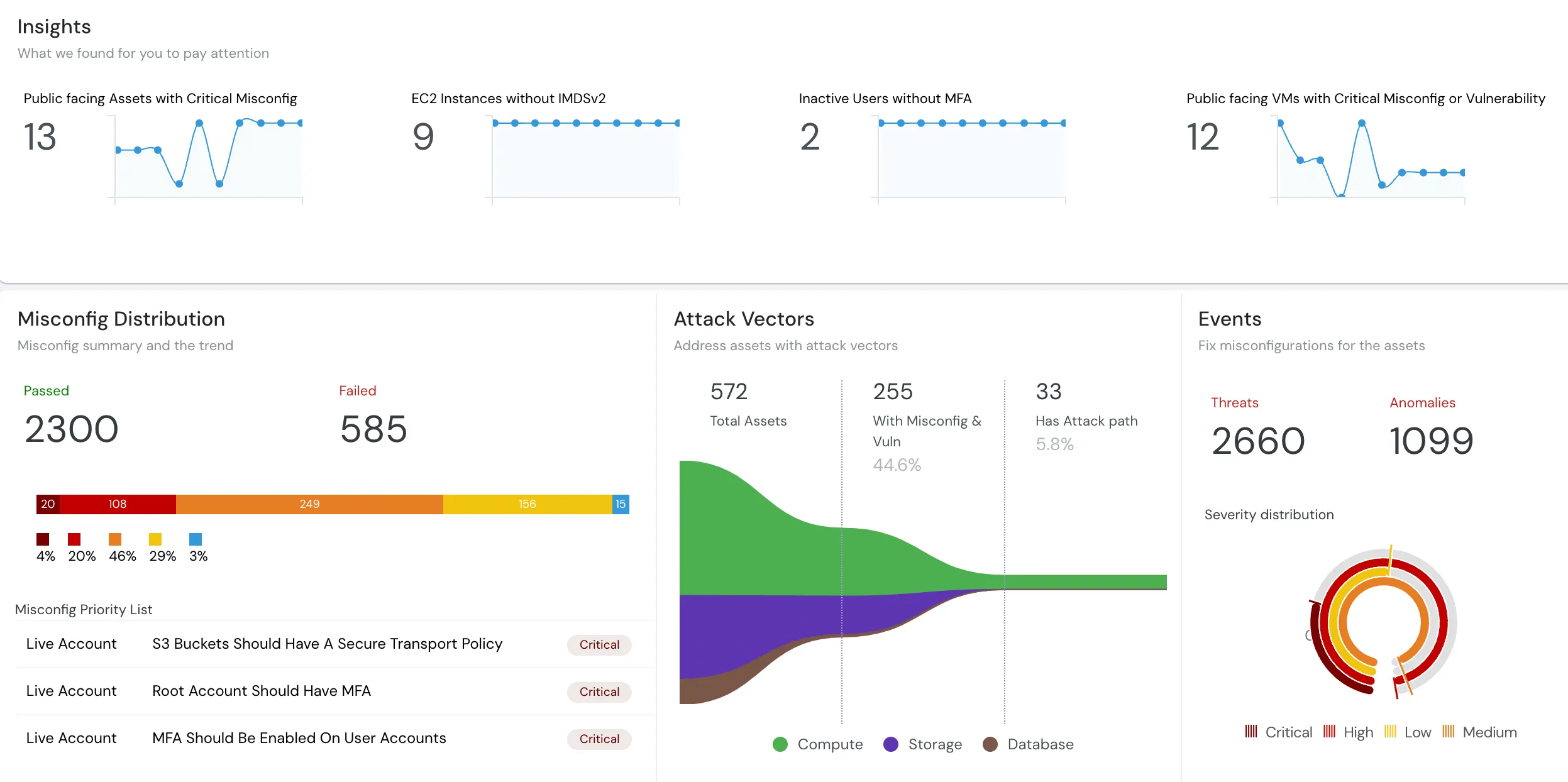
A unified dashboard provides visibility across all identities—human and machine—across your multi-cloud environment.
Strategic Enforcement: JIT and Least Privilege
The ultimate goal of a CIEM is to move your organization toward a “Zero Trust” model using two main strategies: JIT and Least Privilege.
Just-in-Time (JIT) Access
JIT access is the end of “Standing Privileges.” Instead of a developer having “Admin” rights all day, every day, they have zero admin rights by default.
- When they need to fix a problem, they request “Admin” access through the CIEM.
- The system grants that access for a specific amount of time—for example, two hours.
- Once the timer runs out, the access is automatically revoked.
This means that even if a developer’s account is hacked at 10:00 PM, the hacker has no permissions to use because the “Admin” rights expired hours ago.
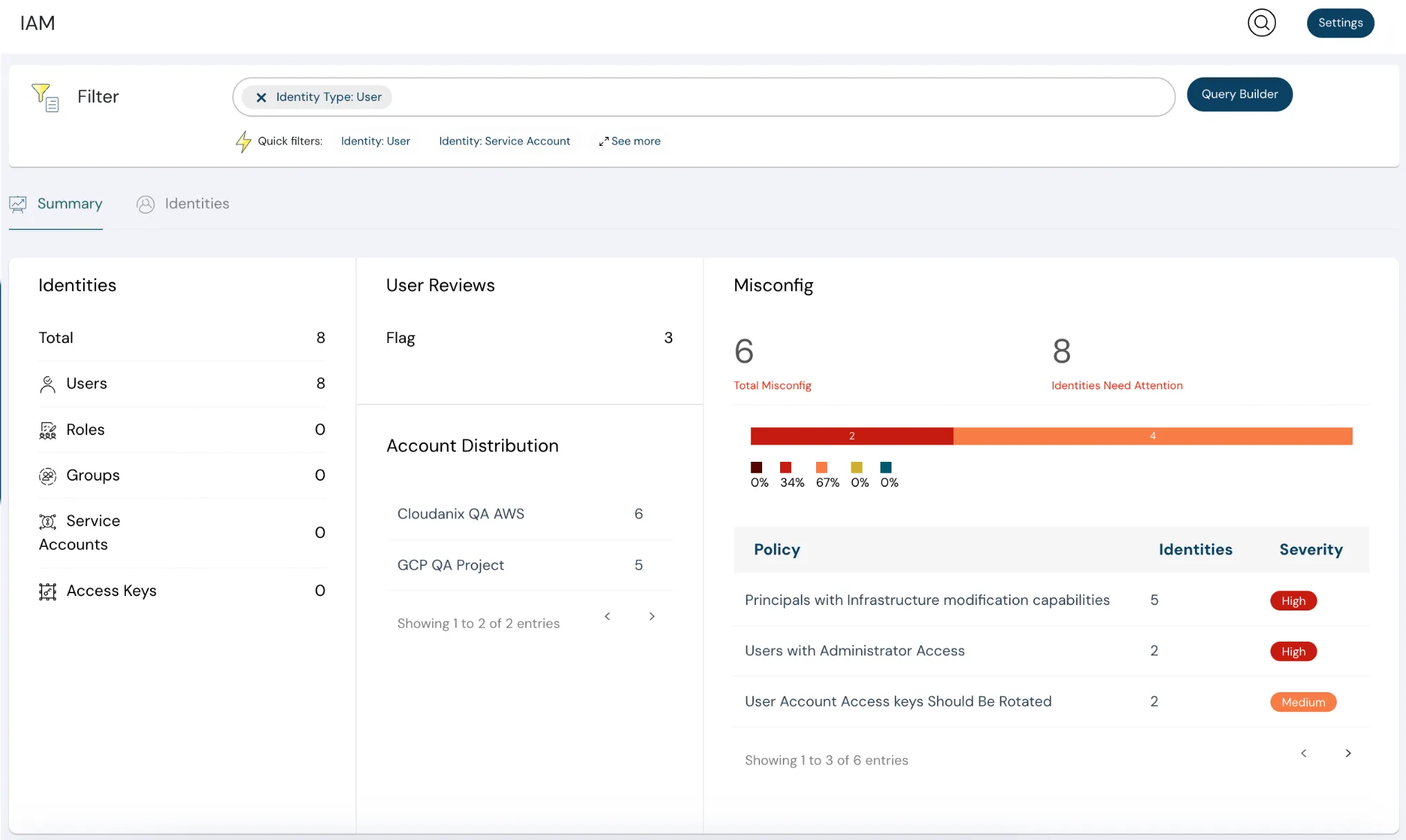
Cloudanix JIT Access ensures permissions are granted only for the time needed—and automatically revoked when the session ends.
Continuous Least Privilege Enforcement
Least Privilege is the rule that every user should only have the absolute minimum access required for their current task. A CIEM doesn’t just set this once; it enforces it continuously. If a developer accidentally adds too much power to an account (known as “permission drift”), the CIEM will instantly flag it or even automatically revert it to the safe version.
CIEM: The Vital Spoke of your CNAPP
While CIEM is powerful on its own, it is most effective when it is part of a unified CNAPP like Cloudanix.
The Power of Context
A standalone CIEM tool only sees identities. But a CNAPP sees everything. This provides “context.” For example:
- The CIEM side sees that a server has “Full Administrator” rights.
- The CWPP side (Workload Protection) sees that the same server has a critical vulnerability and is connected to the public internet.
When these two pieces of information are combined, the system realizes this is a “Category 5” emergency. Without the unified platform, these would just be two separate, medium-sized alerts that your team might ignore.
Unified Reporting for the Whole Team
By using CIEM as a “spoke” in a CNAPP, your CISO, DevOps engineers, and GRC teams all look at the same data. You get a single dashboard that shows your Identity risk, your Configuration risk, and your Runtime risk all in one place.
Conclusion: Take Control of Your Identity Risk
In the cloud, you are only as secure as your weakest identity. Manual audits are no longer enough to protect you from the complex, multi-cloud threats of 2026. To truly reduce your breach risk, you must move toward an automated, identity-first strategy.
By implementing a CIEM solution, you can uncover hidden attack paths, eliminate permission sprawl, and move your team toward the safety of Just-in-Time access.
The first step to a secure cloud is knowing where you are vulnerable today. We recommend performing an immediate IAM audit to identify your “Shadow Admins” and over-privileged service accounts — our guide on how to audit IAM permissions across multi-cloud environments is a good starting point, and the what is CIEM explainer covers the fundamentals.
Ready to see the truth about your cloud identities? Request a Demo of Cloudanix today. Our agentless platform onboards in just five minutes, providing you with a complete audit of your multi-cloud IAM policies and a clear path to Zero Trust.
Related Resources
- Configuration Drift Management: How to Detect Cloud Drift Before It Becomes an Incident
- A Complete List of AWS IAM Misconfigurations
- Elevate Your Security with IAM Just-in-Time (JIT) Access
- Modernizing Privileged Access for Cloud Infrastructure
- Mastering Third-Party Access with Just-in-Time (JIT) Approach
- How to Implement JIT Access in AWS, Azure & GCP
- What is CIEM? Benefits and How to Choose
- Demystifying Identity & Access Management
- Strategies for IAM in Multi-Cloud and AI Era