
Customer Snapshot
| Attribute | Details |
|---|---|
| Industry | Gig-economy / Workforce SaaS Platform |
| Cloud Environment | AWS |
| Code & CI | Bitbucket for SCM, Jenkins for CI |
| Team Structure | Lean DevOps team supporting a larger engineering org |
| Repositories | Including a dedicated database-change-management repo |
| Focus Area | Secret detection with precise exclusions |
The Situation: A Noisy Secret Alert Is a Secret Alert Nobody Trusts
This team adopted secret scanning across their Bitbucket repositories and immediately hit the problem every real codebase hits: some of what the scanner flags is not a live secret. They had a database-change-management repository where migration scripts legitimately contained strings the detector read as high-entropy secrets — the kind of value that looks like a credential to a pattern matcher but is, in context, an expected and benign part of the file.
Their requirement was precise and two-sided. First, exclude that specific string from the findings so it stops showing up as an open secret. Second — and this is the part teams often forget to ask for — stop it from generating email notifications and from appearing in the email summary too. An exclusion that silences the dashboard but keeps emailing the security channel every scan has not actually solved the problem; it has just moved the noise.
The Core Tension
A secret scanner earns its keep through trust: when it alerts, people act. The fastest way to destroy that trust is a stream of known-benign alerts that train the team to ignore secret notifications — which is exactly when a real leaked credential slips past unnoticed. Suppressing a confirmed false positive is not weakening the control; it is protecting the signal. But the suppression has to be complete, covering every channel the alert travels through, or the noise simply reappears in the inbox.
Where the Gaps Were
Benign Strings That Pattern-Match as Secrets
High-entropy values in database migration files, test fixtures, and sample data routinely trip entropy-based secret detection. These are not credentials to rotate — they are expected content. Without a way to mark them as excluded, they sit in the findings list as permanent false positives, diluting the real ones.
Exclusions That Don’t Reach the Notifications
A common half-measure is excluding a finding from the dashboard while the notification pipeline keeps firing on it. The security channel keeps getting pinged, the daily or per-scan email summary keeps listing it, and the team’s trust in secret emails erodes even though the dashboard looks clean.
No Record of Why Something Was Excluded
An exclusion without a captured reason is a governance gap — at audit time, “why is this secret finding suppressed?” needs an answer, not a shrug.
How Cloudanix Addresses This
Broad Detection First, Then Precise Exclusion
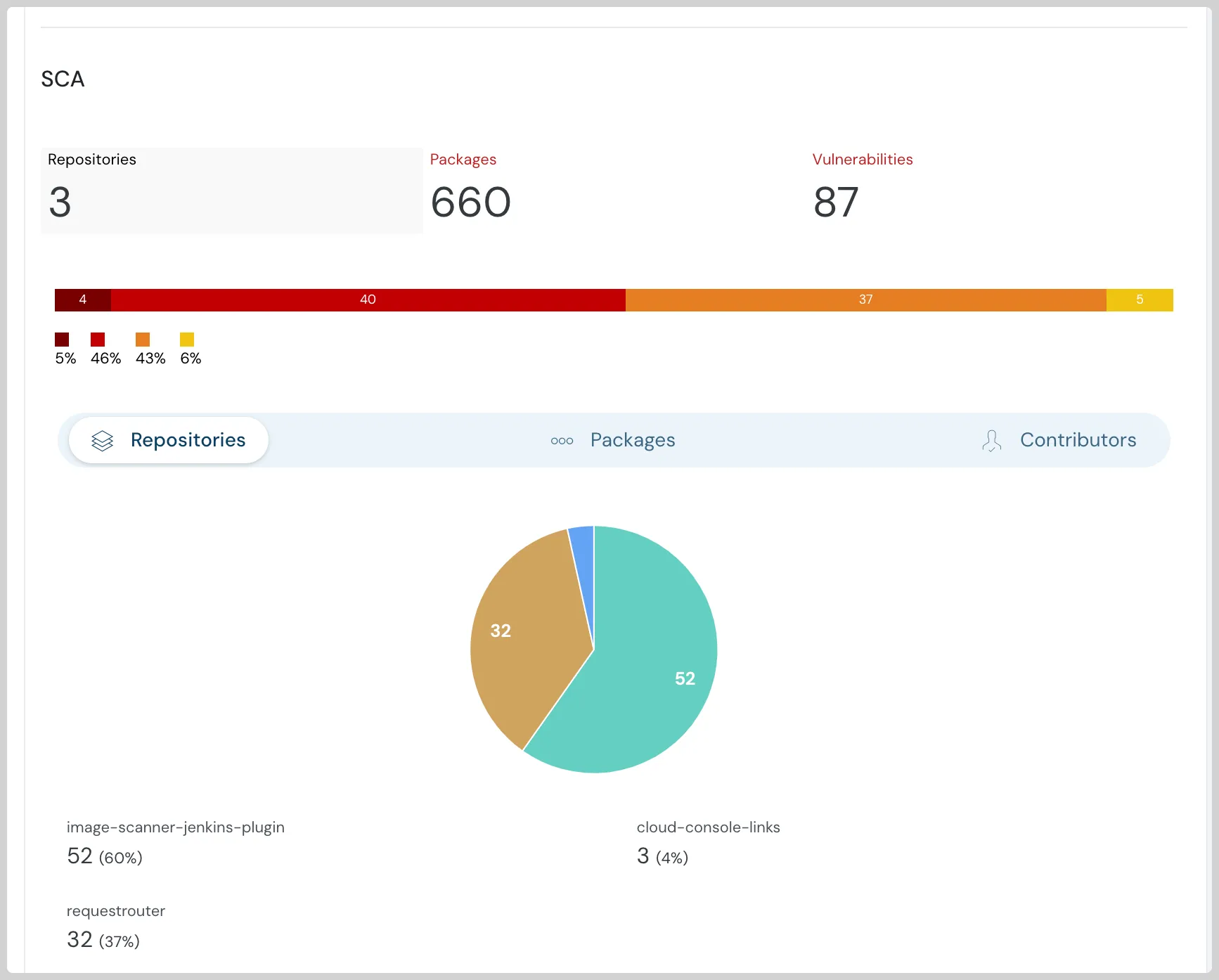
Cloudanix Code Security scans Bitbucket repositories for secrets — hardcoded credentials, cloud keys, tokens, and private keys — across thousands of built-in patterns plus full commit history, surfacing findings at PR time. (See the secret scanning guide.) Against that broad detection, the team can mark a specific confirmed-benign finding as excluded, so it is removed from the active findings view.
Exclusions That Carry Through to Notifications and Summaries
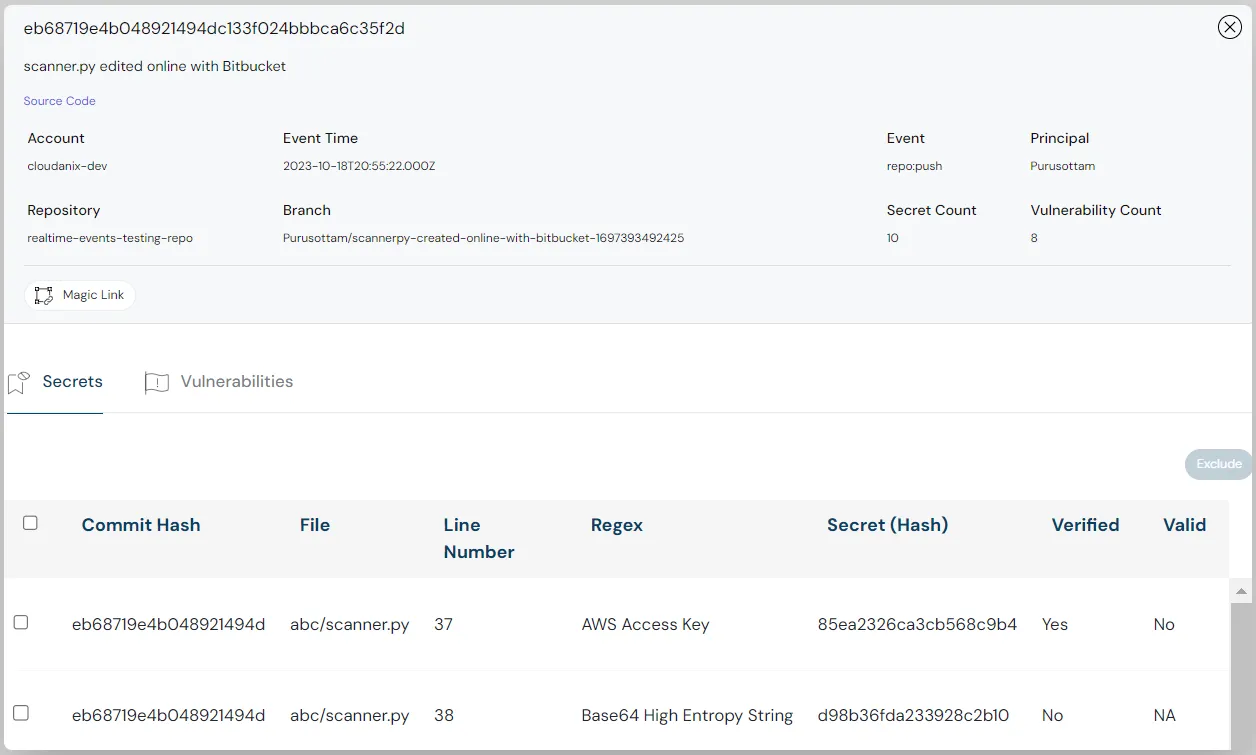
The point this team cared about: an excluded finding should also drop out of the email notifications and the email summary, not just the dashboard. Handling exclusions as a first-class triage action — rather than a dashboard-only filter — is what keeps the secret alert channel trustworthy, because the only things that reach the inbox are the findings that still need action.
A Reason on Record for Every Exclusion
Cloudanix captures the justification when a finding is excluded, so a suppression is a governed decision — “this string in the migration repo is expected, excluded by this person, for this reason” — rather than an invisible silence. That record is exactly what an auditor asks for and what distinguishes a defensible exclusion from a careless one.
Bring-Your-Own Patterns to Reduce Noise at the Source
Where benign values follow a recognizable internal format, custom pattern support lets the team tune detection so the scanner distinguishes their expected strings from genuine credentials up front — reducing the exclusions needed in the first place.
Platform Impact
| Dimension | Dashboard-Only Suppression | First-Class Exclusions |
|---|---|---|
| Findings view | Clean | Clean |
| Email notifications | Still firing | Suppressed with the finding |
| Email summary | Still listing it | Drops the excluded finding |
| Governance | No reason captured | Justification on record |
| Signal trust | Erodes over time | Preserved |
Why Complete Suppression Protects the Signal
The instinct to keep alerting “just in case” is understandable, but it backfires. Every known-benign secret email that lands in the channel lowers the odds that the next email — the one about a real leaked AWS key — gets read with urgency. Alert fatigue is not a soft problem; it is the mechanism by which real incidents get missed. Making an exclusion complete across every channel, with a reason on record, is what lets the team keep secret notifications as a high-signal, high-trust alert rather than background noise.
Key Outcomes
- ✅ Broad Secret Detection: Thousands of patterns plus full-history scanning on Bitbucket.
- ✅ Precise Exclusions: Confirmed-benign strings removed from the active findings view.
- ✅ Complete Suppression: Exclusions carry through to email notifications and summaries.
- ✅ Governed Decisions: A captured justification for every exclusion.
- ✅ Custom Patterns: Tune detection to the team’s expected formats at the source.
Fighting False-Positive Secret Alerts in Your Repos?
If a benign string in a migration or fixtures file keeps emailing your security channel, Cloudanix lets you exclude it cleanly — from the dashboard and the notifications and summary — with a reason on record, so your secret alerts stay trustworthy.
Book a Free Assessment to see secret detection with precise exclusions on your Bitbucket repositories, or explore the interactive demo on the Code Security page.
Related Resources
- Secret Scanning: Guide to Prevent Data Breaches and Leaks
- How to Stop Secrets Leaking in Git
- What is Secrets Sprawl?
- What is Code Security?
- Secret-Aware PR Quality Gates: Failing the Pull Request on Any Leaked Secret
- Code Security for Bitbucket: SAST, SCA, Secrets, and Real-Time Workspace Threat Monitoring