
Updated August 2026: This article was originally published in June 2024 and has been comprehensively updated to reflect the 2026 cybersecurity hiring landscape, including AI security skill requirements, building hybrid/remote security teams, and updated market dynamics as of 2026.
The attack surface of a modern organization grows far faster than headcount ever will. A single startup running workloads across AWS, Azure, and GCP can generate thousands of security events per day — and somewhere between three and five people are responsible for making sense of all of it. That ratio isn’t going away. If anything, the gap between what needs protecting and who’s available to protect it is widening.
Building a cybersecurity team is less about filling seats and more about assembling the right combination of mindset, skills, and adaptability. The best security teams aren’t necessarily the largest. They’re the ones where every person covers meaningful ground, communicates clearly across the organization, and stays ahead of a threat landscape that evolves monthly.
Whether you’re a CISO building out a mature security function, a VP of Engineering hiring your first dedicated security person, or a founder wondering when it’s time to stop relying on “the developer who knows security stuff” — this guide covers what to look for, how to attract the right people, and how to structure goals once they’re on board.
What Skills Should You Look for When Hiring for Cybersecurity Roles?
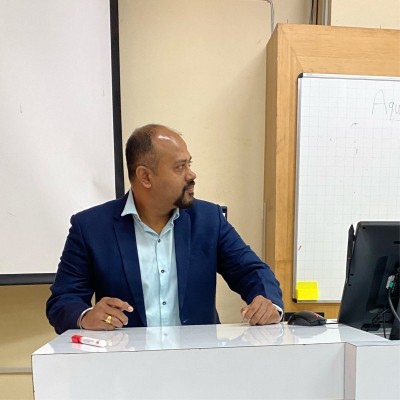
In our ScaletoZero episode with Jesse Miller, we asked what qualities and skills he seeks when hiring for cybersecurity roles. His answer surprised us. Before reaching for technical checklists, he emphasized non-technical skills: basic aptitude and attitude, good communication, and personality assessments — particularly ensuring candidates have empathy.
His reasoning was refreshingly practical: “If you’re hiring for a senior cybersecurity role, it is assumed that you already have the skills to handle things in the cloud, networks, and whatnot.” Technical knowledge is a commodity at senior levels. What separates great security professionals from merely competent ones are the traits below.
Aptitude and Attitude
This is the foundation everything else builds on. CISOs consistently tell us they look for individuals with genuine curiosity about how systems break, a strong work ethic, and a visible commitment to continuous learning. Cybersecurity moves too fast for anyone who stopped learning after their last certification.
The best candidates are the ones who tinker on weekends, follow threat intelligence feeds for fun, contribute to open-source security tools, or run home labs. They’re analytical and persistent — the kind of people who will chase a weird log entry for hours because something doesn’t feel right.
Attitude also means resilience. Security teams deal with high-pressure incidents, shifting priorities, and the existential weight of being the team that “didn’t prevent the breach.” You need people who can absorb pressure without burning out, and who take ownership without finger-pointing when things go sideways.
Good Communication Skills
This is non-negotiable. The most technically brilliant security engineer provides limited value if they can’t explain risk to a CFO, write a clear incident report, or guide a product team through a secure design review.
Effective security communication means speaking the language of the audience. When talking to engineers, speak in technical specifics. When talking to executives, speak in business risk and financial impact. When talking to end users about a new security policy, speak in terms of what changes for their daily workflow and why it matters.
Look for candidates who can take a complex vulnerability — say, a privilege escalation chain across three services — and explain it clearly at three different levels: to a peer, to a director, and to someone with zero security background. If they can do that in an interview, they’ll do it on the job.
Personality Test — Empathy
Remember our podcast episode with Shivani Arni? She explored emotional intelligence in depth and made a compelling case for empathy as a core security skill.
Here’s why it matters practically: security measures almost always create friction for users. Every MFA prompt, every access review, every policy restriction adds a step to someone’s day. Security professionals with empathy understand this. They don’t dismiss user frustration as “people just don’t get security.” Instead, they find solutions that balance security requirements with usability.
Empathy also makes for better threat modeling. Understanding how real humans actually behave — taking shortcuts, reusing passwords, clicking links when they’re distracted — leads to security architectures that account for human nature rather than fighting it.
Within the team, empathy fosters collaboration and psychological safety. People share mistakes faster, ask for help sooner, and support each other through incidents. That matters enormously when you’re a small team covering a large surface.
Programming and Scripting
This isn’t about hiring people who can build production applications. It’s about automation capability. Security teams that can write Python scripts to parse logs, build custom detection rules, automate repetitive compliance checks, or integrate tools via APIs will always outperform teams that rely entirely on manual processes and vendor UIs.
In 2026, scripting ability increasingly means the ability to work with AI-assisted tooling: writing prompts for security copilots, building automation workflows that incorporate LLM-based triage, and customizing detection logic in platforms that support code-based policies.
At minimum, look for comfort with Python, Bash, and at least one infrastructure-as-code tool (Terraform, CloudFormation, or Pulumi). Bonus points for experience with Go or Rust for security tooling.
Threat Intelligence
The ability to gather, analyze, and interpret threat intelligence separates reactive teams from proactive ones. This means understanding the threat actors relevant to your industry, tracking TTPs (Tactics, Techniques, and Procedures), and translating intelligence into actionable defensive measures.
In practice, this looks like someone who can read a threat report about a new cloud exploitation technique, assess whether your environment is vulnerable, and either confirm existing controls cover it or recommend specific mitigations — all within hours, not weeks.
Incident Response
Expertise in incident response means the team can effectively detect, contain, eradicate, and recover from security incidents while minimizing damage and downtime. This includes maintaining runbooks, running tabletop exercises, coordinating with legal and communications during active incidents, and conducting thorough post-incident reviews.
The best IR practitioners stay calm under pressure, communicate clearly during chaos, and treat every incident as a learning opportunity rather than a blame exercise.
Digital Forensics
When a security incident occurs, the ability to collect, preserve, and analyze digital evidence is essential. This covers memory forensics, disk imaging, network traffic analysis, and cloud-specific forensics (CloudTrail analysis, container image inspection, etc.). Even if you’re not in a heavily regulated industry, forensics capability helps you understand what actually happened during an incident rather than guessing.
Compliance Knowledge
Understanding relevant data privacy regulations and compliance frameworks (SOC 2, ISO 27001, HIPAA, PCI DSS, GDPR) ensures your team implements security controls that meet legal and industry standards. This is especially critical for startups approaching enterprise sales, where compliance certifications are often table stakes.
Dive deeper into cloud compliance in our article here.
Hiring for AI Security Skills
This is the fastest-growing skill gap in cybersecurity in 2026. Organizations are deploying AI across their products, internal operations, and customer-facing systems at a pace that far outstrips their ability to secure those deployments. If you’re not hiring for AI security capability today, you’re already behind.
What AI Security Skills Look Like in Practice
- Understanding AI/ML attack surfaces. This means knowing how model poisoning works, understanding adversarial inputs, recognizing data leakage through model outputs, and assessing risks in training pipelines. It’s not about being an ML engineer — it’s about knowing where AI systems are vulnerable.
- LLM security. With large language models embedded in everything from customer support to code generation, security professionals need to understand prompt injection attacks, jailbreaking techniques, data exfiltration through conversational interfaces, and the risks of retrieval-augmented generation (RAG) pipelines that connect LLMs to sensitive internal data.
- AI agent governance. Autonomous AI agents that can take actions — browsing the web, executing code, calling APIs, modifying databases — introduce entirely new classes of risk. Teams building this capability can learn from securing AI coding agents at scale for enterprise development teams. Security teams need people who can define guardrails for agent behavior, monitor for unintended actions, and architect systems where AI agents operate with appropriate least-privilege constraints.
- Supply chain risks in ML. Model registries, pre-trained weights from public repositories, and third-party training data all represent supply chain attack vectors that mirror (but differ from) traditional software supply chain risks.
How to Evaluate AI Security Candidates
This is still an emerging field, so don’t expect polished certifications or years of titled experience. Instead, look for:
- People who’ve done red-teaming or security assessments of AI systems
- Security engineers who’ve built guardrails for LLM deployments
- Researchers who’ve published on adversarial machine learning
- Engineers who understand both the ML pipeline and traditional application security
The overlap between “understands AI” and “understands security” is still small. When you find someone in that intersection, move fast.
Building Hybrid and Remote Security Teams
The post-2024 workplace reality is clear: security teams are distributed. Whether you’re fully remote, hybrid, or multi-timezone, the challenges of building an effective security function across distances are real and specific to this discipline.
Why Security Teams Face Unique Remote Challenges
Security work has characteristics that make remote coordination harder than most engineering disciplines:
- Incident response requires synchronous, high-bandwidth communication. When an active breach is unfolding, you can’t wait for someone to check Slack in a few hours. Teams need clear escalation paths, on-call rotations that respect time zones, and tools that allow rapid synchronous collaboration regardless of location.
- Sensitive information can’t flow through all channels. Discussing active vulnerabilities, sharing forensic evidence, or coordinating with legal during a breach requires secure communication channels. Remote teams need clear policies about what goes where.
- Security culture is hard to build asynchronously. The casual knowledge transfer that happens when someone overhears a colleague discussing a weird alert — that disappears in remote settings unless you deliberately create spaces for it.
Practices That Work for Distributed Security Teams
- Async-first with synchronous escalation. Default to written communication (documented decisions, written runbooks, recorded demos), but have clear and practiced paths to go synchronous when incidents demand it.
- Overlap hours. Even across time zones, ensure at least 2-3 hours of daily overlap where the full team can collaborate. Schedule your most important rituals — threat briefings, incident reviews, architecture discussions — in those windows.
- Distributed incident response drills. Run tabletop exercises with the team in their actual working conditions (home offices, different time zones, different communication tools). If your incident response plan only works when everyone is in the same room, it doesn’t work.
- Documentation as a first-class deliverable. Remote teams that document well outperform co-located teams that rely on oral tradition. Runbooks, decision logs, architecture decisions, and post-incident reviews should be written, searchable, and maintained.
- Invest in tooling that provides shared context. When your security team is distributed, a unified platform that gives everyone the same visibility into your security posture matters more than ever. Consolidated dashboards and centralized alerting mean a team member in Berlin sees the same picture as a team member in San Francisco.
The Role of AI Tools in Reducing Required Team Size
Here’s a reality that every CISO and hiring manager needs to internalize: AI-powered security tooling is fundamentally changing the math on team size. A well-equipped team of four in 2026 can cover ground that required eight to ten people in 2022.
This doesn’t mean you should hire fewer people than you need. It means the definition of “enough people” has changed.
Where AI Tooling Delivers the Most Leverage
- Alert triage and prioritization. The single biggest time sink for security teams — reviewing hundreds or thousands of daily alerts to find the handful that matter — is precisely where AI excels. Modern platforms use machine learning to correlate events, assess context, and surface the alerts that genuinely require human judgment.
- Automated remediation for known patterns. Misconfigured S3 buckets, overly permissive IAM roles, unrotated secrets, expired certificates — these are well-understood problems with well-understood fixes. AI-powered platforms can detect and remediate these automatically, freeing your team for work that requires creativity and judgment.
- GenAI-powered playbooks and investigation. Security analysts can now use AI assistants to accelerate investigations — summarizing log data, suggesting next steps in an incident, generating queries across multiple data sources, and drafting communications. This doesn’t replace experienced analysts; it makes them dramatically faster.
- Continuous compliance monitoring. Instead of quarterly compliance audits that consume weeks of team time, AI-driven platforms provide continuous monitoring against compliance frameworks, automatically flagging drift and suggesting remediation.
What This Means for Hiring Strategy
The implication isn’t “hire fewer security people.” It’s “hire differently.” With AI handling routine triage and remediation, you can afford to hire people with more strategic, creative, and architectural skills. Your team spends less time clicking through alerts and more time on threat modeling, security architecture, red-teaming, and proactive defense.
Modern CNAPP+ platforms like Cloudanix consolidate what used to require five to eight separate tools — CSPM, CWPP, CIEM, vulnerability scanning, compliance monitoring — into a single unified view. This is exactly the shift one team describes going from native and open-source tools to a correlated CNAPP for a lean security team. That consolidation directly reduces the human coordination overhead of managing multiple dashboards, correlating alerts across tools, and maintaining integrations. A team of three working with one comprehensive platform outperforms a team of six juggling a dozen point solutions.
How to Attract the Right Talent to Your Organization
Having the right job description is only half the equation. The cybersecurity job market is competitive, and the best candidates have options. Here’s what actually moves the needle:
1. Culture of Learning and Knowledge-Sharing
Top security professionals want to keep growing. They’re drawn to organizations that invest in conference attendance, support certifications, allocate time for research, and maintain internal knowledge-sharing practices (lunch-and-learns, internal CTFs, book clubs, shared threat intelligence briefings).
2. Radical Candor Over Corporate Bureaucracy
In our podcast with Jesse Miller, he introduced the concept of “Radical Candor” — the practice of giving direct feedback that pushes people to grow and improve. Security professionals tend to be straightforward people who value honest, direct communication. Organizations with thick layers of bureaucracy, politics, and indirect communication lose these people fast.
Create an environment where people can challenge decisions, raise concerns, and propose alternatives without navigating a political minefield. Security teams, in particular, need to be able to say “this is a risk and here’s why” without filtering through three layers of management.
3. Clear Growth Paths
Show candidates where they can go. Whether that’s growing into a staff security engineer role, moving into leadership, specializing in a domain (AI security, cloud security, AppSec), or building out their own team — people want to see a trajectory.
4. Meaningful Work and Visible Impact
Security professionals are motivated by impact. If your organization treats security as a box-checking exercise, you’ll attract box-checkers. If you treat security as a strategic function that enables the business to move faster with confidence, you’ll attract people who think strategically.
5. Competitive Compensation — But Not Just Money
Yes, pay competitively. But also recognize that top candidates evaluate the full package: remote flexibility, tooling quality (engineers hate fighting bad tools), on-call burden, team size relative to scope, and whether leadership actually listens when security raises concerns.
How Should Startups Hire Their First Security Role?
This is one of the most common questions we hear from founders and engineering leaders. The short answer: it depends on your stage, your compliance requirements, and your risk profile.
Option 1: Managed Services First
If you’re pre-Series B and don’t have a compliance deadline forcing the issue, consider starting with a managed security service provider (MSSP) or virtual CISO service. You get a team of specialists covering your environment for a predictable monthly cost, without the overhead of recruiting, onboarding, and retaining a full-time hire.
This works well when your primary need is “make sure nothing is catastrophically misconfigured” rather than “build a security program from scratch.”
Option 2: One Generalist Plus the Right Platform
For most startups between Series A and Series C, the practical sweet spot is hiring a single security generalist — someone who understands cloud security, application security, compliance basics, and incident response at a working level — and pairing them with a unified CNAPP+ platform like Cloudanix that provides the visibility and automation they can’t achieve alone.
This generalist doesn’t need to be an expert in everything. They need to be competent across domains and excellent at prioritization. The platform handles the breadth (scanning all your cloud resources, monitoring compliance drift, detecting misconfigurations), while the human handles the depth (threat modeling, architecture reviews, incident response, security culture).
A single person can’t watch every cloud resource across three accounts, review every code change for security implications, and run compliance audits. But one sharp generalist with the right tooling can cover more ground than you’d expect.
Option 3: Fractional Security Leader + Platform + Engineers
If you’re growing fast and security decisions need to be made at an architectural level, consider a fractional CISO (part-time experienced security leader) combined with one or two security engineers and strong tooling. The fractional CISO sets strategy, the engineers execute, and the platform provides the continuous monitoring and automation layer.
KPIs vs. OKRs for Security Teams
After hiring your team, how do you measure their effectiveness? This is where many organizations get it wrong by reaching for traditional KPIs.
Why KPIs Can Backfire for Internal Security Teams
KPIs like “number of vulnerabilities patched,” “mean time to detection,” or “tickets resolved” seem logical, but they create perverse incentives when applied to internal teams:
- Limited scope. KPIs tend to measure what’s easily countable, not what’s most important. “Tickets resolved” might incentivize someone to close tickets quickly rather than address root causes. “Vulnerabilities patched” doesn’t distinguish between a critical RCE and a low-severity information disclosure.
- Discourages proactive work. If your metrics reward reactive work (responding to alerts, patching vulns), you implicitly deprioritize proactive work (threat modeling, architecture reviews, building automation). The highest-value security work often prevents incidents from happening — and you can’t easily measure events that didn’t occur.
- Discourages collaboration. Individual KPIs can create competition within the team, hindering the knowledge-sharing and collaboration that small security teams desperately need.
Note: KPIs work well for managed security services, where the relationship is transactional and measurable outputs matter. But internal teams need a different framework.
Why OKRs Work Better for Security Teams
Jesse Miller’s recommendation — and one we’ve seen work across dozens of organizations — is to use OKRs (Objectives and Key Results) for internal security teams. OKRs emphasize achieving meaningful objectives with measurable results that track progress toward those objectives.
OKRs satisfy two vital needs:
- Team alignment. Developing OKRs collaboratively ensures the entire team understands what matters this quarter and how their work connects to the broader mission. Everyone rows in the same direction.
- Culture and shared purpose. By aligning individual contributions with broader organizational objectives, OKRs promote a sense of purpose. People aren’t just “closing tickets” — they’re “reducing our mean time to detect lateral movement from 72 hours to under 4 hours,” which connects directly to protecting the business.
Concrete OKR Examples for Security Teams
Here are practical examples you can adapt:
Objective: Reduce cloud infrastructure risk exposure by end of Q3.
- KR1: Achieve 95% compliance score across all production cloud accounts (up from 78%)
- KR2: Remediate all critical and high-severity misconfigurations within 48 hours of detection
- KR3: Implement automated guardrails that prevent the top 10 misconfigurations from being deployed
- KR4: Complete security architecture review for all new services launched this quarter
Objective: Build a security-aware engineering culture across the organization.
- KR1: 100% of engineering teams complete secure development training (with >80% assessment scores)
- KR2: Reduce recurring vulnerability categories in code reviews by 50%
- KR3: Launch a security champions program with at least one representative per engineering team
- KR4: Run two organization-wide incident response tabletop exercises
Objective: Establish mature incident detection and response capability.
- KR1: Reduce mean time to detect (MTTD) for critical threats from 18 hours to under 4 hours
- KR2: Develop and test runbooks for the top 15 incident scenarios relevant to our environment
- KR3: Conduct monthly purple team exercises and document findings and improvements
- KR4: Achieve zero incidents where containment took longer than 2 hours due to process gaps
Objective: Secure our AI/ML pipeline and deployments.
- KR1: Complete threat model for all production AI systems, including data pipelines and model serving
- KR2: Implement input validation and output filtering for all customer-facing LLM features
- KR3: Establish monitoring for model drift, data poisoning indicators, and anomalous inference patterns
- KR4: Define and enforce least-privilege access policies for all AI agent deployments
Notice how each objective tells a story about what the team is trying to achieve, while the key results provide concrete, measurable progress indicators. This gives individuals autonomy in how they achieve results while maintaining team alignment on what matters.
Conclusion
Building an effective cybersecurity team in 2026 requires a fundamentally different approach than it did even two years ago. The skills landscape has shifted — AI security is no longer optional, remote collaboration is the norm, and AI-powered tooling means smaller teams can defend larger surfaces than ever before.
The constants remain: hire for aptitude and attitude first, prioritize communication and empathy, create a culture of learning and candor, and structure goals around meaningful outcomes rather than ticket counts.
For startups and growing organizations, the path is clearer than ever. You don’t need a team of fifteen to have a strong security posture. You need the right people, the right culture, and the right platform working together. Whether that’s one generalist with comprehensive tooling, a small team with clear OKRs, or a fractional leader guiding dedicated engineers — the science of hiring cybersecurity professionals is less about finding unicorns and more about assembling the right combination of human judgment and platform leverage.
Explore what security leaders are prioritizing and how they’re building their teams on the ScaletoZero podcast — where CISOs and security practitioners share unfiltered perspectives on the challenges and opportunities in modern cybersecurity.