

Between November 17 and 20, 2026, four flaws that let attackers run their own code on servers were disclosed or patched. A fifth, in PHP, was fixed on November 19 as part of a release covering seven critical flaws. Each came with a catchy name, a high severity score and a rush of advice to “patch now”: Java4Shell in the Java runtime, nginx2root in the NGINX web server, Ruby2Shell in the Ruby language, and a VMware vCenter authentication bypass that a China-linked espionage group exploited as a zero-day before a patch existed. If you run any real infrastructure, you probably run at least one of these without knowing it.
This post is not another list of bulletins. It explains what each flaw is in plain terms, shows you how to check in a few minutes whether it applies to you, and gives a method for deciding what to fix first when several critical bugs arrive together. We cover general steps that need no particular product, and how Cloudanix can help.
Sources: Java4Shell, nginx2root, Ruby2Shell and the vCenter zero-day, all from The Hacker News, which cites the vendors and researchers named below. Version numbers and workarounds come from those reports and the vendors’ advisories. Some details were still changing as the reports were updated, so confirm against the vendor advisory for your exact build before acting. Commands are our own guidance and should be tested first.
Who Should Read What
- Platform, DevOps and SRE engineers: Steps 1 to 5 contain the commands you can run today.
- Security and vulnerability management teams: “How to Read a Critical Bug” and Steps 2 and 3. The method is more useful than any one patch.
- CISOs and engineering leaders: “The Four Flaws at a Glance” and “Key Takeaways.”
- Application developers (Java, Ruby, Python, web): the Java4Shell and Ruby2Shell sections. Your runtime version matters as much as your code.
- Infrastructure and virtualization admins: the vCenter section and Step 6.
The Four Flaws at a Glance
Remote code execution (RCE) means an attacker can make your server run commands of their choosing. Pre-authentication (“pre-auth”) means they can do it without logging in first. Those two words together describe the worst class of bug.
| Flaw | Where | Needs a login? | Known to be exploited? | Fixed in |
|---|---|---|---|---|
| Java4Shell (CVE-2026-114938) | Java 17.0.6 and later, 21, 25, 27, on certain Intel and AMD chips | No, for several popular apps | Not seen in attacks as of the report; not in CISA’s KEV catalog at that time. Researchers hold back the exploit code | Oracle Java 17.0.21.1, 21.0.13.1, 25.0.5.1, 27.0.1.1, and fixes from other vendors |
| nginx2root (CVE-2026-123007, plus four related flaws) | NGINX 1.9.5 to 1.31.8 with HTTP/2 on | No | No attacks reported; proof-of-concept code is public | NGINX 1.31.9 and 1.30.7 |
| Ruby2Shell (CVE-2026-132825, plus six more Ruby flaws) | Ruby 3.3 through 4.0 before the fixed releases, and reachable in default Rails apps. Ruby 3.2 and earlier are end of life and will not be fixed | No | No attacks reported; researchers say they will publish a working exploit about a week after disclosure | Ruby 4.0.10, 3.4.13, 3.3.14 |
| vCenter authentication bypass (CVE-2026-123890) | VMware vCenter Server | No | Yes, as a zero-day since early September by Armory Castle (formerly UNC5221) | Patches released November 19 |
The vCenter flaw is also among four vulnerabilities that CISA added to its Known Exploited Vulnerabilities (KEV) list on Friday, November 20, alongside flaws in Apache Roller, Cisco Expressway and SAP NetWeaver.
Java4Shell in plain terms
Java has a faster version of its Base64 decoder. Base64 is a way of writing binary data as text, and servers decode it all the time, for example in login headers and security tokens, often before checking whether the user is logged in. A malformed string ending with an extra = makes the fast decoder write 62 or 63 bytes past the end of its output, and Java rejects the string only after that write. Researchers at Calif showed it can be turned into code execution without a login against default settings of Keycloak, Atlassian Jira and Confluence, JFrog Artifactory, Jenkins and PingFederate. Other labs have reproduced crashes and a memory leak but not (yet) code execution. The vulnerable code runs only on x86-64 chips with a feature called AVX-512 VBMI, such as Intel Ice Lake, Sapphire Rapids and newer, and AMD Zen 4 and newer. It does not run on ARM chips. So the same container image can be vulnerable on one server and safe on another.
nginx2root in plain terms
NGINX is a very widely used web server and proxy. A flaw in how it handles HTTP/2 (the modern web protocol) has been present since 2015. F5 says attackers can run code where a memory protection called ASLR is off or can be bypassed, and Wiz says it bypassed ASLR in tests. Code runs with the permissions of an NGINX worker process; getting to full administrator (“root”) needs a second bug, though researchers showed one in the Linux kernel’s SCTP code that worked even from inside a Docker container. Rapid7’s version of the attack needs roughly 128 GB of HTTP/2 traffic, which fails on slow links because of NGINX’s one-hour connection limit. Four other flaws were fixed in the same release.
Ruby2Shell in plain terms
Ruby fixed seven memory-safety flaws in its regular expression engine and in how it changes the case of text. For the critical one, researchers at Veria Labs report it is reachable over the network without logging in on a default Rails or classic Sinatra application, because the request-handling layer (Rack) changes the case of a request field before any application code runs. That is why “our code doesn’t use that feature” is not a safe answer. Because the fix is in Ruby itself, updating your gems or Rails version does not replace a vulnerable interpreter.
The vCenter flaw in plain terms
vCenter is the management console for VMware virtual machines. Google’s threat intelligence team reports the flaw lets an attacker on the network obtain an administrator session without a password, after which they can run commands, copy the directory database, and forge sign-in tokens. In the campaign Google describes, the attackers first got in through a different appliance, a BeyondTrust Remote Support device, and then moved to vCenter and the underlying ESXi hosts. The lesson is that the exploit was used inside networks, after another system was breached, so “vCenter isn’t on the internet” is not the end of the question.
How to Read a Critical Bug
A “9.8 out of 10” score tells you how bad a bug can be, not whether it is bad for you. Three questions decide your priority. We cover them in more depth in our guide to KEV, EPSS and exposure.
- Do you run it? That includes bundled copies. A product that ships its own Java or Ruby needs an update from its maker.
- Can an attacker reach it? A flaw on an internet-facing server is a different problem from the same flaw on a machine with no inbound path.
- Is anyone using it? Check CISA’s KEV catalog (confirmed exploitation) and the EPSS score (predicted likelihood). Public exploit code and vendor warnings also count.
Applied to this week:
- vCenter: exploited, in KEV. Patch first.
- nginx2root, Ruby2Shell: not known to be exploited, but public or imminent exploit code and a very broad installed base. Patch quickly, starting with internet-facing servers.
- Java4Shell: not known to be exploited, narrower conditions (specific chips, specific apps). Patch the internet-facing identity and build systems named by the researchers first.
The Protection Guide
Step 1: Build a list of what you run and where
You cannot check what you cannot find. Start with these questions for each flaw.
Java: which JVMs run, which versions, and on which hardware?
# On a host: running Java processes and their runtime paths
ps -eo pid,args | grep '[j]ava' | awk '{print $1, $2}'
for p in $(pgrep java); do echo "PID $p -> $(readlink -f /proc/$p/exe)"; done

# Version of each runtime
"$(readlink -f /proc/$(pgrep -n java)/exe)" -version

# Does this CPU have all four features the vulnerable code needs?
grep -m1 '^flags' /proc/cpuinfo | tr ' ' '\n' | grep -E '^(avx512f|avx512bw|avx512vbmi|bmi2)$'
All four names must appear for the CPU to run the vulnerable code. If the output is empty, that host is not exposed to Java4Shell, but still update it, because workloads move. Remember that products which bundle their own Java need a fix from the product’s maker, and that Red Hat’s builds had no fix yet when the report was published.
NGINX: version and whether HTTP/2 is on.
nginx -v 2>&1
nginx -T 2>/dev/null | grep -nE 'listen .*http2|http2 on'

# Does a server accept HTTP/2? (run against your NGINX origin, not only the CDN)
openssl s_client -alpn h2 -connect your.host.example:443 </dev/null 2>/dev/null | grep -i 'ALPN protocol'
If the output says ALPN protocol: h2, the server accepts HTTP/2. Note that on Ubuntu and Debian, a package can carry a fix without changing the version number that nginx -v prints, so compare the full package version with the distribution’s advisory.
Ruby: the interpreter version, not just gems.
ruby -v
# In every container image you build
docker run --rm your-image:tag ruby -v
# Lockfile hint (the Ruby version your app was bundled with)
grep -A1 'RUBY VERSION' Gemfile.lock
Versions 3.2 and earlier are end of life and will not be fixed; plan a move to a supported line.
vCenter: the build number in the appliance’s management interface, compared with the fixed versions in Broadcom’s advisory.
Step 2: Decide reachability for each hit
For every system you found, answer: is it reachable from the internet, from partners, from user networks, or only from a management network? Reachability is a network question, and a cloud question:
# AWS: instances with a public IP and the security groups that allow the world in
aws ec2 describe-instances \
  --query "Reservations[].Instances[?PublicIpAddress!=null].[InstanceId,PublicIpAddress,SecurityGroups[].GroupId]" \
  --output table
aws ec2 describe-security-groups \
  --query "SecurityGroups[?IpPermissions[?IpRanges[?CidrIp=='0.0.0.0/0']]].[GroupId,GroupName]" --output table
Write down for each: internet-facing, internal, or management-only. Treat management consoles, such as vCenter, build servers and identity systems, as high-value even when not public, because they hold the keys to everything else.
Step 3: Rank and assign
Use a simple order:
- Exploited in the wild and reachable (vCenter if you run it and it is reachable by anything an intruder could reach)
- Public exploit code, internet-facing
- Public exploit code, internal; or not exploited but internet-facing and high impact
- Everything else, by normal cycle
Give each item an owner and a date. For most teams, writing “who fixes this and by when” is the step that is skipped.
Step 4: Apply the fix, then make it real
A fix that is installed but not live protects nothing.
- Restart or rebuild. After updating Java, restart the Java services and rebuild and redeploy container images so the running process uses the new build. After updating NGINX, do a full restart or a live binary upgrade; a reload leaves the old executable running. After updating Ruby, restart application servers and workers and rebuild images.
- Update bundled runtimes through the product maker.
- Confirm by checking the running process, not the package list.
Step 5: Use workarounds only as a bridge
If you cannot patch today, the reports list temporary measures. Remove each one once the fix is in.
- Java4Shell: start the JVM with
-XX:-UseBASE64Intrinsics(turns off only the faster Base64 code), or-XX:UseAVX=2(turns off AVX-512 entirely, for x86-64 servers only because Java on ARM will fail to start with it). Upwind’s lab tests found both stopped the overflow on every affected version it tried. Do not use-XX:DisableIntrinsic=_base64_decodeBlockon its own, because it stops Java from starting. - nginx2root: turn off HTTP/2 for the affected servers as a bridge. On 1.25.1 and later set
http2 off;in each server block and removehttp2from thelistenlines; on older versions removehttp2fromlisten 443 ssl http2;. That blocks two of the five flaws, so it is a partial measure. Hosts that do not use SCTP can block its kernel module withinstall sctp /bin/falsein a file under/etc/modprobe.d/. - Ruby2Shell: there is no configuration workaround reported for the critical flaw; update the interpreter.
- vCenter: restrict network access to the management interface and the directory service to known administration hosts.
Step 6: Look for signs, and remember they are incomplete
Researchers warn that none of these signs proves compromise and their absence does not prove safety.
- Java4Shell: Base64 tokens of 32 or more characters ending in
=whose length is not a multiple of 4 inAuthorizationheaders; bursts ofIllegalArgumentExceptionerrors fromjava.util.Base64$Decoder; unexplainedhs_err_pidcrash logs or restarts. - nginx2root: NGINX workers launching unexpected programs, workers exiting abnormally or leaving core dumps, long-lived HTTP/2 connections with heavy traffic but few logged requests, and unusual outbound connections or DNS lookups. A clean access log does not rule out attack.
- vCenter: new local administrator accounts, SSH suddenly enabled on the appliance, unexpected single sign-on administrators, and unexplained access to ESXi hosts. Google reports the group scanned internal networks for ports 9080, 5480 and 2012 and used outbound requests to a compromised appliance to move data out.
Step 7: Reduce the next week’s pain
- Keep a software inventory that includes bundled runtimes and container layers, so “do we run X?” is a search.
- Keep a fast path for patching internet-facing systems and a rule for what “emergency” means.
- Segment management systems (vCenter, build servers, identity systems) so a breach of one appliance does not reach them.
- Limit who can log in to them and when, using time-boxed access rather than permanent administrator accounts.
How Cloudanix Can Help
The general steps work without Cloudanix. The platform shortens the slowest parts: finding what you run, deciding what matters, and limiting what an intruder can do after a bug is used.
Find and rank exposure automatically. Zero-Day Watch ingests the CISA KEV catalog, EPSS scores, NVD and other advisory feeds, and matches new or re-scored vulnerabilities against what you actually run: container images in your registries, the images of currently running Kubernetes pods, serverless artifacts, OS packages on virtual machines, and language packages from SBOMs. It joins each match to reachability and the identity and data the workload can touch, so the same bug on a public workload with an administrator role ranks above the same bug on an isolated test system. Cloudanix says this takes minutes from a CISA listing to a ranked list. Notifications go to Slack, Teams, PagerDuty, email or webhook.
Know what is in your code and images. Code Security builds a CycloneDX SBOM for each repository and matches dependencies against a vulnerability database fed by 28 sources with KEV and EPSS prioritization. Container image scanning covers build time and running Kubernetes workloads, and the platform can show the path from repository to image to workload to role to data when those layers are connected. This is how you answer “which services run Ruby 3.3.13 or Java 21.0.13.0.3?” without a manual hunt. See also which vulnerabilities are actually running in production.
See what is exposed. CSPM and attack surface management list internet-facing assets and misconfigurations, and attack path analysis shows how an intruder could move from an exposed server to sensitive data. Contextual severity ranks each finding by exposure, environment, data and identity, with the reason shown.
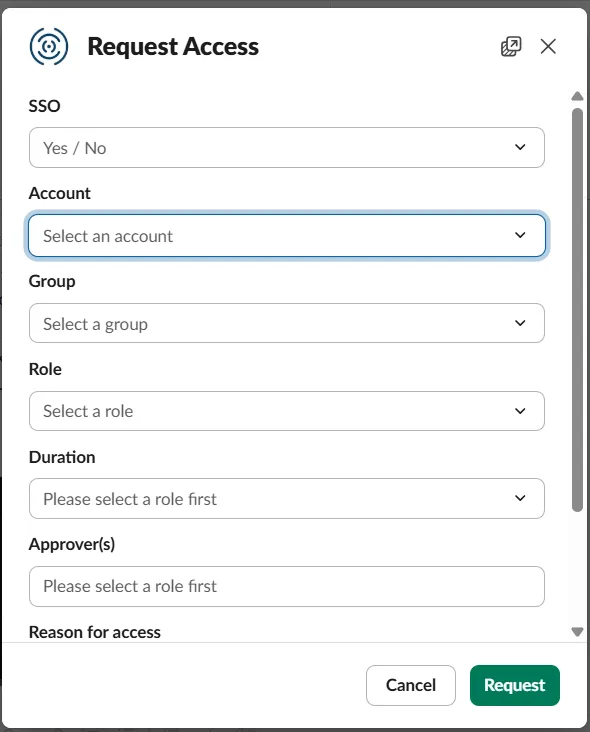
Limit what happens after the door opens. Both the vCenter and nginx2root stories turn on what an intruder can do next. Cloud JIT, VM JIT and Database JIT remove permanent administrator access to the systems an intruder would pivot to, replacing it with approved, time-boxed, recorded access, and Agentic JIT does the same for build pipelines. Java4Shell targets exactly the identity and build systems, such as Keycloak and Jenkins, that hold other systems’ credentials. Cloud UEBA and cloud detection and response alert when an identity behaves unlike itself.
What this does not do. Cloudanix does not patch software for you, and virtualization infrastructure such as vCenter and ESXi, as well as network appliances, sit outside what a cloud-and-code inventory sees; handle those with your own inventory. A vulnerability scanner reports that Java is present, not whether the CPU supports the vulnerable path, so use the CPU check in Step 1 to adjust priority. Matching depends on advisory feeds, so a very new flaw or one without a CVE number, such as six of the seven Ruby flaws at the time of the report, may be tracked under another identifier until a number exists. The platform speeds up the triage; the patch and restart remain your work.
Quick Reference Checklist
- Listed every Java runtime, NGINX server, Ruby interpreter and vCenter instance, including bundled and containerized ones
- Checked CPU flags on Java hosts, and HTTP/2 status on NGINX
- Marked each system internet-facing, internal or management-only
- Ranked by exploitation, reachability and impact, and assigned an owner and date to each
- Patched, then restarted or rebuilt, and confirmed on the running process
- Applied workarounds only as a bridge and removed them after patching
- Searched for the signs listed for each flaw
- Restricted network access to management consoles
- Replaced permanent administrator access to management and build systems with time-boxed access
- Kept a searchable inventory including bundled runtimes
Key Takeaways
- Four critical code-execution flaws landed in four days. Only the vCenter flaw was confirmed exploited, and it had been used as a zero-day since September.
- Severity scores do not decide priority. Whether you run it, whether it is reachable and whether it is being exploited do.
- The fixes for Java, Ruby and NGINX live inside the runtime or server, so updating libraries or frameworks does not replace them, and services must be restarted or images rebuilt.
- Management and identity systems deserve priority even when they are not public, because intruders use them after getting in elsewhere.
- Reducing standing access limits what a successful exploit can do next.
Want to see which of this week’s flaws apply to your estate, ranked by reachability and what each system can reach? Book a session and we will map it with you.
People Also Read
- 52 PostgreSQL Fixes, One UnrealIRCd Flaw Under Attack: How to Decide What to Patch First With KEV and EPSS
- Which Vulnerabilities Are Actually Running in Production?
- Ivanti Connect Secure Zero-Day and KEV: Why Exposure and Blast Radius Matter
- What is an Attack Path and Why Isolated Findings Mislead You
- Top 15 Cloud Misconfigurations in 2026 and How to Fix Them
- What is the CISA KEV Catalog?
- What is EPSS?
- Understanding Remote Code Execution (RCE)
- What is a Zero-Day Vulnerability?
- How to Prioritize Which CVEs to Fix
- Cloudanix Zero-Day Watch
- Cloudanix Code Security