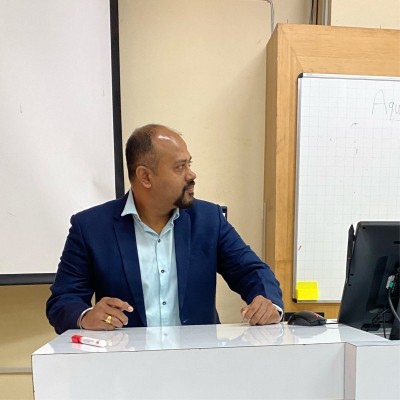
Running a successful blue team means managing prioritization under pressure, reducing manual toil through automation, and maintaining forensic rigor when every instinct says to move fast. Karan Dwivedi, Security Engineering Manager at Google, has spent over seven years in defensive security across Yahoo and Google — covering threat detection, incident response, and digital forensics. He joined Yahoo right as they experienced the world’s largest data breach, giving him immediate real-world exposure to large-scale incident handling. In this episode, he shares how blue teams should prioritize detections, why red teams are partners rather than adversaries, and why going fast at the expense of forensic data quality is actually going slow.
You can read the complete transcript of the episode here >
What are the biggest challenges in running a blue team?
Karan identifies three major challenges from direct experience at Google-scale organizations:
- Prioritization is the core challenge. It is impossible to detect and respond to every single threat. The right approach: build a threat model, stack-rank all organizational risks, then work from the top down. For each risk, determine whether you can prevent it, avoid it, or mitigate it. Detection — knowing when something happens — is the fallback when prevention is not possible. Some risks you simply accept.
- Manual toil compounds relentlessly. Triaging alerts, analyzing events, correlating data, and determining next steps — all require human judgment. The goal is to automate the mechanical parts (log correlation, initial triage) so analysts can focus on higher-severity, higher-priority alerts. Measure success by hours saved per analyst, which translates directly to dollars.
- Burnout is systemic and under-discussed. Night shifts, weekend shifts, constant incident pressure — Karan has personally taken weeks off not for vacation but to reset from burnout. Management must proactively monitor team load, distribute work across time zones, and create space for recovery. This is not talked about enough in the industry.
How should blue teams define and measure success?
The one-liner mission: detect and successfully stop intrusions to keep the company safe. But the metrics that demonstrate progress are more nuanced:
- Detection coverage by TTP: How many tactics, techniques, and procedures from your threat model are you able to detect? Coverage by operating system, by attack category, by severity level.
- Time to detect, respond, and mitigate: Are you getting faster over time? Are high-severity alerts being handled faster this month than last month?
- Red team and purple team catch rate: Where in the kill chain are you detecting simulated attacks? Catching an adversary during initial reconnaissance is very different from catching them at the point of data exfiltration.
- Toil reduction over time: The team should be increasing automation and decreasing manual work — freeing capacity for analysis of novel threats rather than repetitive alert processing.
How should blue teams work with red teams?
Karan’s first principle: red teams are partners, not adversaries. Their job is to help the blue team improve.
- Treat red team activity like real attacks. Do not be lenient in your response just because it is an internal exercise. Treat the simulation as a genuine threat — the quality of learnings depends on it.
- Focus on what external attackers could replicate. Internal red teamers often have knowledge advantages — they know internal systems, have access that external attackers would need to earn. When digesting red team findings, focus on the parts that any external attacker could reproduce.
- Use findings to feed prioritization. Red team exercises should produce specific gaps: “you caught us here, but missed us here.” Those gaps become the next items on your detection backlog — directly informing how you allocate engineering effort.
- Measure where in the kill chain you detect them. Early detection (during reconnaissance or initial access) versus late detection (during lateral movement or exfiltration) tells you how mature your coverage is. The earlier you detect, the less damage occurs.
This partnership model — where offensive security informs defensive investment — is what makes threat hunting effective rather than reactive.
How should forensic data be collected without compromising integrity?
Karan is emphatic: do not sacrifice quality for speed. Going fast in forensics often means going slow in the investigation because compromised data cannot support conclusions.
- Have playbooks ready before incidents occur. When an emergency hits at 3 AM, you need documented step-by-step instructions so clear that someone half-awake can execute them correctly. Which commands to run, which buttons to click, which file formats to expect, which tools to use for analysis.
- Understand data volatility. Memory is volatile — if you panic and start clicking around, you create new processes that overwrite the evidence you need. If you abruptly power off a machine, you lose volatile memory entirely. Collect volatile data first, then move to persistent storage.
- Maintain chain of custody. Document who collected what, when, and who it was handed to. Without this, you cannot prove data integrity in litigation. The moment you lose that attestation, your facts become guesses.
- Use forensically sound, court-accepted tools. Open source tools like GRR (Google Rapid Response) enable remote forensic collection from distributed hosts. But ensure whatever tooling you use is legally accepted in your jurisdiction — that is what actually gives you speed without compromising integrity.
- Remote collection is the new normal. With distributed workforces, physically sitting in front of a machine is often not possible. Agent-based remote collection (pulling data the moment hosts are available) has become the primary method. But nothing beats local, forensically sound collection done with no network interference when it is possible.
How should organizations handle budget constraints for threat detection?
Budget for security logging and detection is always limited. Karan ties it back to prioritization:
- Understand the value of each log field. Not all fields in a log are equally useful. If you can identify which five fields you need for detection and which six fields from another source you can join with them — you may not need to store everything. That precision reduces storage costs dramatically.
- Retention periods should match risk, not convention. If an attack happened two weeks ago and you only keep logs for one week, you have zero visibility. But keeping everything forever is unaffordable. Match retention to the detection windows defined by your threat model.
- Make the investment case concrete. Tell leadership: “If you give us this budget, we can detect these specific threats. Without it, these risks remain invisible.” That specificity is what gets checks signed — not abstract requests for “more security budget.”
- Flow logs are a practical compromise. Full packet capture is expensive and often unnecessary. Flow logs (available in all major clouds) give you connection metadata — source, destination, volume, timing — sufficient for most network-level detection without the storage overhead of full captures.
How should someone start a career in blue team security?
Karan recommends building three pillars in parallel:
- Knowledge: Operating system concepts, network concepts (every OSI layer), application concepts — then layer security on top of each. Finally, understand organizational risk and business impact. This creates a pyramid from technical depth to strategic context.
- Skills: Capture the Flag competitions build muscle memory with real tools. Automate with Python. Practice until playbook execution is so ingrained that you can run commands from memory — shortcuts, pipelines, the whole workflow.
- Experience: Real-world incidents are irreplaceable. Look for internships, volunteer work, or open source projects. Contributing to tools like GRR or Sigma rules builds your resume while giving you hands-on exposure that no book can replicate.
And one parallel thread that runs alongside all three: network early and often. The compounding effects of professional connections — second-degree introductions, mentorship, collaboration opportunities — accelerate every other pillar.