Cloudanix Joins AWS ISV Accelerate Program

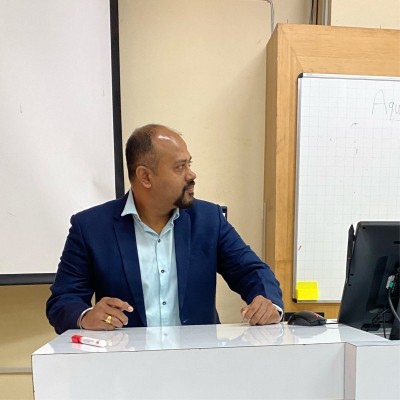
Security Debt and Building Risk-Driven Security Programs with Aakash Yadav

Learn how to quantify security risks, manage security debt, tackle supply chain challenges, and why risk-driven programs outperform compliance-driven ones.

Security programs built on compliance alone will only take an organization so far. The real maturity comes from understanding and quantifying risk. Aakash Yadav, Security Analyst at LaunchDarkly, designs and manages enterprise information security risk programs, performs supply chain risk assessments, and supports security and privacy compliance efforts. In this episode, he makes the case for why risk should drive your security program, not the other way around.

You can read the complete transcript of the episode here >

How should organizations quantify and prioritize security risks?

The traditional two-dimensional risk matrix (likelihood vs. impact) is a starting point, but it lacks the quantitative depth needed for real prioritization. When multiple risks land in the same “high” category, teams struggle to decide what to tackle first.

Aakash recommends adding more context to the matrix:

  • Define what “high” actually means: A severity label without quantification adds little value. Specify the financial impact, the blast radius, and the time period over which the risk materializes.
  • Plot probabilities over time: Rather than a static snapshot, model how the likelihood of exploitation changes as the threat landscape evolves.
  • Reduce the unknown: Every risk has more information available than teams assume. The question is not whether data exists, but whether the team has sought it out.

He recommends the book How to Measure Anything in Cybersecurity as a practical guide to prioritizing vulnerabilities based on business risk. The core principle: risk is a moving target that requires continuous reevaluation, not a one-time classification exercise.

What is security debt and can it ever reach zero?

Security debt is the accumulation of unaddressed vulnerabilities and findings that pile up when teams lack the resources to fix everything. Aakash is direct: it will never reach zero, and anyone claiming otherwise is not being honest.

The key to managing security debt is continuous reevaluation:

  • Risks change over time: A vulnerability classified as “low” six months ago may now be actively exploited in the wild. The severity must be reassessed.
  • Use risk registers: Track all debt in a risk register and revisit it regularly. Ensure that lows remain lows and have not quietly become highs.
  • Treat it like engineering debt: Just as product teams reprioritize backlog items when customer demand shifts, security teams must reprioritize when the threat landscape shifts.

The parallel to technical debt is exact. You will never eliminate it entirely, but you can prevent it from becoming unmanageable through disciplined, ongoing review.

What challenges arise when setting up security programs across M&A integrations?

The biggest challenge Aakash faced during M&A was the assumption that the acquiring company’s security program is automatically superior. This mindset creates friction and misses opportunities.

His recommendations for security leaders navigating M&A:

  • Keep an open mind: The acquired company may have better processes in certain areas. Be willing to learn from them.
  • Do not force immediate alignment: Expecting 100% compliance with your program from day one is unrealistic and counterproductive. Let programs run in parallel until a thoughtful merge is possible.
  • Make the combined program better: The goal is not to override one program with another. It is to take the best elements of both and create something stronger.

A practical example: change controls differ across every organization. Forcing an acquired company onto your change control process immediately will break their workflows and jeopardize compliance timelines. A phased approach works better, similar to the enterprise risk management challenges other security leaders have navigated.

How should organizations approach supply chain security for open source software?

Supply chain security sits right behind phishing as a top concern, and Aakash acknowledges that the industry does not do a great job addressing it. Open source software powers critical infrastructure, but it introduces significant risk if not managed properly.

Before adopting any open source component, evaluate:

  • Community support: Is it maintained by a healthy community or a single individual who could abandon it?
  • Release frequency: Regular updates indicate active maintenance and security patching.
  • Change management: When updating versions, review what changed. Do not blindly upgrade.
  • Ongoing monitoring: Install and forget is a recipe for disaster. Continuously track the health of your dependencies.

The balance is important: restricting engineers from using open source stifles growth. The answer is allowing it with vigilance, proper review processes, and continuous monitoring. Organizations looking to formalize this should explore software composition analysis tools and practices, and understand how supply chain security, SBOMs, and vulnerability management fit together.

Why should security programs be risk-driven rather than compliance-driven?

This is the central thesis of the episode. Aakash identifies compliance-driven security as the single biggest mistake organizations make, and it manifests in three ways:

  • Unaware: Organizations build their entire security program on compliance frameworks without realizing it limits their maturity.
  • Aware but ignoring: They know compliance alone does not secure their product, but the program “works” so they avoid changing it.
  • Hoping not to get caught: They understand the gap but bet that passing audits is sufficient.

The problem with compliance-driven programs:

  • A SOC 2 report tells you an organization passed an audit. It does not tell you how their controls align with their actual infrastructure or business operations.
  • Compliance frameworks ask you to do risk reviews, but few organizations actually use those reviews as inputs to create new projects or reduce risk.
  • Compliance will take a program to a certain maturity level, but the next step requires risk quantification to produce actionable, prioritized results.

The shift from compliance-driven to risk-driven is what separates organizations that check boxes from those that genuinely reduce their attack surface. It aligns with how third-party risk management should work as well: assessing actual risk posture rather than collecting audit reports.


Related Resources

What Our Users Are Saying

Customer Reviews

Cloudanix is trusted by security leaders worldwide to deliver proactive, reliable, and cutting-edge cloud security.

One day, I changed the password of a root account, and my CTO called me within less than a minute to confirm if I did so. I was not expecting a reaction this quick. He told me Cloudanix alerted him of this password change and that he wanted to confirm as it was a critical security notification. I couldn't believe it!

Ritesh Agarwal
Ritesh Agarwal
CEO, Airgap Networks

Compliance is one way of staying secure, but what I want is the ability to go deeper and attain 'true security.' Cloudanix provides us the capability to do so.

Vishal Madan
Vishal Madan
Head of Engineering, iMocha

Cloudanix is building for the future of the cloud, which makes the product all the more desirable.

Ritesh Agarwal
Ritesh Agarwal
CEO, Airgap Networks

Cloudanix gave us the visibility we were missing. Being able to move from permanent access to a robust Just-In-Time (JIT) workflow has fundamentally changed our security posture without slowing down our engineering velocity.

Pavan Kumar Lekkala
Pavan Kumar Lekkala
SRE Lead, HugoHub

We are excited to leverage Cloudanix's comprehensive multi-cloud DevSecOps solution to secure our production workloads on AWS. Cloudanix has demonstrated that it can solve many challenges that DevSecOps teams face while continually adding new features such as SOC2 compliance and drift detection.

Satish Mohan
Satish Mohan
Co-founder & CTO, Airgap Networks

Managing third-party partner access was once a major concern for our security posture. With Cloudanix JIT Cloud, we've effectively achieved zero third-party risk. We can now grant access confidently, knowing that it is temporary, audited, and automatically revoked, resulting in a 100% reduction in our privileged access exposure.

Okesh Badhiye
Okesh Badhiye
Head of Technical Engineering, Finfinity

The snooze feature and responsible alerts have helped us save time and prioritize what to tackle first.

Satish Mohan
Satish Mohan
Co-founder & CTO, Airgap Networks

Implementing Cloudanix JIT internally allowed us to practice what we preach. By eliminating permanent access to our own clouds and databases, we've neutralized the risk of standing privileges, ensuring our own 'keys to the kingdom' are never left exposed.

Girish Manghnani
Girish Manghnani
Managing Partner, Tech Inspira

The problem with permissions is a lot of times, the gaps are left open due to oversights from inside the organization itself. With Cloudanix's CIEM, we get a complete view of user permissions and access. This enables us to update the permissions, reducing the attack surface.

Nilesh Pethani
Nilesh Pethani
Application Architect, iMocha

In the world of Fintech, trust is our currency. Cloudanix provided the frictionless visibility we needed to secure our EKS workloads across AWS, ensuring we stay audit-ready for SOC2 and GDPR without slowing down our engineering velocity.

Amol Naik
Amol Naik
Head of Security & Infrastructure, HugoHub

Cloudanix delivered value within 5 minutes of onboarding. Continuous monitoring, timely detection, and excellent documentation helped us attain a great cloud security posture.

Divyanshu Shukla
Senior DevSecOps, Meesho

Technology strategies and business strategies are in a state of constant change which includes centralization and decentralization of responsibilities. Regardless of strategic shift, we still have intellectual property to protect. Cloudanix are critical partners for us in our public cloud security posture across our three cloud providers.

Jerry Locke
Jerry Locke
Senior Director Global Solutions Engineering, Eversana

Cloudanix has been amazing. They opened up a common Slack channel with us — and it feels like we are talking to our own team and getting things done with Cloud security. The support team is always available, friendly, helpful, and ready to go out of their way.

Satish Mohan
Satish Mohan
CTO, Airgap Networks

Beyond just access management, Cloudanix CSPM has given us a unified view of our AWS environment. The real-time alerting and anomaly detection allow us to prevent any untoward activity before it happens, which is critical for a marketplace connecting 50+ financial institutions.

Okesh Badhiye
Okesh Badhiye
Head of Technical Engineering, Finfinity

For a Fintech company, data is our most valuable — and most sensitive — asset. Cloudanix DAM hasn't just improved our visibility; it has given us control. The ability to mask data and prevent unauthorized queries in real-time is a game-changer for our compliance and customer trust.

Jiten Gala
Jiten Gala
President Engineering and Product, Kapittx

Our clients, especially in the Middle East financial sector, demand absolute accountability. Cloudanix JIT Cloud has been a competitive differentiator for us, allowing us to provide secure, governed access to customer accounts that meet their strictest audit and compliance requirements.

Girish Manghnani
Girish Manghnani
Managing Partner, Tech Inspira

Cloudanix is always on my team's lips because of its exceptional support. Be it a small or big query, Cloudanix has gone above and beyond to resolve them. This one's a keeper for us.

Sujit Karpe
Sujit Karpe
CTO, iMocha

For a long-lasting partnership, great support goes a long way. Cloudanix has delivered exceptional support whenever required. Their edge is their team is always ready to go beyond to solve any issues that we have. This speaks volumes about the culture at Cloudanix.

Akash Maheshwari
Akash Maheshwari
Co-founder, MoveInSync

Beyond the technology, Cloudanix feels like an extension of our own team. Their willingness to stand up a dedicated Middle East tenant for us and provide exceptional support at a sensible price makes them a long-term partner for Hugosave.

Surya Tamada
Surya Tamada
CTO, HugoHub

The real-time notifications that Cloudanix provides are a real lifesaver. Their adaptive notifications ensure that my team stays productive and doesn't get interrupted all the time.

Digvijay Singh
Staff Security Engineer, Meesho

The whole point in technological evolution is to help improve the world we live in. We must protect that and to do so requires an effective and efficient security strategy. The Cloudanix team helped make our public cloud security posture management strategy a reality. The symbiotic relationship we have allows for a continuous feedback loop which is how business should operate.

Larry Wheat
Larry Wheat
Staff Solutions Engineer, Eversana

Ready to see your graph?

Connect a cloud account in under 30 minutes. See every finding rooted in identity, asset, and blast radius — with a fix path attached.

Book a Demo