AWS and Cloudanix team co-authored this blog: Real-Time Threat and Anomaly Detection for Workloads on AWS

Australian Cyber Security Centre's Baseline Mitigation Strategies

Essential Eight

The Essential Eight is a prioritized set of mitigation strategies developed by the Australian Cyber Security Centre (ACSC) to help organizations protect themselves against cyber threats. Originally published as part of the Strategies to Mitigate Cyber Security Incidents, the Essential Eight represents the baseline cybersecurity controls that all organizations should implement. The Essential Eight consists of eight mitigation strategies: Application Control, Patch Applications, Configure Microsoft Office Macro Settings, User Application Hardening, Restrict Administrative Privileges, Patch Operating Systems, Multi-Factor Authentication, and Regular Backups. For organizations using AWS, Azure, GCP, or OCI, implementing Essential Eight requires adapting these controls to cloud environments while maintaining the security outcomes intended by the ACSC.

Understanding Essential Eight for Cloud Environments

The Australian Cyber Security Centre's Essential Eight provides baseline cybersecurity controls proven to mitigate cyber security incidents. The framework defines three maturity levels (Maturity Level One, Two, and Three) that organizations can progressively implement. While originally designed for traditional IT environments, Essential Eight principles apply to cloud infrastructure on AWS, Azure, GCP, and OCI. Organizations must adapt the controls to cloud-native services, containerized workloads, serverless functions, and infrastructure-as-code while maintaining the security outcomes intended by each mitigation strategy.

Restrict Administrative Privileges in Cloud Environments

Essential Eight mitigation strategy 5 requires organizations to restrict administrative privileges to operating systems and applications based on user duties. This includes using just-in-time administration, privileged access management, and enforcing least privilege. Cloudanix's Just-In-Time (JIT) access implements time-bound administrative access across AWS, Azure, GCP, and OCI, directly supporting Essential Eight requirements. JIT eliminates standing administrative privileges, provides temporary elevated access only when needed with approval workflows, automatically revokes access after designated periods, and maintains comprehensive audit trails — all aligned with Essential Eight maturity levels for privileged access management.

Multi-Factor Authentication for Cloud Access

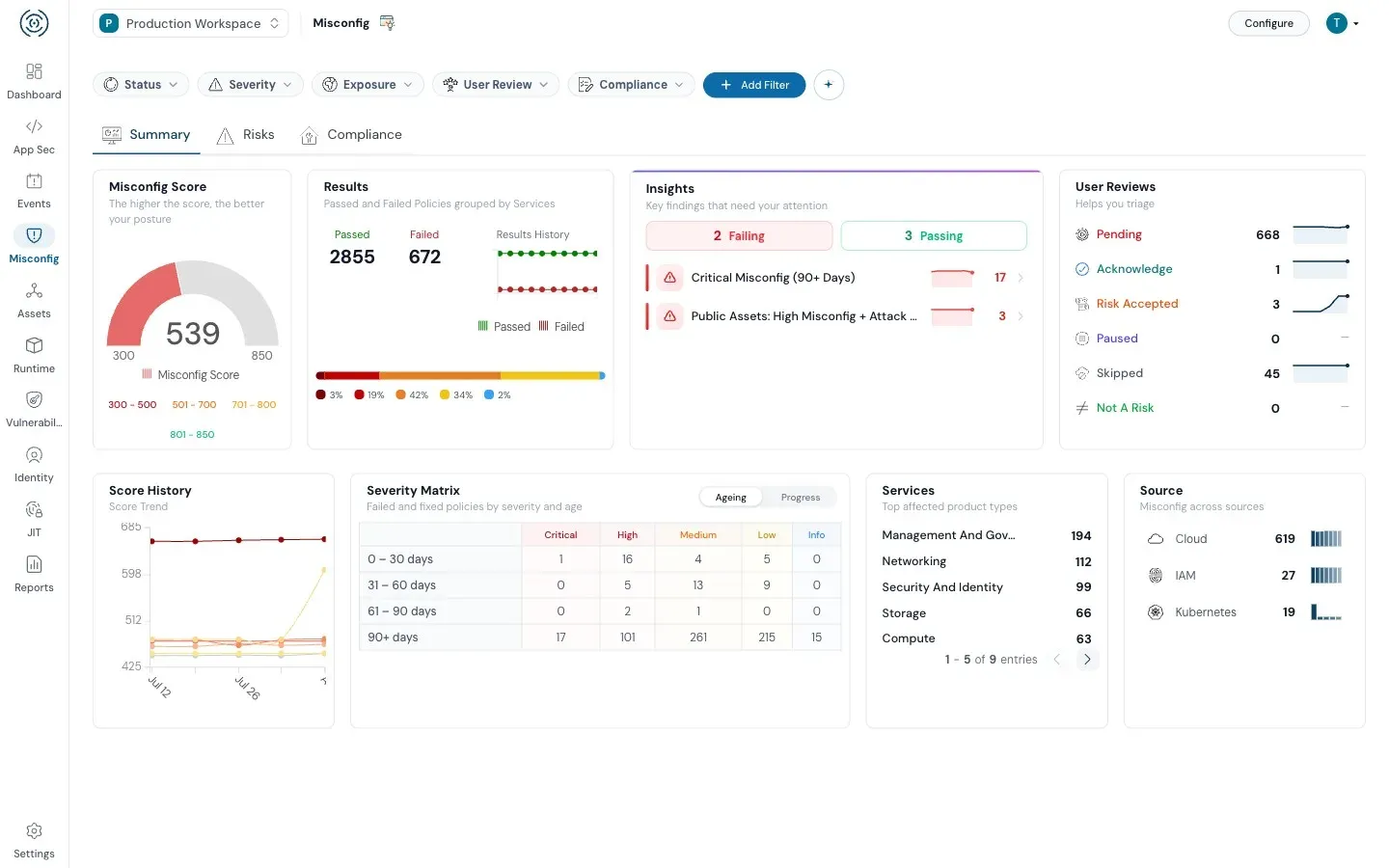
Essential Eight mitigation strategy 7 mandates multi-factor authentication (MFA) for all users when accessing important data repositories, cloud-based services, and remote access solutions. This is particularly critical for administrative access to cloud infrastructure. Cloudanix monitors MFA enforcement across AWS, Azure, GCP, and OCI environments, detecting accounts without MFA enabled, identifying high-privilege identities lacking MFA, tracking MFA compliance for both human and service accounts, and alerting on MFA policy violations. This visibility helps organizations achieve and maintain Essential Eight MFA requirements across multi-cloud infrastructure.

Cloud Identity and Privilege Management

Essential Eight's restriction of administrative privileges extends to managing both human administrators and non-human identities in cloud environments. Modern cloud infrastructure includes thousands of service accounts, API keys, IAM roles, and workload identities across AWS, Azure, GCP, and OCI. Cloudanix provides comprehensive identity governance that monitors all identity types for excessive privileges, enforces least-privilege access principles, detects dormant or unused accounts and credentials, tracks administrative activities across cloud platforms, and supports segregation of duties. This holistic approach helps organizations meet Essential Eight requirements for privileged access management in cloud-native environments.

Patch Management for Cloud Workloads

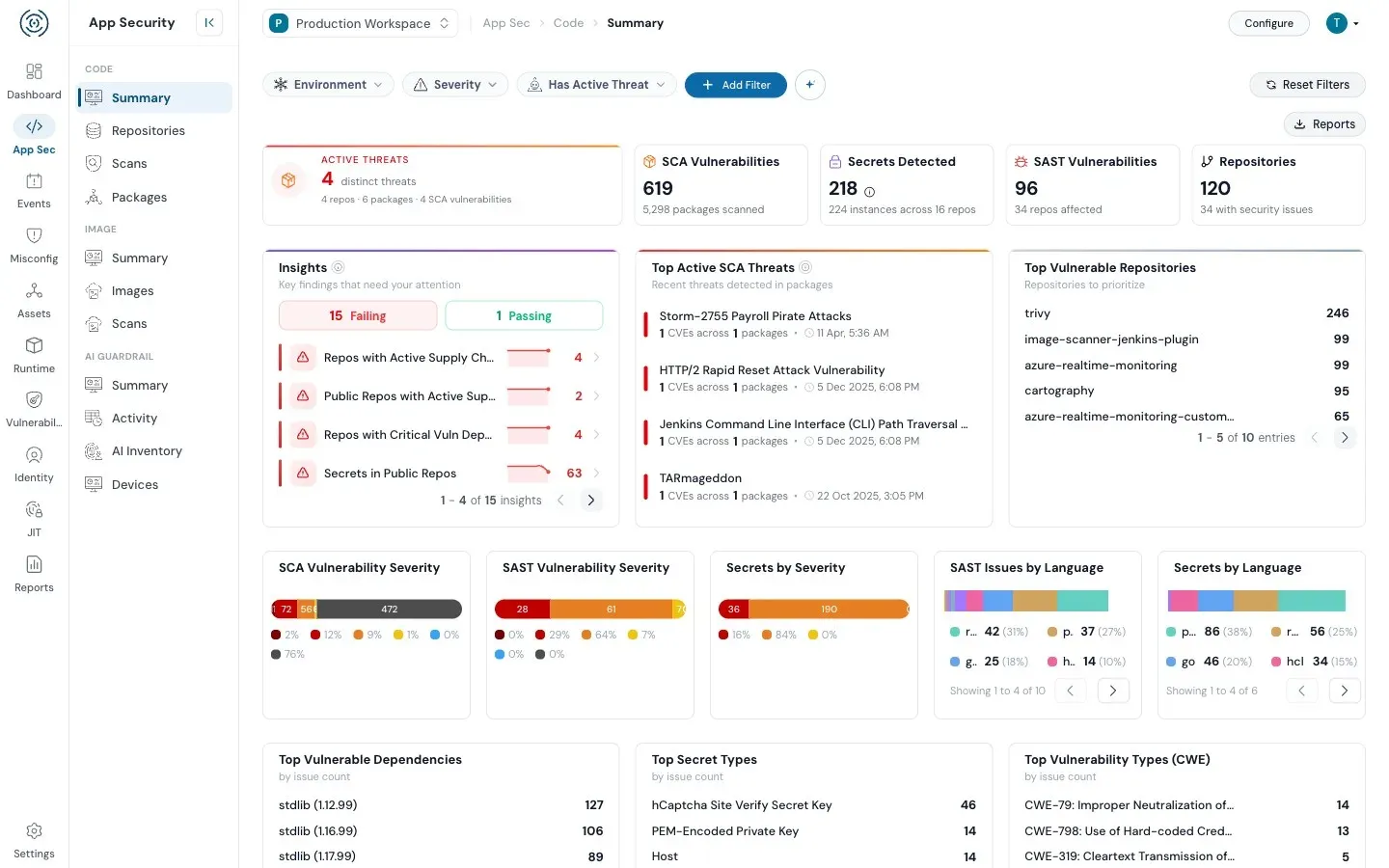
Essential Eight mitigation strategies 2 and 6 require patching applications and operating systems within specific timeframes based on security vulnerabilities. In cloud environments, this applies to virtual machines, container images, serverless functions, and managed services. Cloudanix provides workload security across AWS EC2, Azure VMs, GCP Compute, and OCI Compute including vulnerability scanning of virtual machines and container images, detection of unpatched critical vulnerabilities, tracking of security updates and patch compliance, and runtime protection for workloads. These capabilities help organizations meet Essential Eight patch management requirements for cloud infrastructure.

Application Control and Workload Security

Essential Eight mitigation strategy 1 requires application control to prevent execution of unapproved or malicious programs. In cloud environments, this extends to container security, serverless function validation, and workload integrity monitoring. Cloudanix secures cloud workloads including containers, Kubernetes clusters, serverless functions, and virtual machines across AWS ECS/EKS/Lambda, Azure AKS/Functions, GCP GKE/Cloud Run, and OCI Container Engine. Security controls include container image scanning and validation, runtime application monitoring, workload configuration compliance, and detection of unauthorized applications or processes — supporting Essential Eight application control objectives in cloud-native architectures.

Regular Backups and Cloud Resilience

Essential Eight mitigation strategy 8 requires regular backups of important data, software, and configurations with testing of restoration processes. Cloud environments introduce new considerations including backup of cloud-native resources, infrastructure-as-code, and distributed data. Cloudanix helps organizations implement backup and resilience strategies by monitoring backup configurations for AWS S3, RDS, Azure Storage, Backup, GCP Cloud Storage, and OCI Object Storage, detecting missing or inadequate backup policies, tracking backup retention and encryption, and alerting on backup failures. This supports Essential Eight requirements for backup and disaster recovery in cloud environments.

Australian Cyber Security Centre Baseline Controls

Achieve Essential Eight Maturity with Cloudanix

Essential Eight provides proven baseline cybersecurity controls recommended by the Australian Cyber Security Centre. Cloudanix helps organizations implement and maintain Essential Eight maturity levels across AWS, Azure, GCP, and OCI environments.

Privileged Access Management (Strategy 5)

Implement Just-In-Time administrative access and enforce least privilege across cloud infrastructure to meet Essential Eight maturity requirements.

Multi-Factor Authentication (Strategy 7)

Monitor and enforce MFA requirements across cloud platforms to protect against credential compromise.

Vulnerability and Patch Management (Strategies 2 & 6)

Scan cloud workloads for vulnerabilities and ensure timely patching of applications and operating systems.

Loading animation...
Comprehensive cloud security platform covering code to cloud protection

Security for your Code, Cloud and Data

Cloudanix replaces your 5-6 disjointed security tools within 30 minutes.

Get Started

CLOUDANIX

Insights from Cloudanix

Explore guides, checklists, and blogs that simplify cloud security and help you secure your infrastructure.