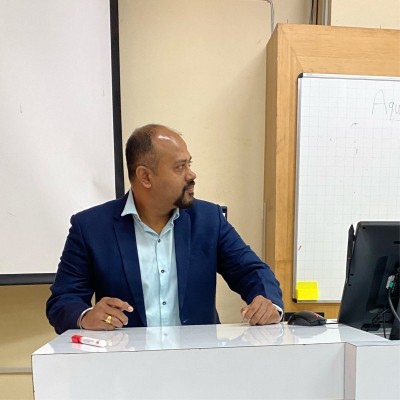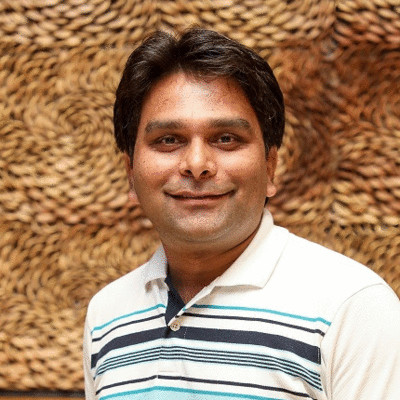
In the traditional security narrative, humans are frequently labeled as the “weakest link.” However, according to Cassie Clark, a security awareness leader with eight years of experience in behavioral change, this perspective misses a fundamental truth: humans are only as secure as the context in which they operate.
By leveraging behavioral design methodologies, organizations can shift the focus from blaming individuals to enabling them as one of the strongest lines of defense. Our conversation with Cassie on the Scale To Zero podcast revealed how psychology, environment design, and empathy can transform security from a burden into a habit.
You can read the complete transcript of the epiosde here >
The Psychology of the “Automatic Brain”
To understand security failures, we must first understand how humans process information. Cassie references the research of Daniel Kahneman in Thinking, Fast and Slow, which identifies two primary systems of thought:
- System 1 (Automatic): Subconscious, reflexive, and driven by habit. This system accounts for up to 95% of our daily actions.
- System 2 (Methodical): Deliberate, conscious, and methodical. This accounts for as little as 5% of our thinking.
The conflict arises because traditional security practices — like annual training — ask people to use their deliberate 5% brain to remember facts. Meanwhile, attackers have spent years manipulating the automatic 95% brain through fear, urgency, and authority bias. This is exactly why AI-powered deepfakes and social engineering are so effective: they exploit the automatic brain’s trust in familiar voices and authority figures.
Context vs. Choice: Why Environment Matters
One of the most impactful lessons from behavioral science is that context drives behavior more than individual choice. Cassie provides two powerful examples of how context dictates security outcomes:
- The Shredder Example: If an employee sits on the second floor and the paper shredder is on the 13th floor requiring a special access code, they are less likely to shred documents daily. Subconsciously, humans are evolutionarily designed to conserve energy and choose the easier path.
- The Home Context: An employee might be highly security-conscious while at their desk. However, at 8:30 PM, while watching TV, burning dinner, and checking their phone, they are in a completely different context where they are much more susceptible to a phishing lure.
This insight has profound implications for how organizations design their security controls. Rather than relying on employees to always make the right choice, the environment should make the secure path the easiest path — a principle that aligns closely with building a modern security culture through engineering defaults rather than compliance mandates.
Moving Beyond “Security Fatigue”
Security is not the main job of most employees; it is an additional obligation that can lead to “security fatigue” if not handled correctly. To combat this, organizations must find a balance between necessary friction and seamless integration.
Choice Architecture
People feel more “bought-in” when they have a sense of choice. For instance, when rolling out Mobile Device Management (MDM), offering employees a choice between enrolling a personal device or receiving a company-issued device can reduce the feeling of being monitored and increase adoption. This principle of choice architecture — giving people agency within secure boundaries — is far more effective than top-down mandates.
Strategic Friction
While the goal is often to reduce friction, security is one of the few areas where friction can be beneficial. Slowing a user down “just enough” at a critical decision point — such as a prompt before they engage in a risky behavior — forces them to move from their automatic brain into their methodical brain. A well-placed multi-factor authentication prompt, for example, creates just enough friction to trigger conscious decision-making without creating fatigue.
Reimagining Security Awareness Programs
The traditional model of annual videos and disconnected multiple-choice questions often leads to employees “switching on the video” and ignoring the content. Successful awareness programs should follow a more rigorous behavioral framework:
- Identify the Risk: e.g., Compromised credentials.
- Define the Behavior: e.g., Consistent use of a password manager.
- Apply Micro-Interventions: Use bite-sized learning and just-in-time prompts throughout the year rather than one large annual event.
Cassie notes that when training is relatable and specific, the results are measurable. In her experience, creating custom content instead of using neutral third-party vendors led to employee feedback where users reported using the lessons to protect themselves and their families in their personal lives. This approach mirrors the philosophy behind scaling security champions — making security personal and relevant rather than abstract and bureaucratic.
Cultivating a “No-Blame” Culture
When an employee is manipulated by a sophisticated attack — such as the increasingly terrifying AI voice-based attacks — organizations must resist the urge to “blame and shame.”
If an organization reacts punitively, employees will hesitate to report incidents in the future. Instead, Cassie advocates for an empathetic approach:
- Lock down the situation immediately.
- Follow up with a conversation, not just more training.
- Never waste an incident: Use the data to identify if additional technical controls (like phishing-resistant MFA) are needed or if a process prompt would have helped.
This no-blame philosophy is central to building a resilient security culture where employees feel safe reporting mistakes quickly, minimizing the blast radius of any breach.
The Crisis of Burnout in Security Leadership
The intersection of security and human behavior also applies to the security teams themselves. Gartner research indicates that 73% of CISOs feel some level of burnout.
Cassie suggests that dealing with burnout requires setting firm boundaries and, for leaders, mastering the art of delegation. Transitioning from an individual contributor who “controls everything” to a leader who enables their team is a critical step in maintaining long-term resilience. Understanding emotional intelligence — the ability to manage your own emotions while empathizing with your team — is a key skill for security leaders navigating this transition.
Conclusion: Infusing Security into the Day-to-Day
True security culture is built when security is “infused” into the day-to-day processes employees already follow. By making the secure path the easy path, and by respecting employees’ time and context, organizations can move away from the “tug-of-war” between humans and technical controls.
The lesson is clear: stop designing security for the 5% methodical brain and start designing for the 95% automatic brain. When the environment, the tools, and the culture all point toward secure behavior, every user becomes a cybersecurity asset rather than a liability.
Recommended Learning Resources from Cassie Clark
- Book: Thinking, Fast and Slow by Daniel Kahneman.
- Newsletter: Habit Weekly (Behavioral science focus).
- Thought Leaders: Dr. Jessica Barker and Perry Carpenter.
People Also Read
- Cybersecurity For Every User
- Emotional Intelligence - CISO(s) POV
- How to Respond to a Data or Security Breach?
- What is Incident Response?
- What is Threat Modeling?
- The Human Element: Mastering Emotional Intelligence in Cybersecurity Leadership
- Building a Resilient Security Culture with Mauricio Duarte
- AI Deepfakes and the Evolving Threat Landscape
- Scaling Security Champions: From Compliance to Culture